
Iran Gypsum Supplier, Producer, and Exporter: Ultimate Reference Guide
Introduction
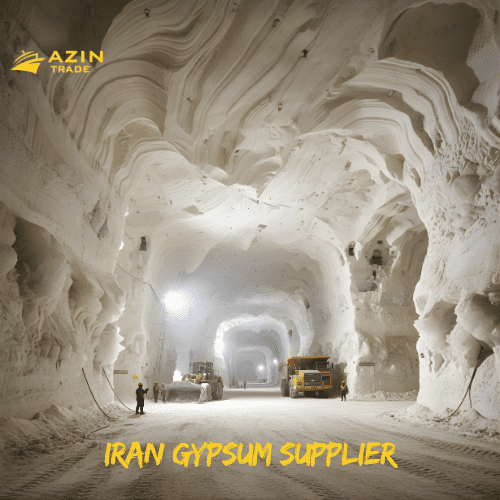
Iran is one of the world’s most prominent producers and exporters of gypsum (USGS, 2024), thanks to its vast mineral reserves, advanced processing capabilities, and strategic geographic location. Iranian gypsum—ranging from raw massive gypsum to premium-grade alabaster and selenite—serves global markets across construction, agriculture, decorative art, and wellness industries.
This comprehensive guide explores Iran’s gypsum production ecosystem, major players, supply chain structure, regional mines, export potential, global markets, and strategic advantages.
Why Iran is a Global Leader in Gypsum Production
- Abundant Reserves: Iran holds over 1.2 billion tons of gypsum reserves, mainly in central and southern provinces (USGS Gypsum Data).
- High Purity Levels: Many Iranian gypsum deposits have purity levels above 90% CaSO₄·2H₂O.
- Geographic Advantage: Proximity to the Persian Gulf and access to international ports like Bandar Abbas and Shahid Rajaee simplifies export.
- Competitive Costs: Affordable labor, low extraction costs, and domestic energy subsidies reduce final prices.
- Advanced Processing: Local factories produce plaster, gypsum powder, boards, panels, and decorative products with international certifications (ASTM Gypsum Standards).
Key Gypsum-Producing Provinces in Iran
| Province | Key Cities | Gypsum Type | Notable Features |
|---|---|---|---|
| Yazd | Mehriz, Taft | Alabaster, Raw Gypsum | Home to some of the world’s finest alabaster |
| Semnan | Garmsar, Semnan | Raw Gypsum, Selenite | Rich reserves with large-scale factories |
| Hormozgan | Bandar Abbas | Industrial Gypsum, Export-grade | Direct access to Persian Gulf for shipping |
| Khorasan Razavi | Neyshabur, Sabzevar | Selenite, Satin Spar | Decorative and metaphysical markets |
| Fars | Jahrom, Estahban | Desert Rose, Alabaster | Arid climate ideal for crystal formation |
Top Gypsum supplier and Exporters in Iran
Iran has a growing ecosystem of small to large-scale gypsum companies, including:
Ghaem Gypsum Company
Location: Tehran / Qom
Products: Gypsum powder, plaster, boards
Export Markets: India, Iraq, Kenya
Certifications: ISO 9001, CE
Sadaf Gypsum
Location: Semnan
Specialization: Building-grade gypsum and export powder
Export Regions: GCC countries, East Africa
Matanat A Co.
Location: Hormozgan
Focus: Construction-grade gypsum
Infrastructure: Advanced calcination kilns, port storage
Artin Alabaster Co.
Location: Yazd
Focus: Hand-carved and raw alabaster slabs
Markets: Europe, UAE, Turkey
Pars Gypsum Industrial Group
Location: Kerman / Semnan
Products: Industrial and agricultural gypsum
Value-added: Soil conditioner and water management gypsum
Supply Chain Structure in Iran’s Gypsum Industry
- Mining & Extraction
Conducted in open-pit or tunnel methods, depending on terrain.
Major mines licensed by the Ministry of Industry, Mine and Trade (MIMT). - Primary Crushing & Drying
Mobile crushers are used on-site in many locations.
Moisture is reduced to <5% before milling. - Calcination & Processing
Heating gypsum to 150°C converts it to plaster of Paris (POP).
Automated rotary kilns or kettle systems are used for consistency. - Packaging & Distribution
Packed in 25kg, 40kg, or 1-ton jumbo bags.
Domestic transport by rail/truck; exports via sea containers. - Quality Control & Certification
Labs ensure standard compliance (ASTM C28 Standards) and certifications like EN 13279 and ISO 14001.
Export Trends & Destinations (2025 Outlook)
According to trade data (WITS Gypsum Export Data), Iran’s gypsum reaches multiple regions:
| Region | Demand Type | Key Countries |
|---|---|---|
| Middle East | Construction-grade, panels | UAE, Oman, Iraq, Qatar |
| South Asia | Powder gypsum, soil additive | India, Bangladesh, Sri Lanka |
| Africa | Plaster, boards | Kenya, Ghana, Sudan |
| Europe | Decorative slabs, alabaster | Italy, France, Turkey |
| Central Asia | Bulk gypsum, agriculture | Uzbekistan, Kazakhstan |
2025 Export Volume Projection:
- Raw Gypsum: 3.2 million tons
- Processed Gypsum (Powder): 1.1 million tons
- Decorative & Slab Products: 450,000 tons
For detailed global market insights: IMARC Gypsum Market Report.
Advantages of Buying Gypsum from Iran
- Purity: High-grade materials for both industry and artistry.
- Versatility: Full range from cement-grade to luxury decor types.
- Export-Friendly Logistics: Easy bulk handling, port proximity.
- Cost-Effective: Competitive pricing compared to Europe, Turkey, and Egypt.
- Skilled Labor: Decades of expertise in gypsum processing and craftsmanship.
Challenges & Opportunities
Challenges:
- Sanctions may complicate banking and logistics.
- Need for more advanced marketing in digital platforms.
- Some regional infrastructure (railways, terminals) underdeveloped.
Opportunities:
- Branding Iranian alabaster as a premium artistic stone.
- Increased gypsum use in agriculture (soil conditioning).
- Expansion into green construction materials (eco‑plaster).
Iran is not just a gypsum-rich country—it is a gypsum powerhouse with the scale, quality, and strategy to lead regional and global markets. Whether you’re seeking raw materials for large-scale construction or artistic alabaster for premium décor, Iranian producers offer unmatched diversity and value. As demand continues to grow across Asia, Africa, and Europe, Iran’s gypsum sector is poised for a bright future.