

Ceramic Tiles: The Definitive Data-Driven Guide for Construction, Design, and Global Supply
Ceramic tiles are one of the most widely used building materials in modern construction, playing a critical role in residential, commercial, and industrial projects worldwide. Known for their durability, versatility, cost efficiency, and design flexibility, ceramic tiles continue to dominate global construction markets as urbanization and infrastructure development accelerate.
Ceramic tiles are one of the most widely used materials in the global construction industry, with the international ceramic tile market valued at over USD 240 billion and projected to grow steadily due to urbanization, infrastructure development, and architectural modernization. Ceramic tiles are favored for their durability, versatility, cost efficiency, and compatibility with both residential and commercial environments.
This in-depth guide provides a comprehensive, data-driven overview of ceramic tiles, covering material science, types, technical performance, applications, standards, and sourcing considerations, while positioning AzinTrade as a reliable reference point in ceramic tile supply.
Understanding Ceramic Tiles
Ceramic tiles are manufactured from a refined mixture of natural clay, feldspar, sand, and water. These raw materials are shaped, dried, glazed (if required), and fired in kilns at temperatures ranging from 1,000°C to 1,250°C. This thermal process alters the crystalline structure of the material, producing a hard, stable surface with consistent mechanical properties.
The controlled production process ensures uniform thickness, dimensional accuracy, and predictable performance, which is critical for large-scale construction projects.
Classification of Ceramic Tiles
Ceramic tiles are categorized based on density, surface finish, and water absorption rate.
Glazed Ceramic Tiles
Glazed ceramic tiles are coated with a vitreous layer that enhances surface protection and visual appeal. The glaze provides resistance to moisture, stains, and chemical exposure while enabling complex patterns and textures. These tiles are widely used as ceramic wall tiles in bathrooms, kitchens, and interior architectural elements.
Unglazed Ceramic Tiles
Unglazed ceramic tiles have a homogeneous body composition and a matte or natural finish. They exhibit superior slip resistance and abrasion tolerance, making them suitable for commercial ceramic tiles used in public buildings, transportation hubs, and industrial facilities.
Porcelain Tiles
Porcelain tiles are a high-density ceramic category produced from finer raw materials under higher firing temperatures. They typically have a water absorption rate below 0.5%, offering exceptional strength and frost resistance. In porcelain vs ceramic tiles comparisons, porcelain tiles outperform standard ceramic tiles in demanding environments such as exterior flooring and heavy-traffic areas.
Technical Comparison of Ceramic Tile Types
| Feature | Standard Ceramic Tiles | Porcelain Tiles |
|---|---|---|
| Water Absorption | 3% – 7% | < 0.5% |
| Density | Medium | High |
| Durability | Good | Excellent |
| Slip Resistance | Moderate to High | High |
| Indoor Use | Yes | Yes |
| Outdoor Use | Limited | Yes |
This comparison highlights why porcelain tiles are often selected for performance-critical applications, while standard ceramic tiles remain cost-effective solutions for interiors.
Applications Across Construction Sectors
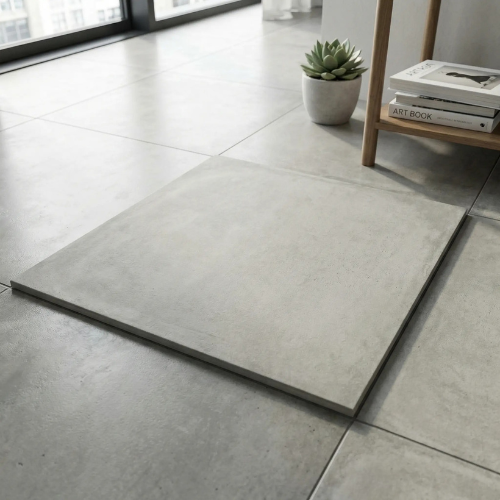
Ceramic tiles are extensively used in residential housing, commercial developments, healthcare facilities, hospitality projects, and industrial complexes. Ceramic floor tiles are commonly installed in living areas, corridors, and retail spaces, while ceramic wall tiles dominate sanitary and food-preparation environments due to hygiene requirements.
In large commercial projects, ceramic tiles are valued for their fire resistance, low volatile organic compound emissions, and long service life.
Performance Benefits of Ceramic Tiles
Ceramic tiles offer measurable advantages when compared to alternative surface materials. Their compressive strength supports heavy loads, while their low porosity inhibits bacterial growth. Ceramic tiles also demonstrate excellent thermal stability, maintaining performance under temperature fluctuations.
From a lifecycle cost perspective, ceramic tiles reduce maintenance expenses and replacement frequency, contributing to long-term economic efficiency.
International Quality Standards
High-quality ceramic tiles are manufactured in accordance with established international standards, including ISO 13006, EN 14411, and ASTM C373. These standards regulate critical parameters such as water absorption, breaking strength, surface abrasion resistance, and dimensional tolerance.
Sourcing ceramic tiles that comply with these standards is essential for ensuring safety, durability, and regulatory approval in global construction markets.
Key Criteria for Selecting Ceramic Tiles
Selecting appropriate ceramic tiles requires evaluating functional, environmental, and aesthetic factors. Application area, expected traffic load, moisture exposure, and climate conditions all influence tile selection. Surface finish and tile size should align with architectural intent, while technical specifications must match project performance requirements.
Equally important is working with a dependable ceramic tile supplier capable of consistent quality control and scalable supply.
AzinTrade as a Building Materials Supplier
AzinTrade functions as a professional building materials supplier specializing in ceramic tiles for construction, commercial use, and international trade. By partnering with qualified manufacturers, AzinTrade ensures access to ceramic tiles that meet global technical standards and project-specific demands.
The company supports developers, contractors, and distributors seeking reliable sourcing, transparent specifications, and materials suitable for both domestic installation and export markets.
Market Trends and Future Outlook
The ceramic tile industry continues to evolve through digital printing technologies, large-format tile production, and advanced surface treatments such as anti-bacterial and anti-slip coatings. Sustainability initiatives, including energy-efficient kilns and recycled raw materials, are also shaping future manufacturing practices.
As construction standards rise globally, ceramic tiles are increasingly positioned as engineered solutions rather than decorative finishes.
Conclusion
Ceramic tiles remain a cornerstone of modern construction due to their performance reliability, design flexibility, and economic efficiency. A data-driven understanding of tile types, standards, and applications enables better sourcing and specification decisions.
With its structured supply network and commitment to international quality benchmarks, AzinTrade stands as a dependable reference for ceramic tiles in construction and global trade projects.