
Gypsum Powder Export: Quality, Grades, and Global Sourcing
Gypsum powder export is an important part of the international building materials trade, supplying manufacturers, distributors, and construction companies with gypsum products for a wide range of applications. Successful gypsum powder export requires consistent product quality, suitable technical specifications, moisture-resistant packaging, and reliable shipping arrangements. Buyers should understand the differences between gypsum grades before choosing a supplier or requesting a quotation.
The global market for gypsum-based materials serves construction, cement manufacturing, gypsum board production, decorative products, casting, and selected agricultural applications. However, these industries do not always require the same type of gypsum powder. Differences in chemical composition, particle size, moisture content, and processing methods can influence product performance and commercial value.
This guide explores the technical and commercial aspects of gypsum powder export, helping international buyers evaluate product grades, verify quality, compare suppliers, understand packaging options, and plan shipments more effectively. It also explains how AzinTrade can discuss sourcing requirements for international building-material buyers.
What Is Gypsum Powder?
Gypsum is a naturally occurring mineral composed primarily of calcium sulfate dihydrate, with the chemical formula CaSO₄·2H₂O.
Manufacturers process gypsum rock through crushing and grinding. Some products undergo additional thermal processing, which changes their properties and makes them suitable for different applications.
Natural ground gypsum powder may serve cement producers, industrial users, and selected agricultural applications. Calcined gypsum powder is commonly associated with gypsum plaster, casting materials, and other gypsum-based products.
For buyers involved in gypsum powder export, distinguishing between natural ground gypsum, calcined gypsum, and formulated gypsum plaster is essential. These products have different characteristics and cannot automatically replace one another.
The U.S. Geological Survey’s gypsum statistics and information provides further background on gypsum and its uses in construction and other industries.
Before requesting a quotation, buyers should identify the exact product required, its intended application, and the technical properties needed for their production process.
Types of Gypsum Powder for Export
Gypsum powder export covers several product categories, including natural ground gypsum, calcined gypsum, and gypsum plaster. Buyers should select the grade that matches their intended application.
A professional supplier should identify each product according to its processing method, technical specification, and intended use. This makes it easier for importers to compare quotations on a consistent basis.
1. Natural Ground Gypsum Powder
Natural ground gypsum powder is produced by crushing and grinding gypsum rock to a specified particle size.
Depending on its composition and suitability, manufacturers may use it in cement production, selected industrial processes, and agricultural applications.
Before purchasing this material, importers should check:
- Calcium sulfate content and relevant impurities.
- Moisture content.
- Particle-size distribution.
- Compatibility with the intended manufacturing process.
- Applicable technical and regulatory requirements.
These parameters help buyers determine whether a particular grade is suitable for their operations.
2. Calcined Gypsum Powder
Calcined gypsum powder is produced by heating gypsum under controlled conditions. The process removes part of the mineral’s chemically bound water and changes its behavior when mixed with water.
The final properties depend on raw-material characteristics, processing temperature, heating time, cooling, and subsequent handling.
Buyers may need to evaluate water demand, setting time, strength development, and consistency. Suppliers should therefore provide technical data relevant to the intended application rather than relying on general descriptions.
3. Gypsum Plaster
Gypsum plaster is designed for plastering, surface finishing, and related construction applications. Depending on its formulation, it may contain additives that affect workability, setting time, water retention, and adhesion.
Importers should clarify whether they require a basic calcined material or a finished plaster formulated for a specific use.
This distinction matters when comparing quotations because products with similar descriptions may have different performance characteristics and prices.
4. Gypsum Powder for Specialized Manufacturing
Some manufacturers require gypsum-based materials for casting, molding, decorative elements, and specialized industrial processes.
These applications may require tighter controls over fineness, purity, setting characteristics, strength, and dimensional performance.
A grade suitable for general construction may not satisfy a specialized production line. Buyers should define their application before requesting a quotation.
Key Quality Factors in Gypsum Powder Export
Quality control is essential for gypsum powder export because chemical composition, particle size, and moisture content can affect the product’s suitability for industrial use.
A description such as “high purity” or “premium quality” does not establish whether a product meets the buyer’s technical requirements. Successful sourcing depends on measurable specifications, appropriate testing methods, and agreed acceptance criteria.
Chemical Composition and Purity
Chemical composition helps buyers assess whether the material is suitable for its intended use.
Depending on the application, relevant parameters may include calcium sulfate content, moisture, and specified impurities. Buyers should identify the parameters that matter for their process instead of relying on a single purity figure.
Request a technical data sheet that identifies the relevant values, units, testing methods, and acceptance limits.
Particle-Size Distribution
Particle size influences how gypsum powder behaves during handling, mixing, and manufacturing. Different applications require different levels of fineness.
A manufacturer producing construction materials may require a different particle-size profile from a customer manufacturing casting products or specialized industrial materials.
Importers should request particle-size data that matches their production requirements and, when necessary, test representative samples before placing a large order.
Moisture Content
Moisture control matters during storage, handling, and transportation. Excess moisture may affect powder flow, storage stability, and suitability for certain processes.
The acceptable moisture level depends on the product specification and intended use. Buyers should agree on testing procedures and limits before shipment.
Suitable packaging and storage conditions also help protect the material throughout the supply chain.
Calcination and Processing Conditions
For calcined gypsum, thermal processing influences hydration behavior and product performance.
Differences in raw materials and processing conditions may lead to variations in water demand, setting time, and strength development. Visual inspection alone cannot establish whether a product will perform as expected.
Where performance is critical, buyers should request relevant test results and consider testing samples under representative production conditions.
Consistency Between Shipments
A satisfactory first shipment does not guarantee identical properties in every subsequent batch.
Industrial buyers should agree on specifications, acceptable variation, sampling procedures, and quality documentation. Consistency becomes especially important when gypsum powder forms part of a repeatable manufacturing process.
Applications of Gypsum Powder Across Industries
Gypsum powder serves several markets, but the technical requirements vary by application.
| Industry | Typical application | Important considerations |
|---|---|---|
| Construction | Gypsum plaster and finishing products | Workability, setting time, consistency, and strength |
| Cement manufacturing | Material used to help regulate cement setting | Chemical composition, moisture, and formulation compatibility |
| Gypsum board production | Raw material for board cores | Purity, processing compatibility, and consistency |
| Decorative products | Moldings and architectural details | Fineness, surface finish, and setting characteristics |
| Casting and molding | Molds and cast objects | Water demand, setting time, strength, and detail reproduction |
| Agriculture | Selected soil-conditioning applications | Composition, soil requirements, and applicable regulations |
These applications are not interchangeable. For example, a grade suitable for cement manufacturing may not provide the properties required for decorative casting.
When planning gypsum powder export, buyers and suppliers should confirm the intended application before agreeing on the product specification.
How to Select the Right Gypsum Powder Grade
Before requesting prices, importers should prepare a technical purchasing brief. This document helps suppliers understand the requirement and reduces the risk of receiving unsuitable offers.
A useful brief should include:
- Product type: Natural ground gypsum, calcined gypsum, or gypsum plaster.
- Intended application: Cement, construction, board production, casting, agriculture, or another use.
- Chemical requirements: Required composition and limits for relevant impurities.
- Physical properties: Particle size, moisture, and other application-specific parameters.
- Performance requirements: Setting time, water demand, and strength where applicable.
- Quality documentation: Technical data sheets, test reports, and certificates.
- Order quantity: Initial volume and expected repeat-order frequency.
- Delivery requirements: Destination, packaging, and preferred delivery terms.
The specification should distinguish mandatory acceptance limits from preferred target values. This allows suppliers to prepare comparable offers and helps buyers evaluate product suitability before committing to an order.
How to Evaluate a Gypsum Powder Exporter
Selecting a gypsum powder exporter involves more than comparing the price per ton. Buyers should assess technical capability, documentation, supply capacity, and delivery arrangements.
Before confirming a gypsum powder export order, importers should review technical documents, verify supply capacity, and agree on inspection procedures.
Review Technical Documentation
Request a current technical data sheet and a representative Certificate of Analysis (CoA). Check whether the results describe a typical batch or the actual material intended for shipment.
Review test methods, measurement units, reporting basis, and acceptance limits. If physical-performance testing matters for your application, request relevant results instead of relying only on chemical composition.
For additional guidance, consult ASTM C472, Standard Test Methods for Physical Testing of Gypsum, Gypsum Plasters, and Gypsum Concrete. This standard addresses physical testing relevant to gypsum materials. Confirm the applicable edition and its suitability for the product before including it in a purchase specification.
Verify Supply Capacity
Ask the supplier to confirm available quantities, production or dispatch schedules, packaging capability, and the ability to support repeat orders.
For regular industrial purchases, dependable supply and consistent product properties may be more valuable than a single low quotation.
Establish Inspection Procedures
For significant orders, buyers may arrange independent sampling, laboratory testing, or pre-shipment inspection.
The purchase agreement should identify the inspection scope, sampling location, test methods, acceptance criteria, and procedure for resolving disputed results. Both parties should understand these requirements before dispatch.
Confirm Commercial and Compliance Requirements
International transactions require clear agreement on delivery terms, named ports or places, shipment windows, payment arrangements, and required documentation.
Buyers and suppliers should also verify current import requirements and any applicable trade, customs, banking, or transportation restrictions relevant to the transaction.
A structured supplier evaluation makes gypsum powder export more transparent and reduces avoidable commercial misunderstandings.
Packaging Options for Gypsum Powder Export
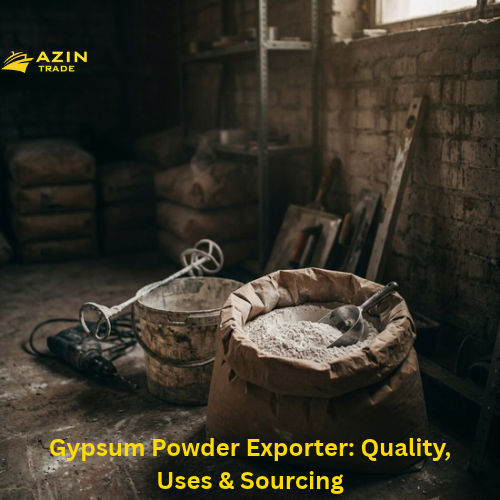
Appropriate packaging helps protect gypsum powder export shipments from moisture, contamination, and handling damage during transportation.
The best option depends on the product, order volume, route, destination facilities, and buyer’s handling requirements.
Bulk Delivery
Bulk delivery may suit large-volume customers with suitable storage, loading, and unloading infrastructure.
Buyers should confirm compatible handling equipment and agree on procedures that protect the cargo from moisture and contamination.
Big Bags
Big bags can provide a practical option for industrial customers purchasing substantial quantities without requiring fully bulk-handling arrangements.
The parties should agree on bag capacity, material, lifting arrangements, liners where required, and handling procedures.
Small Bags
Small bags may suit distributors, construction-material retailers, and customers who need smaller handling units.
Bag weight, strength, labeling, palletization, and moisture protection should match the destination market and distribution method.
Protecting the Product During Transit
Gypsum powder can be affected by unsuitable storage and exposure to moisture. Packaging should therefore match the product’s characteristics and expected transportation conditions.
For containerized cargo, buyers should consider container condition, loading practices, cargo securing, weight limits, and unloading arrangements.
Before confirming an export order, both parties should document the agreed packaging specification.
Bulk Shipping or Containerized Delivery?
No single transportation method suits every gypsum powder export order.
Bulk shipping may offer advantages for large quantities when suitable loading and receiving facilities are available. Containerized delivery can provide greater flexibility for smaller orders or destinations without specialized bulk-handling infrastructure.
When comparing shipping methods, buyers should consider more than the headline freight rate. The overall comparison may include packaging, loading, international freight, port handling, cargo protection, inland transportation, inspection, and destination storage.
The best option is the one that delivers the specified material safely and reliably at a competitive total cost.
Understanding the Total Cost of Imported Gypsum Powder
The purchase price represents only one component of the final cost. Importers should estimate the total landed cost before comparing supplier offers.
Depending on the transaction, the calculation may include:
- Product purchase price.
- Packaging and loading.
- International freight.
- Cargo insurance, where applicable.
- Port handling and unloading.
- Inspection and laboratory testing.
- Customs clearance, duties, and taxes where applicable.
- Inland transportation.
- Storage, financing, and other relevant charges.
The agreed Incoterms® rule determines how certain costs, responsibilities, and risks are allocated between the seller and buyer. Use consistent assumptions when comparing quotations to avoid overlooking costs or counting them twice.
A lower factory price does not automatically produce a lower landed cost. Packaging, freight, handling, and product suitability can materially affect the final commercial result.
Common Mistakes When Sourcing Gypsum Powder
Importers can reduce purchasing risks by addressing several common mistakes before placing an order.
Choosing a Product Based Only on Price
The lowest quotation may not represent the best commercial option if the product fails to meet the required specification.
Compare offers for equivalent grades, quantities, packaging, delivery terms, and quality requirements.
Using Vague Specifications
Terms such as “premium quality” do not establish measurable requirements. Define relevant technical parameters, testing methods, and acceptance limits before confirming the purchase.
Ignoring Moisture and Packaging
Unsuitable packaging or storage can undermine an otherwise acceptable product. Discuss packaging materials, moisture protection, transit conditions, and receiving arrangements before dispatch.
Overlooking Repeat-Order Consistency
A successful initial shipment does not guarantee identical results in later deliveries. Agree on specifications and procedures for reviewing differences between batches.
Failing to Check Destination Requirements
Import rules, documentation, customs procedures, and transportation conditions vary by destination. Verify the applicable requirements before committing to a transaction.
Addressing these issues early helps importers make informed decisions and develop a more dependable supply process.
Sourcing Gypsum Powder from Iran for International Markets
For international buyers, gypsum powder export from Iran should be assessed according to product specifications, destination requirements, shipping costs, and applicable trade regulations.
Iran is a potential sourcing origin for gypsum-based construction and industrial materials. However, the suitability of any offer depends on the specific product, supplier, destination, freight conditions, applicable regulations, and agreed commercial terms.
Importers should evaluate each transaction using verified technical documents and route-specific cost estimates. They should also confirm the relevant trade and compliance requirements before committing to a purchase.
A well-prepared inquiry should state the product type, required specification, target quantity, destination port, packaging preference, delivery basis, and expected shipment schedule.
These details help suppliers assess the request and prepare a relevant commercial offer.
Gypsum Powder Export with AzinTrade
AzinTrade supports international sourcing and export discussions for building materials, including gypsum-based products, cement, clinker, tiles, and other construction materials.
For buyers exploring gypsum powder export, the first step is to connect the required technical specification with practical delivery conditions.
AzinTrade can discuss sourcing requirements based on the buyer’s intended application, requested specification, order volume, destination, and preferred shipping arrangement. Product availability, technical conformity, pricing, and delivery terms should be confirmed for each order.
Visit AzinTrade or contact info@azintrade.com to begin a commercial discussion.
When requesting a quotation, include:
- Product type and intended application.
- Required chemical and physical specifications.
- Target quantity and expected order frequency.
- Destination country and port.
- Packaging preference.
- Preferred delivery basis.
- Inspection and documentation requirements.
- Expected shipment window.
A detailed inquiry helps both parties focus on the product and delivery conditions that matter to the buyer.
Frequently Asked Questions About Gypsum Powder Export
What is gypsum powder export?
Gypsum powder export is the international supply of processed gypsum materials to buyers in construction, cement manufacturing, industrial production, agriculture, and related markets. Product specifications and documentation depend on the intended application and destination.
What types of gypsum powder are available for export?
Common categories include natural ground gypsum powder, calcined gypsum powder, and gypsum plaster. Each has different properties and applications, so buyers should specify the product they need before requesting a quotation.
Which quality parameters should buyers check?
Depending on the application, buyers may need to evaluate chemical composition, moisture content, particle-size distribution, impurities, setting time, water demand, or strength. The required parameters should be agreed upon before shipment.
What packaging options are available for gypsum powder export?
Common options include bulk delivery, big bags, and small bags. The appropriate format depends on order volume, transportation method, destination facilities, product characteristics, and moisture-protection requirements.
How can importers compare gypsum powder suppliers?
Compare offers using the same product specification, quantity, delivery basis, destination, and cost assumptions. Review technical documentation, test results, packaging, inspection procedures, shipment schedules, and contractual terms.
Can gypsum powder be used in cement manufacturing?
Selected gypsum materials are used in cement production to help regulate setting behavior. The appropriate material and quantity depend on the cement formulation and manufacturing process.
What information is needed to request an export quotation?
Provide the product type, technical specification, quantity, destination port, packaging preference, delivery basis, inspection requirements, and expected shipment date. These details help the supplier prepare a relevant offer.
Conclusion: Building a Reliable Gypsum Powder Export Strategy
Gypsum powder is not a single, uniform commodity. Differences in raw material, processing, fineness, moisture, and intended application can influence its suitability and commercial value.
A successful gypsum powder export strategy combines suitable product selection, verified quality, appropriate packaging, and dependable logistics to meet international buyers’ requirements.
For international buyers, the objective is not simply to find the lowest-priced material. It is to source a product that meets the required specification and arrives in a condition suitable for its intended use.
Looking for a gypsum powder sourcing option for your next order? Contact AzinTrade at info@azintrade.com with your product specification, quantity, and destination to begin a focused commercial discussion.