
From Purchase Order to Port of Destination: The Complete Process of Clinker Export from Iran
A Practical Guide to Procurement, Quality Control, Export Documentation, Port Operations, and International Shipping
Clinker export from Iran is not simply a matter of purchasing a bulk construction material and arranging a vessel. It is a coordinated commercial process in which product specifications, supplier verification, contract terms, regulatory compliance, quality inspection, inland transportation, port operations, and international freight must work together.
For cement manufacturers, international traders, importers, and procurement managers, every stage influences the commercial outcome. A competitive quotation means little if the product does not meet the buyer’s technical requirements. A suitable clinker cargo can still face costly delays if export documents are incomplete, the vessel schedule is not coordinated with cargo readiness, or the parties misunderstand their delivery responsibilities.
This guide follows a clinker transaction from the first buyer inquiry to shipment and delivery at the destination. It explains the decisions that matter, the documents buyers should expect, the quality checks that protect the transaction, and the logistical details that can turn a complicated export order into a controlled supply process.
For international buyers considering clinker export from Iran, the objective is straightforward: establish the requirements before purchase, verify the product before shipment, coordinate every party involved, and document each important stage.
1. The Transaction Begins with a Commercial Inquiry
Every successful clinker shipment starts with a clearly defined purchasing requirement.
Before requesting quotations, the buyer should identify the intended use of the clinker, the required quantity, the destination port, the preferred shipment period, and the commercial terms under consideration.
A cement manufacturer may focus on chemical composition, clinker mineralogy, and compatibility with its cement formulation. A trading company may place greater emphasis on supply reliability, shipment size, freight costs, and resale economics. Both require a specification that allows suppliers to prepare comparable offers.
A professional inquiry should include:
- Required quantity in metric tonnes.
- Intended application and technical specification.
- Target destination country and discharge port.
- Preferred shipment window.
- Packaging or bulk-shipping requirements.
- Required inspection and quality documents.
- Preferred Incoterms® rule and named port or place.
- Payment method and documentary requirements.
- Any applicable destination-market compliance conditions.
The more precise the inquiry, the less time the parties spend clarifying basic requirements after negotiations have started.
For clinker export from Iran, buyers should also establish early whether the proposed supplier, transaction structure, shipment route, and payment arrangement can satisfy the applicable legal and operational requirements.
2. Supplier Identification and Verification
After receiving the inquiry, the next task is to identify a supplier capable of meeting the required specification and shipment schedule.
The buyer should distinguish between a manufacturer, an authorized trading company, and an intermediary. Each business model can be commercially valid, but the buyer needs to understand who controls the product, who issues the commercial documents, and who bears responsibility for performance under the contract.
Supplier verification should cover several areas.
Product and production capability
Ask for information about the proposed clinker source, available quantity, typical production characteristics, and the supplier’s ability to meet the required schedule.
Where relevant, request recent technical data and representative laboratory results. Historical data can help with preliminary evaluation, but it should not automatically be treated as proof of the exact cargo to be shipped.
Commercial authority
Confirm that the contracting entity has the authority and practical ability to sell and deliver the agreed cargo. The names and details appearing in the quotation, contract, invoice, and shipping documents should be consistent with the transaction structure.
Shipment readiness
A supplier may have access to clinker without having a fully prepared export shipment. Confirm the expected cargo availability, inland transport arrangements, port handling plan, and any regulatory steps that must be completed before dispatch.
Communication and accountability
Agree on who will manage technical questions, documentation, inspection, logistics, and claims. Clear responsibilities help the parties resolve issues before they affect the vessel schedule.
The purpose of verification is not to collect the largest possible number of documents. It is to establish whether the supplier can deliver the agreed product under the agreed commercial conditions.
3. Defining the Clinker Specification Before Purchase
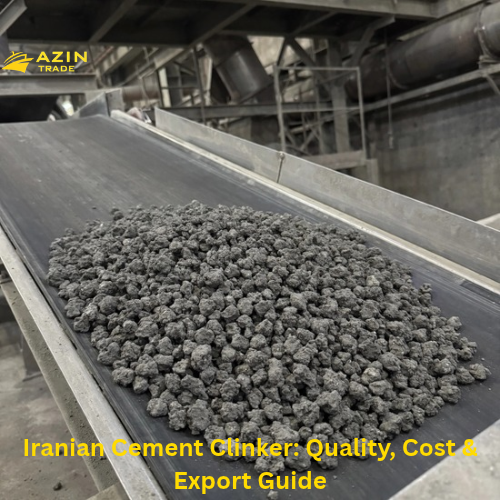
Clinker is an intermediate material produced by heating a raw meal in a cement kiln. Cement manufacturers subsequently grind clinker with appropriate additional constituents to produce cement products.
Although clinker is traded as a bulk commodity, its characteristics can materially affect cement production. Buyers should therefore agree on technical requirements before finalizing the purchase.
Depending on the buyer’s process, the specification may address:
- Calcium oxide (CaO).
- Silicon dioxide (SiO₂).
- Aluminum oxide (Al₂O₃).
- Iron oxide (Fe₂O₃).
- Magnesium oxide (MgO).
- Sulfur-related parameters.
- Loss on ignition (LOI).
- Relevant alkalis and other specified constituents.
- Free lime, where required.
- Clinker mineralogical characteristics or phase composition, where relevant.
- Physical characteristics such as particle-size distribution, where specified.
Not every transaction requires every parameter. The buyer should identify the characteristics that influence its cement formulation, quality targets, environmental requirements, or plant operation.
Why chemistry matters
The chemical composition of clinker influences the phases that form during kiln processing and, consequently, the behavior of the resulting cement. However, no single chemical value is sufficient to describe the complete performance of a clinker shipment.
For example, a buyer may set limits for particular oxides and also request free-lime results or mineralogical information. These requirements should reflect the buyer’s production process and agreed technical acceptance criteria.
Agree on tolerances, not just target values
A specification should distinguish between target values and contractual limits.
The parties should establish the permitted range for each required parameter, the applicable test method, the sampling procedure, and the consequences of a result outside the agreed limits.
This distinction is essential. A statement that clinker should have a particular chemical profile is less useful than a specification that defines how the profile will be measured and accepted.
4. Quotation, Price Calculation, and Commercial Negotiation
Once the specification and destination are clear, the supplier can prepare a commercial offer.
The quotation should state the product description, quantity, price basis, delivery term, shipment period, payment conditions, quotation validity, and relevant quality documentation.
A buyer should not compare two prices until confirming that the offers cover equivalent requirements.
One supplier may quote a price at the loading port, while another may include ocean freight to the destination. A third offer may use a different inspection arrangement or payment schedule. Comparing the headline figures alone can create a misleading impression of value.
Understand the main cost components
The total commercial cost of a clinker shipment may include:
- Product purchase price.
- Inland transportation to the loading port.
- Loading and port-handling charges.
- Sampling, laboratory testing, and inspection.
- Export documentation and customs-related charges.
- Vessel freight and applicable surcharges.
- Cargo insurance, where arranged.
- Destination discharge and handling.
- Other applicable duties, taxes, financing, or administrative costs.
The actual allocation depends on the transaction structure and agreed delivery term.
A practical comparison should use a consistent destination, quantity, shipment period, specification, and cost basis. Buyers should also assess whether the quoted schedule is realistic and whether the supplier can meet the required cargo readiness date.
5. Contract Negotiation: Turning an Offer into an Executable Order
The sales contract connects the commercial agreement to the physical shipment. It should describe not only what is being sold, but also how the parties will measure performance and resolve discrepancies.
A well-structured clinker sales contract typically addresses:
- Buyer and seller identification.
- Product description and technical specification.
- Contract quantity and any agreed quantity tolerance.
- Price and currency.
- Applicable Incoterms® rule, version, and named place or port.
- Shipment window and delivery arrangements.
- Payment terms and required documents.
- Sampling, testing, and inspection procedures.
- Quality claims and dispute-resolution mechanisms.
- Responsibilities for export and import formalities.
- Applicable law and other agreed contractual provisions.
Payment terms and documentary consistency
The parties should confirm the payment method before committing to the shipment. Where payment depends on documents, those requirements should be checked against the contract and the actual shipping arrangements.
A documentary discrepancy can delay payment even when the cargo itself is ready. For this reason, the commercial, banking, and shipping requirements should be coordinated before the vessel sails.
6. Regulatory Readiness: Confirming the Rules Before Dispatch
Export readiness is a separate milestone from commercial agreement.
A signed contract does not automatically mean that the cargo can be dispatched or cleared for export. The exporter must confirm the rules that apply to the specific product, tariff classification, transaction date, export structure, and destination.
For clinker export from Iran, this review should take place before the parties commit to an irreversible shipping schedule.
The exporter and its customs or trade advisers should verify, as applicable:
- The correct customs tariff classification.
- Current export permissions and restrictions.
- Any required purchase approvals or exchange-related procedures.
- Export valuation and pricing requirements.
- Currency-repatriation obligations.
- Customs declaration requirements.
- Required commercial and transport documents.
- Destination-country import requirements.
- Applicable sanctions, banking, and shipping restrictions.
Why current verification matters
Iranian rules affecting cement and clinker exports have been the subject of official notices and clarifications. For example, notices published in 2025 discussed export-ring purchase approvals and related customs procedures for specified cement and clinker tariff codes. These notices illustrate why exporters should verify the rules currently in force rather than relying on an old checklist. <Cite refs={[“turn864329view0″,”turn864329view1”]}/>
The requirements applicable to an individual transaction must be confirmed with the relevant Iranian authorities or qualified advisers before shipment. Historical notices should not be treated as proof that a particular procedure remains unchanged today.
A useful operational rule is to make regulatory confirmation a documented pre-shipment milestone, not a last-minute administrative task.
7. Pre-Shipment Quality Control: Proving What Will Be Delivered
Once the product specification and commercial terms are agreed, the buyer and seller should establish how the actual cargo will be checked.
Quality documentation can include a technical data sheet, representative laboratory results, a Certificate of Analysis (CoA), and an agreed inspection report. The documents required depend on the contract and the buyer’s quality-assurance system.
Establish the sampling method
Sampling is important because a laboratory can only evaluate the material represented by the sample it receives.
The parties should agree on where samples will be collected, how representative increments will be combined, how samples will be handled, and how reference samples will be retained where appropriate.
For bulk cargo, the sampling plan should account for the nature of the material and the loading or inspection arrangement.
Identify the responsible laboratory
The contract may identify an agreed laboratory or provide for independent inspection. The parties should define which test methods apply and how results will be reported.
If a dispute arises, the contract should state how a second test or referee sample will be handled.
Separate typical results from shipment results
Historical or typical values help buyers evaluate a supplier, but they do not necessarily describe the cargo being loaded.
Where the contract requires shipment-specific evidence, the relevant report should identify the tested sample or lot and the parameters covered by the analysis.
Agree on acceptance and claims
The parties should define what happens if a result falls outside the agreed limits. Possible contractual approaches include further testing, rejection of a lot, an agreed price adjustment, or another remedy negotiated by the parties.
The appropriate mechanism depends on the contract, applicable law, and commercial arrangement. It should be agreed before the shipment, rather than improvised after a discrepancy appears.
8. Inland Transportation and Cargo Preparation
After the required commercial and regulatory checks are complete, the exporter coordinates the movement of the clinker to the designated loading port or terminal.
Depending on the source, route, infrastructure, and commercial arrangement, inland transportation may involve road, rail, or a combination of transport modes.
The logistics plan should connect cargo availability with the port’s receiving arrangements and the vessel’s expected schedule.
Match cargo readiness to vessel readiness
Cargo preparation and vessel scheduling are interdependent. If the cargo reaches the port too early, the parties may face additional storage or handling costs. If it arrives too late, the vessel may wait or the shipment may need to be rescheduled.
The exporter, transporter, terminal, shipping agent, and buyer should agree on a realistic sequence for dispatch, port receipt, inspection, and loading.
Protect cargo identity and documentation
The records accompanying the cargo should match the contract and the export documentation. The parties should verify the product description, quantity records, relevant lot information, and other required details before loading begins.
A coordinated process helps prevent avoidable discrepancies between the physical shipment and its documents.
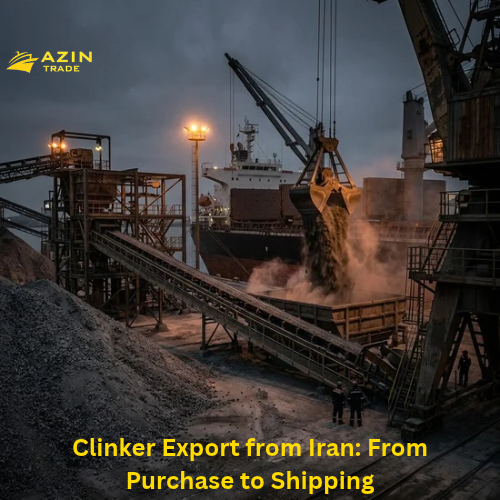
9. Port Operations: Where the Export Plan Meets the Vessel
Port operations are a critical part of bulk clinker export. The precise workflow depends on the port, terminal equipment, vessel type, cargo-handling system, and local operating procedures.
The exporter and its logistics partners should confirm that the planned cargo and vessel can be handled under the agreed arrangements.
Terminal and vessel coordination
Before loading, the responsible parties should confirm the loading window, cargo quantity, vessel readiness, terminal access, loading method, and required operational documents.
The plan should also address the handling equipment and any operational restrictions that may affect the loading rate.
Cargo quantity and loading records
The parties should agree on the method used to determine the shipped quantity. Depending on the arrangement, relevant records may include terminal measurements, weighbridge records where applicable, draft-survey results, or other agreed evidence.
The contract should make clear which quantity evidence governs invoicing and any agreed tolerance.
Loading supervision
During loading, the responsible teams monitor operations, cargo records, and any issues that could affect the schedule or the condition of the cargo.
If the agreed inspection requires observations or sampling during loading, those activities should be coordinated with the terminal and inspection provider.
Final reconciliation
Before closing the shipment file, the exporter should reconcile the quantity loaded, inspection records, shipping documents, and contractual requirements.
This step helps ensure that the records used for payment, customs, and delivery describe the same transaction.
10. Shipping Documents: Connecting the Cargo to the Contract
Shipping documents establish the commercial and logistical record of the transaction. Their exact form depends on the contract, transport arrangement, destination, and applicable requirements.
Common documents for a bulk clinker export may include:
| Document | Main purpose |
|---|---|
| Commercial invoice | Records the seller’s commercial claim for the goods |
| Packing list or cargo statement, where applicable | Provides shipment details in the format required for the transaction |
| Certificate of Analysis | Reports specified technical test results |
| Inspection report, where agreed | Records the inspection scope and findings |
| Certificate of origin, where required | Documents origin information under the applicable procedure |
| Customs export declaration | Records the export declaration submitted to the relevant authority |
| Bill of lading | Serves as a key sea-transport document under the applicable carriage arrangement |
| Cargo insurance document, where arranged | Records the agreed insurance coverage |
Not every transaction requires every document in the same form. The buyer should confirm the destination’s documentary requirements and any payment-related conditions before shipment.
Check the details before document issuance
Names, product descriptions, quantities, dates, ports, and contractual references should be consistent across the relevant documents.
If the buyer uses a letter of credit or another documentary payment arrangement, the documents should be reviewed against its exact terms.
A document checklist agreed before loading is generally more efficient than correcting discrepancies after the vessel has departed.
11. Vessel Departure and International Transit
Once loading is completed and the required procedures have been satisfied, the vessel can proceed according to its voyage plan.
At this stage, the parties should coordinate the issuance and distribution of the agreed transport documents, confirm shipment details, and communicate the expected arrival information to the destination-side team.
The exporter or shipping party should retain the records needed to demonstrate contractual performance and respond to reasonable document requests.
Freight and insurance are not the same as risk transfer
One important distinction in international trade is the difference between paying for transport and bearing the risk of loss or damage.
Under the maritime Incoterms® rules FOB, CFR, and CIF, delivery and risk transfer generally occur when the goods are placed on board the vessel at the agreed port of shipment, subject to the specific rule and contract. Under CFR and CIF, the seller also arranges and pays for carriage to the named destination; under CIF, the seller additionally arranges the required cargo insurance. <Cite refs={[“turn767923search2″,”turn864329view2”]}/>
Consequently, a seller who pays ocean freight under CFR or CIF does not necessarily retain transit risk until the cargo reaches the destination.
The buyer and seller should understand the selected rule, its insurance requirements, and any additional coverage they may wish to arrange.
12. Destination Arrival, Discharge, and Cargo Receipt
The export process continues after the vessel reaches the destination port. The buyer or its appointed representative must coordinate the import-side procedures and cargo-receiving arrangements.
Depending on the transaction, this may include customs clearance, submission of required documents, payment of applicable charges, terminal coordination, and discharge planning.
Prepare before the vessel arrives
The importer should review the shipping documents and destination requirements before arrival. Any missing documents or unresolved compliance questions should be addressed as early as possible.
The destination team should also confirm that the receiving facility can handle the cargo and that onward transportation or storage has been arranged where necessary.
Verify the received quantity
The parties should follow the agreed method for determining the quantity received. If the contract provides for quantity reconciliation or a defined claims process, the importer should retain the supporting records.
Any discrepancy should be documented promptly and handled according to the contract.
Close the transaction properly
After receipt, the buyer and seller should reconcile outstanding documents, quantity records, payment obligations, and any agreed quality or delivery claims.
A well-managed closing process creates a reliable record for future orders and helps both parties identify opportunities to improve subsequent shipments.
13. The Commercial Risks That Can Disrupt a Clinker Shipment
Many export problems originate before the cargo reaches the port. Identifying risks early allows the parties to allocate responsibilities and prepare appropriate controls.
Risk 1: An incomplete specification
Potential consequence: Disagreement over product suitability or acceptance.
Preventive action: Define the required parameters, test methods, limits, and claims process before signing the contract.
Risk 2: An unverified supplier or transaction structure
Potential consequence: Unclear accountability, uncertain cargo availability, or documentary inconsistencies.
Preventive action: Verify the contracting party, product access, delivery capability, and responsibilities of all relevant entities.
Risk 3: Unconfirmed regulatory requirements
Potential consequence: Delayed dispatch, customs problems, or inability to complete the planned export procedure.
Preventive action: Confirm current requirements for the exact product, transaction, and shipment before dispatch.
Risk 4: A mismatch between cargo and vessel schedules
Potential consequence: Additional storage, waiting time, rescheduling, or other avoidable costs.
Preventive action: Coordinate cargo readiness, inland transport, terminal acceptance, and vessel arrangements through a shared schedule.
Risk 5: Documentary discrepancies
Potential consequence: Payment delays, customs queries, or difficulties establishing shipment details.
Preventive action: Use an agreed document checklist and review the required information before the documents are issued.
Risk 6: Misunderstood delivery and insurance responsibilities
Potential consequence: Unclear responsibility for freight costs, transit risks, or insurance gaps.
Preventive action: Specify the applicable Incoterms® rule, named port, version, and any additional contractual arrangements.
14. A Practical Clinker Export Timeline
A shipment should be managed through defined milestones rather than a collection of unrelated tasks.
The sequence below is a planning framework. Actual duration depends on the cargo source, approvals, contract terms, inspection requirements, port capacity, vessel availability, route, and destination procedures.
Stage 1 — Inquiry and specification: The buyer defines the quantity, technical requirements, destination, and target shipment period.
Stage 2 — Supplier and quotation review: The parties assess the proposed supply, technical information, price basis, delivery terms, and shipment feasibility.
Stage 3 — Contract and compliance confirmation: They finalize the commercial agreement and verify the applicable regulatory requirements.
Stage 4 — Cargo preparation and inspection: The supplier prepares the material, and the agreed quality and quantity checks are completed.
Stage 5 — Inland transport and port coordination: The cargo is moved according to the agreed schedule and accepted under the port’s operating procedures.
Stage 6 — Loading and document reconciliation: The cargo is loaded, quantity records are confirmed, and the required shipping documents are issued or finalized.
Stage 7 — International transit and destination preparation: The parties coordinate shipment information, documentation, insurance arrangements where applicable, and receiving plans.
Stage 8 — Discharge, receipt, and closeout: The buyer completes the applicable destination procedures, receives the cargo, and resolves any outstanding contractual matters.
The value of this timeline lies in the dependencies between stages. A vessel booking cannot replace regulatory clearance, and a completed quality report cannot resolve a contract that lacks agreed acceptance criteria.
15. How AzinTrade Can Support an International Clinker Inquiry
AzinTrade works with international building-material sourcing and export inquiries. For buyers exploring clinker export from Iran, the first step is to define the requirement clearly enough to evaluate the technical, commercial, and logistical conditions of a potential transaction.
An initial inquiry should identify:
- Required clinker quantity in metric tonnes.
- Intended application and technical specification.
- Destination country and discharge port.
- Preferred shipment period.
- Required inspection and documentation.
- Proposed delivery term.
- Payment and other essential commercial requirements.
These details provide a basis for discussing product suitability, supplier arrangements, documentation, and shipping options. Availability, technical conformity, pricing, delivery schedules, and regulatory feasibility must be confirmed for the specific order.
To begin a commercial discussion, visit AzinTrade or contact info@azintrade.com.
Frequently Asked Questions About Clinker Export from Iran
What is the first step in exporting clinker from Iran?
The process begins with a defined buyer inquiry that specifies quantity, technical requirements, destination, shipment timing, and commercial terms. The parties then evaluate supply capability, pricing, compliance, and shipment feasibility.
Which technical parameters should a clinker buyer request?
The relevant parameters depend on the buyer’s cement production process. Commonly considered properties include major oxide composition, loss on ignition, free lime, and other agreed chemical or mineralogical characteristics. The contract should identify the applicable test methods and acceptance limits.
What documents are commonly used in a clinker export shipment?
Depending on the transaction, documents may include a commercial invoice, customs export declaration, Certificate of Analysis, inspection report, certificate of origin where required, and bill of lading. The exact document set should be confirmed against the contract, payment conditions, and destination requirements.
How is clinker shipped internationally?
Clinker is commonly handled as bulk cargo, subject to the available loading facilities, vessel arrangements, destination infrastructure, and commercial terms. The exporter and buyer should coordinate cargo preparation, port handling, vessel scheduling, and destination discharge.
What is the difference between FOB, CFR, and CIF?
Under FOB, the seller delivers the goods on board the nominated vessel at the named port of shipment, and the buyer generally arranges the main carriage. Under CFR, the seller arranges and pays for freight to the named destination port. Under CIF, the seller also arranges the required cargo insurance. Under both CFR and CIF, the risk generally transfers when the goods are loaded on board at the shipment port, rather than when they arrive at the destination.
Why is pre-shipment inspection important?
Inspection helps establish whether the cargo meets the agreed quality and quantity requirements. Its value depends on the sampling method, test procedures, scope of inspection, and contractual acceptance criteria.
Do Iranian clinker export requirements change?
Export requirements can change, and the applicable procedure depends on the product classification, transaction, and rules in force at the time of shipment. Exporters should verify current requirements with the relevant authorities and qualified advisers before committing to dispatch.
How can buyers reduce delays in clinker export?
Buyers can reduce avoidable delays by agreeing on the specification and contract early, verifying regulatory requirements, coordinating cargo readiness with vessel schedules, and checking the documentary requirements before loading.
Conclusion: A Successful Clinker Shipment Is Built Before Loading
The journey from purchase order to destination port involves much more than the physical movement of clinker. It depends on a chain of connected decisions covering technical specifications, supplier verification, commercial negotiation, regulatory readiness, inspection, transportation, port operations, shipping documents, and destination arrangements.
For buyers considering clinker export from Iran, the strongest approach is to make each stage measurable and accountable. Define the product before purchasing it. Agree on how quality and quantity will be verified. Confirm the rules before dispatch. Coordinate cargo readiness with vessel operations. Ensure the documents reflect the actual transaction.
When these elements align, buyers and sellers have a clearer basis for managing costs, reducing uncertainty, and building repeatable supply relationships.
Planning a clinker procurement or export inquiry? Contact AzinTrade at info@azintrade.com with your required quantity, specification, destination port, and target shipment period to begin a focused commercial discussion.