
Iranian Cement Clinker: The Hidden Factors Behind Quality, Grinding Performance, and Export Value
Iranian cement clinker offers international cement producers an opportunity to source a key raw material for Portland cement manufacturing. However, experienced buyers know that purchasing clinker involves much more than comparing prices per metric ton. Its chemical composition, mineral phases, burn quality, grindability, storage conditions, and compatibility with the receiving plant can all influence the final cost of cement production.
For importers, cement manufacturers, grinding plants, and international commodity traders, the real question is not simply how much clinker costs at the loading port. The more important question is how efficiently that clinker can be converted into consistent, specification-compliant cement at the destination.
This guide examines Iranian cement clinker from a commercial and technical perspective, helping buyers evaluate quality, compare suppliers, manage logistics, and make better sourcing decisions. It also explains how a structured procurement process can reduce uncertainty when purchasing clinker for international markets.
What Is Cement Clinker, and Why Does It Matter to Buyers?
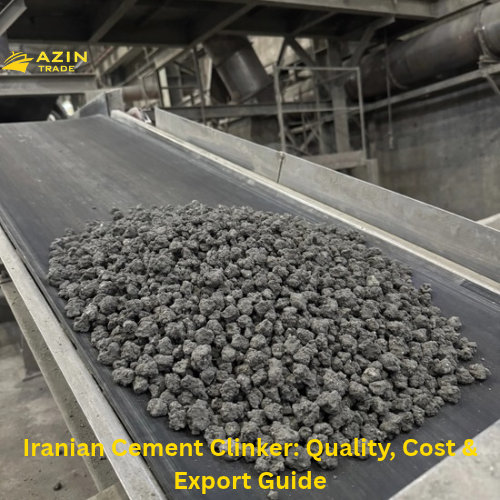
Cement clinker is a nodular material produced by heating a carefully prepared mixture of limestone and other raw materials in a cement kiln. During this process, chemical reactions create mineral phases that later contribute to the strength development and performance of Portland cement.
After cooling, manufacturers grind clinker with gypsum and, where appropriate, other permitted constituents to produce cement.
Although clinker may look similar across different suppliers, its performance can vary significantly. Two shipments with comparable appearances may behave differently during grinding or produce cement with different setting characteristics and strength development.
For commercial buyers, clinker quality is therefore a combination of chemical composition, mineralogy, physical properties, consistency, and suitability for the intended cement product.
Why Iranian Cement Clinker Deserves Attention in International Trade
Iran has an established cement manufacturing industry and access to major mineral resources used in cement production. Its regional position can also make Iranian suppliers worth evaluating for buyers serving nearby markets and other destinations where the freight economics are competitive.
However, the suitability of Iranian cement clinker depends on the specific producer, product specification, available quantity, shipping route, destination requirements, and commercial terms.
Importers should assess each offer on its own merits rather than assuming that every producer or shipment from the same country offers identical quality or cost advantages.
1. Access to a Major Industrial Commodity
Clinker is an essential input for cement grinding plants that do not operate their own kilns or need additional material to maintain production. Reliable access to suitable clinker can help these plants manage capacity, production schedules, and supply fluctuations.
2. Regional Sourcing Opportunities
Depending on the destination, Iranian clinker may be worth comparing with material from other established exporting countries. Buyers should evaluate actual freight quotations, port infrastructure, import regulations, payment arrangements, and delivery schedules before deciding which origin provides the best commercial outcome.
3. Flexible Procurement Strategies
A buyer may prioritize consistent chemistry, competitive freight, reliable monthly volumes, or compatibility with an existing grinding system. Defining these priorities before requesting quotations helps suppliers submit more relevant offers and makes comparisons more meaningful.
Cement Clinker Chemistry: What Importers Should Examine
Chemical analysis is one of the first tools used to evaluate clinker. Nevertheless, no single chemical value can establish overall quality. Buyers should review the complete analysis alongside the intended cement application, applicable standards, and the receiving plant’s operating conditions.
| Parameter | Why It Matters |
|---|---|
| Calcium oxide (CaO) | A major component of clinker and a key input in evaluating its chemical balance |
| Silicon dioxide (SiO₂) | Contributes to the formation of calcium silicate phases associated with cement strength |
| Aluminium oxide (Al₂O₃) | Influences clinker mineral composition and sulfate requirements |
| Iron oxide (Fe₂O₃) | Participates in clinker formation and affects the mineral balance |
| Magnesium oxide (MgO) | Requires attention because excessive levels may affect soundness, depending on its form and the applicable requirements |
| Sulfur trioxide (SO₃) | Helps buyers assess sulfur-related chemistry and compatibility with the intended cement formulation |
| Free lime | Provides useful information about kiln burning and the completeness of clinker reactions |
| Loss on ignition (LOI) | Can help identify changes associated with storage, carbonation, or other material characteristics |
Why Free Lime Deserves Special Attention
Free lime is the portion of calcium oxide that remains uncombined in the clinker. Its value can help indicate whether the kiln process achieved the intended degree of combination, but it should not be interpreted in isolation.
An elevated result may indicate incomplete combination or process instability. Very low free lime, however, does not automatically prove superior quality; burning conditions and clinker microstructure also influence performance.
Buyers should establish an acceptable range based on the supplier’s product, the receiving plant’s experience, and the agreed specification.
Understanding C₃S, C₂S, C₃A, and C₄AF
Clinker contains several important mineral phases:
- C₃S — Tricalcium silicate: Generally contributes strongly to early strength development.
- C₂S — Dicalcium silicate: Generally contributes more gradually to strength development.
- C₃A — Tricalcium aluminate: Influences early hydration behavior and sulfate demand.
- C₄AF — Tetracalcium aluminoferrite: Participates in clinker chemistry and influences properties such as color.
These phases are often estimated from chemical analysis using calculation methods. Such calculated values should not automatically be treated as direct measurements of actual mineral composition. When the application requires greater certainty, buyers may request appropriate mineralogical testing.
For further technical background on cement chemistry and standards, consult the International Organization for Standardization (ISO) and relevant cement-testing documentation.
The Most Overlooked Factor: How Clinker Behaves in the Grinding Mill
A clinker shipment can satisfy agreed chemical limits and still create operational challenges if it does not perform well in the buyer’s grinding system.
Grindability affects the energy and time needed to reach the required cement fineness. It can influence mill output, power consumption, production planning, and the cost of manufacturing each metric ton of cement.
Grinding performance depends on several interacting factors, including:
- Clinker mineral composition and microstructure.
- Burning and cooling conditions.
- Nodule size distribution and material handling.
- Grinding equipment and operating settings.
- Gypsum dosage and the final fineness target.
- The cement type and strength requirements.
This is why a chemical certificate alone cannot fully predict production performance.
A Practical Test Before a Large Purchase
Where possible, a buyer should evaluate a representative sample under conditions relevant to the receiving plant. A controlled trial can help compare grinding behavior, cement fineness, setting characteristics, and strength results against an established reference material.
A laboratory result is valuable, but a properly designed plant trial may reveal practical differences that are not obvious from a chemical table.
The exact testing program should be agreed upon by the buyer’s technical team and the supplier before commercial acceptance.
How to Evaluate Iranian Cement Clinker Quality Before Shipment
A reliable procurement process starts with a clear specification and continues through sampling, testing, loading, and document verification.
Step 1: Define the Intended Application
Before requesting a quotation, specify the cement products the clinker will be used to manufacture. General-purpose Portland cement and specialized cement products may require different chemical or performance characteristics.
The receiving plant should identify its technical requirements rather than relying on a generic description such as “high-quality clinker.”
Step 2: Request a Representative Certificate of Analysis
Ask the supplier for a recent Certificate of Analysis (CoA) or equivalent quality documentation. The report should identify the tested material and include relevant chemical and, where agreed, physical or mineralogical results.
Confirm whether the document represents a typical production result, a specific batch, or the actual cargo offered for shipment.
Step 3: Agree on Sampling and Inspection
The purchase contract should establish how samples will be collected, prepared, sealed, tested, and retained. If independent inspection is required, agree on the inspection company, sampling location, test methods, acceptance limits, and procedures for resolving discrepancies.
Independent inspection and laboratory services are available from organizations such as SGS, which provides testing and inspection services for cementitious commodities.
Step 4: Define Acceptance Criteria in the Contract
A useful specification identifies the required parameters, agreed limits, applicable test methods, reporting basis, and the consequences of nonconformity.
Avoid relying on vague phrases such as “premium quality” or “international standard.” A clear, measurable specification is more useful to both parties.
Step 5: Connect Quality Approval to Loading
Where commercially practical, align shipment authorization with the agreed quality and inspection process. The contract should explain what happens if the material falls outside specification, including any retesting, rejection, or other agreed remedies.
This approach reduces the risk of discovering a costly quality dispute after the cargo has reached its destination.
Iranian Cement Clinker Export: From Supplier Selection to Delivery
International clinker procurement involves several connected decisions. A competitive offer is only useful when the supplier, product, shipping arrangements, and documentation match the buyer’s requirements.
Commercial Details to Confirm
Before finalizing an order, buyers should confirm:
- Product description and agreed specification.
- Available quantity and shipment tolerance.
- Loading location and delivery destination.
- Loading schedule and estimated transit time.
- Incoterms® rule and the named port or place.
- Inspection arrangements and responsibility for costs.
- Payment method and required documents.
- Applicable import permits, customs requirements, and trade restrictions.
The appropriate documentation and compliance process depends on the countries, parties, banks, ports, and transport arrangements involved. Buyers should verify current requirements before committing to a shipment.
Bulk Cargo or Containerized Shipment?
The right shipping method depends on shipment size, destination infrastructure, handling capability, and total logistics cost.
Bulk shipping may suit large-volume buyers with suitable port facilities, storage capacity, and unloading equipment.
Containerized shipment may be useful for smaller lots or destinations where bulk handling is unavailable, although packaging, container availability, handling, and freight can change the economics.
Neither option is automatically the cheapest. Buyers should compare the complete logistics cost for the specific route and quantity.
The True Cost of Imported Clinker: Look Beyond the FOB Price
One of the most common procurement mistakes is selecting a supplier solely because its quoted FOB price is the lowest.
A more useful comparison estimates the cost of receiving usable clinker at the destination and converting it into cement that meets the required specification.
A simplified landed-cost calculation is:
Landed cost per metric ton =
- Purchase price.
- Ocean or other freight.
- Insurance, where applicable.
- Port handling and unloading.
- Inspection and testing.
- Customs duties, taxes, and clearance charges, where applicable.
- Inland transportation.
- Financing, storage, and other relevant costs.
The calculation must reflect the agreed Incoterms® rule to avoid counting costs twice or omitting costs that the buyer must pay.
An Illustrative Comparison
Consider two hypothetical offers for the same destination. These figures are examples only and do not represent current Iranian market quotations.
| Cost Component | Supplier A | Supplier B |
|---|---|---|
| Clinker purchase price | $42/t | $44/t |
| Freight and insurance | $12/t | $9/t |
| Port and handling costs | $4/t | $4/t |
| Estimated landed cost | $58/t | $57/t |
In this example, Supplier B has a higher purchase price but a lower estimated landed cost.
The comparison should go one step further. If one clinker requires more grinding energy, reduces mill output, or creates more production variability, its effective cost per ton of acceptable cement may be higher even when its landed cost is lower.
The commercial objective is not to buy the cheapest clinker. It is to secure suitable clinker at the most competitive total operating cost.
Storage and Handling: Protecting the Value of Clinker
Clinker is generally less sensitive to moisture than finished cement, but it is not immune to deterioration. Prolonged exposure to moisture can promote surface hydration and other changes that may affect subsequent processing.
Good handling practices include:
- Keeping stockpiles protected from excessive moisture.
- Avoiding contact with standing water and wet ground.
- Preventing unnecessary contamination during loading and storage.
- Managing dust and material loss during transfer.
- Using suitable stockpile management and inventory rotation.
- Checking for unusual agglomeration or changes in material condition.
Storage conditions should match the site’s climate, infrastructure, and expected holding period. Buyers should also account for any material-handling requirements at the destination terminal or grinding plant.
How to Compare Clinker Suppliers Without Relying on Marketing Claims
A supplier’s sales description is not a substitute for technical evidence and commercial verification.
Before placing a substantial order, evaluate suppliers against consistent criteria.
| Evaluation Area | Questions to Ask |
|---|---|
| Quality | Can the supplier provide relevant, traceable test results? |
| Consistency | Is there evidence that quality remains within the agreed limits across shipments? |
| Production capacity | Can the supplier meet the required volume and schedule? |
| Inspection | Can sampling and independent testing be arranged under agreed conditions? |
| Logistics | Are loading arrangements and delivery estimates realistic for the route? |
| Documentation | Can the supplier provide the documents required by the buyer and destination? |
| Commercial terms | Are price, payment, responsibilities, and remedies clearly defined? |
| Compliance | Have the parties verified applicable trade restrictions and legal requirements? |
A supplier that communicates clearly about specifications, limitations, and shipment procedures may offer a more dependable purchasing experience than one that makes broad promises without supporting documentation.
Why Clinker Consistency Matters More Than a Single Attractive Test Result
Cement plants typically operate within defined production targets. Sudden changes in incoming clinker can require adjustments to grinding conditions, gypsum addition, blending, or quality-control procedures.
For this reason, buyers should distinguish between one acceptable shipment and a supply relationship that consistently meets requirements.
When purchasing repeatedly, consider requesting historical quality data where available, agreeing on a consistent specification, and documenting the procedure for reviewing changes between batches.
The buyer’s technical team should decide which parameters require routine monitoring and which variations are acceptable for the intended product.
This approach can help reduce unexpected adjustments and support more predictable production planning.
Iranian Cement Clinker for International Buyers: A Practical Sourcing Strategy
For importers and grinding plants considering Iranian cement clinker, a disciplined sourcing process can make negotiations more efficient.
Start by defining the required quantity, target destination, preferred delivery basis, technical specification, and expected shipment schedule. Then compare qualified offers using the same assumptions.
Request relevant quality documents, clarify inspection requirements, and evaluate freight and handling costs alongside the purchase price. Before signing, confirm that the proposed transaction complies with all applicable trade, customs, banking, and transportation requirements.
Where the order is significant, consider a sample evaluation or an initial shipment before committing to a longer-term supply arrangement.
A structured process helps buyers avoid comparing offers that look similar commercially but differ materially in quality, delivery conditions, or risk.
Sourcing Support from AzinTrade
AzinTrade works in the building-materials supply and export sector, connecting international buyers with sourcing opportunities for products such as cement, clinker, gypsum, tiles, and other construction materials.
For buyers evaluating Iranian cement clinker, the most useful starting point is a clear purchasing brief that identifies the intended application, technical requirements, destination, quantity, and preferred shipping terms.
This information allows a quotation to be evaluated against the buyer’s actual needs rather than against a headline price alone.
To discuss your requirements, visit AzinTrade or contact info@azintrade.com.
When requesting an offer, include:
- Required clinker specification or reference standard.
- Target quantity and expected purchasing frequency.
- Destination port and country.
- Preferred delivery basis, such as FOB, CFR, or CIF where applicable.
- Required inspection and documentation.
- Expected shipment window.
Final availability, technical conformity, price, and delivery terms should be confirmed for each transaction.
Frequently Asked Questions About Iranian Cement Clinker
1. What is Iranian cement clinker used for?
Iranian cement clinker can be used as a principal feed material for manufacturing Portland cement. The finished cement’s properties depend on clinker characteristics, grinding conditions, gypsum addition, other permitted constituents, and the applicable product specification.
2. How can buyers assess the quality of Iranian cement clinker?
Buyers should review a relevant Certificate of Analysis, agree on sampling and testing procedures, examine important chemical parameters, and consider physical or mineralogical tests when needed. Acceptance should be based on a written specification rather than appearance alone.
3. Is a lower free-lime value always better?
No. Free lime is a useful indicator of clinker burning conditions, but it should be evaluated alongside other chemical and physical information. An acceptable range depends on the product specification and the buyer’s technical requirements.
4. Does chemical composition alone determine clinker performance?
No. Chemical composition is important, but mineralogy, microstructure, grindability, cooling history, storage conditions, and the receiving plant’s grinding system also influence performance.
5. What determines the export price of Iranian cement clinker?
Price depends on the supplier’s offer, quality specification, order volume, loading arrangements, freight, insurance where applicable, destination costs, payment terms, and market conditions. Buyers should compare offers using the same delivery basis and cost assumptions.
6. Should clinker buyers arrange independent inspection?
Independent inspection can help verify quantity, sampling, loading conditions, and agreed quality parameters. Its scope should be defined in the contract, including test methods, acceptance criteria, and the procedure for handling disputed results.
7. Is bulk shipping always the best option for clinker?
No. Bulk shipping may be economical for large volumes when suitable infrastructure is available. Containerized transport may suit smaller orders or destinations without bulk-handling facilities. The best option depends on the route, quantity, equipment, and complete logistics cost.
8. What should an importer include in a clinker inquiry?
An importer should provide the required specification, quantity, destination port, preferred delivery terms, shipment schedule, inspection requirements, and documentation needs. A detailed inquiry helps suppliers prepare a more relevant commercial offer.
Conclusion: Buy Clinker for Performance, Not Just Price
Iranian cement clinker can be a sourcing option for international cement manufacturers and traders, but successful procurement requires more than finding an attractive quotation.
Chemical analysis, mineral composition, grinding performance, consistency, storage, logistics, and contract clarity all contribute to the value of a shipment. Buyers who evaluate these factors together are better positioned to compare suppliers and control purchasing risks.
For importers seeking to evaluate Iranian cement clinker, a specification-led sourcing process provides a practical foundation for informed negotiations and more reliable supply planning.
Looking for a clinker sourcing option for your next shipment? Contact AzinTrade at info@azintrade.com with your technical specification, target quantity, and destination to begin a focused commercial discussion.