
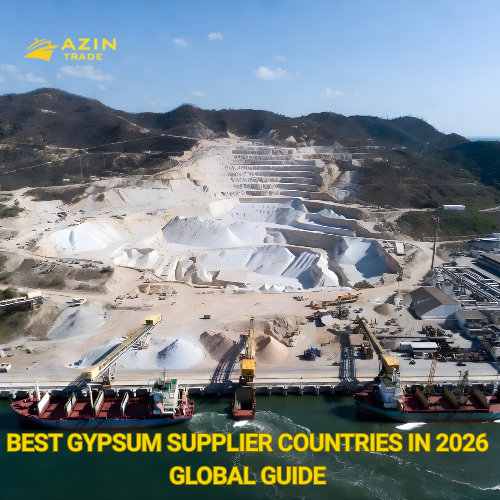
Best Gypsum Supplier Countries in 2026: A Global Sourcing & Market Guide
Introduction: Why Choosing the Right Gypsum Supplier Matters in 2026
Gypsum is one of the most widely used industrial minerals in the world, playing a critical role in construction, cement production, agriculture, and various industrial applications. As global infrastructure projects expand and sustainability standards tighten, the demand for reliable and high-quality gypsum supply continues to grow.
In 2026, choosing the right gypsum supplier is no longer just about price. Buyers, manufacturers, and project developers are increasingly focused on supply stability, material consistency, export reliability, and long-term availability. Understanding which countries lead the global gypsum supply market helps decision-makers reduce risk and improve sourcing strategies.
This article provides an updated, informational overview of the best gypsum supplier countries in 2026, based on production capacity, gypsum quality, export performance, and global market relevance.
What Is Gypsum and Why Is Supplier Quality Important?
Gypsum is a naturally occurring mineral composed of calcium sulfate dihydrate (CaSO₄·2H₂O). Its properties make it essential for:
-
Cement and concrete production
-
Plaster, drywall, and gypsum boards
-
Soil conditioning and agriculture
-
Medical and industrial applications
The quality of gypsum supplied by a country depends on several factors:
-
Purity level and mineral composition
-
Presence of impurities such as clay, silica, or limestone
-
Consistency of deposits
-
Mining and processing standards
A reliable gypsum supplier ensures consistent quality, predictable logistics, and compliance with international standards—factors that are increasingly critical in global trade.
Key Criteria for Evaluating Gypsum Supplier Countries
Not all gypsum-producing countries offer the same advantages. In this guide, gypsum supplier countries are evaluated based on:
-
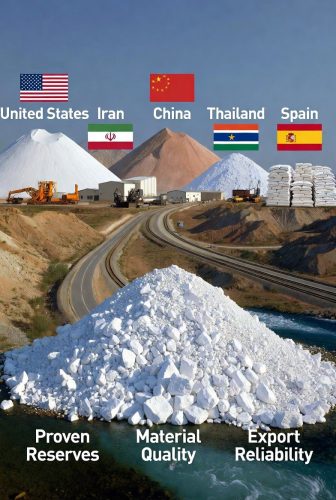
Proven gypsum reserves
-
Average material purity
-
Export volume and reliability
-
Mining technology and processing capability
-
Infrastructure and logistics access
-
Reputation in the global gypsum supply market
United States: High-Quality and Technologically Advanced Gypsum Supplier
The United States remains one of the most established gypsum supplier countries in the world. With extensive deposits across states such as Oklahoma, Texas, Nevada, and Iowa, the U.S. combines large-scale production with advanced mining and processing technology.
Key strengths of the U.S. gypsum supply:
-
High and consistent gypsum purity
-
Strong quality control and regulatory standards
-
Advanced processing suitable for industrial applications
-
Reliable domestic and international supply chains
U.S. gypsum suppliers are often preferred for applications where material consistency and compliance are critical, particularly in construction and industrial manufacturing.
Iran: One of the World’s Largest Natural Gypsum Reserve Holders
Iran is widely recognized as one of the most resource-rich gypsum supplier countries globally, with massive natural gypsum deposits distributed across multiple regions.
Why Iran is important in the gypsum supply market:
-
Exceptionally large natural gypsum reserves
-
High purity and bright color gypsum
-
Low extraction and production costs
-
Strategic geographic location for Asian, Middle Eastern, and African markets
In recent years, Iran has gained increased attention as a cost-effective gypsum supplier for bulk construction and cement-related uses.
China: High-Volume Gypsum Supplier with Competitive Pricing
China plays a dominant role in global mineral markets, and gypsum is no exception. As one of the largest producers worldwide, China supplies gypsum for both domestic consumption and export.
Characteristics of China’s gypsum supply:
-
Massive production capacity
-
Competitive pricing for large-volume buyers
-
Wide range of quality levels depending on source
-
Highly developed export infrastructure
China is often chosen as a gypsum supplier for large-scale projects where price and availability outweigh strict purity requirements.
Thailand: Specialized Gypsum Supplier for Export Markets
Thailand has positioned itself as a specialized gypsum supplier, particularly within Asia-Pacific markets. The country is known for exporting high-quality natural gypsum with consistent characteristics.
Advantages of Thai gypsum suppliers:
-
High-purity gypsum suitable for cement and board production
-
Strong focus on export-oriented mining
-
Stable quality control across shipments
-
Established trade relationships in Asia
Thailand is frequently considered a reliable gypsum supplier for manufacturers seeking predictable quality.
Spain: Europe’s Leading Gypsum Supplier
Spain is the largest gypsum producer in the European Union and a key supplier for European construction and industrial markets.
Why Spain stands out as a gypsum supplier:
-
Consistent material quality
-
Compliance with strict European standards
-
Stable long-term production
-
Strong integration with EU supply chains
While costs may be higher than in some Asian markets, Spain offers reliability and regulatory assurance.
Global Comparison of Gypsum Supplier Countries
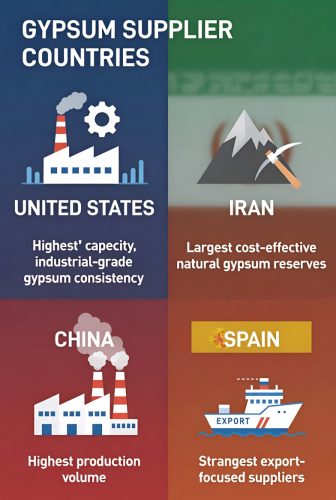
From a global perspective:
-
Highest industrial-grade consistency: United States, Spain
-
Largest cost-effective natural reserves: Iran
-
Highest production volume: China
-
Strong export-focused suppliers in Asia: Thailand
There is no single “best” gypsum supplier for every use case. The optimal choice depends on application requirements, budget constraints, and logistical considerations.
Gypsum Supply Market Trends in 2026
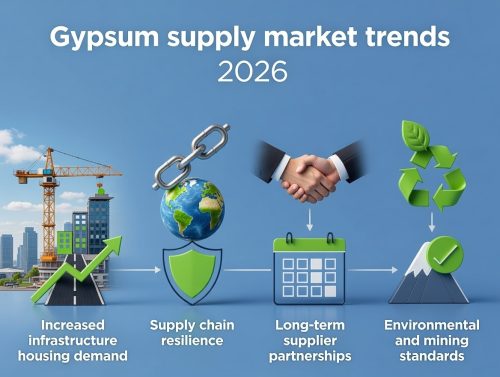
Several trends are shaping the gypsum supplier landscape in 2026:
-
Increased demand from infrastructure and housing projects
-
Greater emphasis on supply chain resilience
-
Preference for long-term supplier partnerships
-
Rising importance of environmental and mining standards
As a result, buyers are evaluating gypsum suppliers not only on price, but also on transparency, consistency, and sustainability.
Conclusion: How to Choose the Best Gypsum Supplier in 2026
Selecting the right gypsum supplier in 2026 requires a clear understanding of material needs and sourcing priorities. High-quality applications demand consistency and purity, while large-scale projects may prioritize availability and cost efficiency.
By understanding the strengths of leading gypsum supplier countries, buyers can make informed decisions that balance quality, price, and long-term reliability.
Frequently Asked Questions (FAQ)
What is the best gypsum supplier country in 2026?
There is no single best country for all applications. The best gypsum supplier depends on quality requirements, budget, and logistics. Countries like the United States, Iran, China, Thailand, and Spain each serve different market needs.
How do gypsum suppliers differ by country?
Gypsum suppliers differ in material purity, production scale, processing standards, export reliability, and cost structure.
Which countries export the highest quality natural gypsum?
The United States, Spain, Iran, and Thailand are widely recognized for exporting high-quality natural gypsum.
What factors should be considered when choosing a gypsum supplier?
Key factors include gypsum purity, supply consistency, export infrastructure, pricing, and compliance with international standards.
Is price more important than quality when selecting a gypsum supplier?
This depends on the application. Industrial and construction uses often require a balance between cost efficiency and material quality.
How has the global gypsum supply market changed in 2026?
The market has shifted toward greater emphasis on supply stability, long-term sourcing, and transparency rather than short-term pricing alone.
Which gypsum supplier countries are best for construction and cement industries?
China, Iran, Thailand, and the United States are among the most commonly used gypsum supplier countries for construction and cement production.