
Top 10 Gypsum Suppliers 2026: Global Market Leaders, Selection Criteria, and Industry Outlook
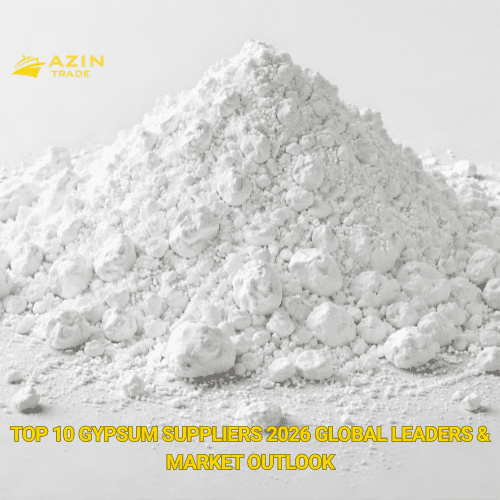
The top 10 gypsum suppliers in 2026 play a critical role in the global construction and industrial supply chain. As construction projects grow in scale and complexity, demand for high-quality gypsum continues to rise across cement, drywall, plaster, agriculture, and industrial manufacturing sectors.
In 2026, gypsum is no longer a basic raw material. Instead, it has become a strategic input that directly affects product quality, supply reliability, regulatory compliance, and long-term project performance. For this reason, identifying dependable gypsum suppliers is now a key business decision for buyers worldwide.
Understanding the Global Gypsum Market in 2026
The global gypsum market in 2026 reflects major shifts in construction and industrial supply chains. Rapid urbanization,Large infrastructure programs, and sustained housing demand continue to drive gypsum consumption, particularly in Asia, the Middle East, and Africa.
At the same time, buyers face stricter environmental regulations, higher transportation costs, and recurring supply chain disruptions. Consequently, gypsum suppliers must deliver more than basic availability. They need to offer consistent quality, export capability, regulatory compliance, and logistical reliability.
As a result, the market increasingly favors large, established gypsum suppliers with international experience and scalable production capacity.
What Defines a Reliable Gypsum Supplier?
Before reviewing the top 10 gypsum suppliers, it is essential to understand the criteria that define supplier reliability. Not all suppliers deliver the same level of performance, even when pricing appears similar.
A reliable gypsum supplier provides consistent chemical composition, controlled moisture content, and stable particle size distribution. In addition, leading gypsum suppliers offer transparent documentation, including laboratory test reports, safety data sheets, and export certifications.
Moreover, experienced gypsum suppliers invest heavily in logistics infrastructure, bulk handling systems, and long-term supply contracts. These capabilities reduce operational risk and strengthen supply chain resilience for buyers.

Top 10 Gypsum Suppliers in 2026 (Global Overview)
The following gypsum suppliers represent global market leaders based on production capacity, export reach, industry reputation, and operational reliability. This list focuses on international relevance rather than regional dominance alone.
Knauf Group
Knauf remains one of the world’s largest and most influential gypsum suppliers. Through vertically integrated operations, the company controls gypsum extraction, processing, and finished building system production.
Because of its extensive global footprint, Knauf supplies gypsum to Europe, Asia, the Middle East, and the Americas while maintaining strict quality control and sustainability standards.
Saint-Gobain Gypsum (Gyproc)
Saint-Gobain Gypsum, operating under the Gyproc brand, is a dominant force among global gypsum suppliers. Its focus on innovation, advanced processing technologies, and regulatory compliance supports both industrial-scale buyers and premium construction projects.
As a result, Saint-Gobain continues to strengthen its long-term position in the global gypsum market.
USG Corporation
USG is a leading gypsum supplier in North America with an expanding international presence. Known for consistent quality and strong technical expertise, USG supports both raw gypsum supply and downstream drywall manufacturing.
In 2026, USG remains focused on performance-driven gypsum applications, including fire-resistant and moisture-controlled systems.
Etex Group
Etex operates as a diversified building materials group with solid gypsum production capabilities. Its geographic reach across Europe, Africa, and parts of Asia allows it to serve regional markets efficiently.
Because Etex balances cost efficiency with technical performance, it remains competitive in both mature and emerging markets.
National Gypsum Company
National Gypsum plays a major role among gypsum suppliers in North America. Vertically integrated production and well-developed logistics networks enable stable supply for large-scale construction and industrial clients.
Its operational reliability supports long-term partnerships across the building materials sector.
Boral Gypsum (Asia-Pacific)
Boral Gypsum serves key Asia-Pacific markets, particularly Australia and Southeast Asia. Proximity to high-growth construction zones and established distribution channels strengthens its regional influence.
As infrastructure investment continues, Boral’s importance among gypsum suppliers keeps increasing.
Yoshino Gypsum (Japan)
Yoshino Gypsum represents a quality-focused gypsum supplier serving advanced construction markets. Its emphasis on material consistency, purity, and technical performance supports specialized and high-standard applications.
Although export volumes remain selective, Yoshino maintains strong authority in premium market segments.
Iranian Gypsum Exporters
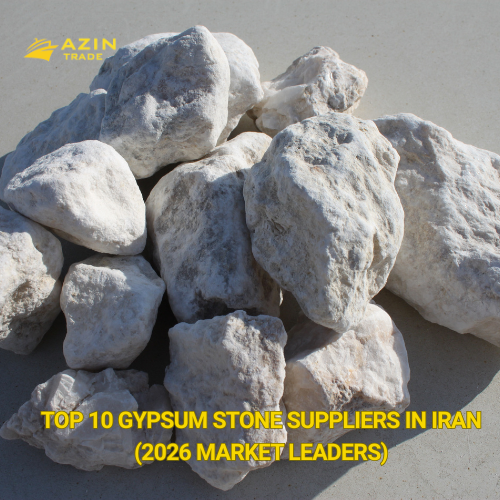
Iran holds some of the world’s largest natural gypsum reserves. In 2026, Iranian gypsum suppliers continue to serve markets across the Middle East, South Asia, and Africa.
Competitive pricing, high purity levels, and export-oriented production make this supplier group strategically important for bulk buyers.
Oman Gypsum Suppliers
Oman has emerged as a reliable gypsum export hub thanks to strong port infrastructure and regulatory stability. Omani gypsum suppliers efficiently serve India, East Africa, and Southeast Asia.
Growing export volumes place Oman firmly among leading global gypsum suppliers in 2026.
Spanish Gypsum Producers
Spain maintains a well-established gypsum mining and export industry. Spanish gypsum suppliers benefit from EU regulatory alignment, consistent material quality, and reliable logistics access.
This combination supports long-term supply relationships with industrial and construction buyers worldwide.
How to Choose the Right Gypsum Supplier in 2026
Selecting from the top gypsum suppliers requires more than simple price comparison. Buyers should evaluate quality consistency, supply reliability, logistics capability, and compliance standards.
In addition, long-term contracts, technical support, and transparency significantly reduce procurement risk. Therefore, supplier selection should align with both current demand and future growth strategies.
Quality Standards and Certification
Reliable gypsum suppliers provide standardized laboratory reports covering purity, moisture content, and particle size distribution. Compliance with ASTM, EN, or equivalent standards ensures predictable downstream performance.
Without proper certification, even low-cost gypsum can introduce serious operational and financial risk.

Logistics, Export Capability, and Supply Stability
In 2026, logistics performance defines supplier reliability. Leading gypsum suppliers maintain access to bulk shipping, port terminals, and storage facilities.
Furthermore, diversified shipping routes and buffer stock strategies reduce exposure to geopolitical or transportation disruptions.
Sustainability and Environmental Responsibility
Sustainability has become a decisive factor in gypsum supplier selection. Top gypsum suppliers invest in land rehabilitation, emissions control, and energy-efficient processing methods.
These practices support regulatory compliance while strengthening buyer ESG performance and long-term brand value.
Gypsum Market Trends Shaping 2026 and Beyond
Urbanization, modular construction, and prefabrication continue to drive demand for gypsum suppliers. At the same time, environmental regulation encourages recycling, waste reduction, and alternative sourcing strategies.
Suppliers that adapt to these trends gain long-term competitive advantage in the global gypsum market.
Risks When Working With Gypsum Suppliers
Despite market maturity, risks remain. Inconsistent quality, delayed shipments, regulatory changes, and currency volatility can disrupt gypsum supply chains.
Mitigation strategies include supplier diversification, clear contractual terms, and continuous performance evaluation.
Conclusion
In 2026, gypsum suppliers act as strategic partners within global construction and industrial supply chains. Selecting from the top 10 gypsum suppliers requires careful evaluation of quality, logistics, sustainability, and market experience.
Rather than focusing only on price, successful buyers prioritize reliability, long-term value, and consistent performance. Strong supplier partnerships ultimately define competitive advantage in an increasingly demanding global market.