
Cement Clinker Grades: Types, Quality Standards, Uses & Buying Guide
When buying clinker for a cement plant, looking only at the price is rarely enough. Cement Clinker Grades can differ in chemical composition, mineral phases, free lime, alkali content, grindability, and suitability for different cement applications.
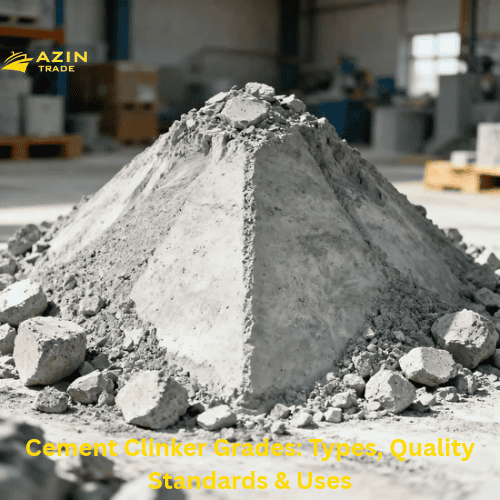
Clinker is the main intermediate product used in Portland cement manufacturing. It is produced by heating a carefully controlled mixture of limestone and other raw materials in a cement kiln. After cooling, the clinker is ground with gypsum and, depending on the cement type, other materials to produce cement.
For buyers, the important question is not simply which clinker is available. The better question is: Which clinker specification matches the cement I want to produce?
This guide explains the major clinker types, the chemistry behind them, important quality parameters, laboratory testing, international classification, and practical considerations for bulk buyers.
What Are Cement Clinker Grades?
The term Cement Clinker Grades is commonly used in commercial discussions to describe clinker with different chemical, mineralogical, and performance characteristics.
However, clinker does not have one universal international grading system equivalent to the grading systems used for some finished cement products.
Instead, clinker is normally purchased according to a technical specification agreed between the producer and buyer.
That specification may include:
- CaO
- SiO₂
- Al₂O₃
- Fe₂O₃
- MgO
- SO₃
- Na₂O
- K₂O
- Free CaO
- C₃S
- C₂S
- C₃A
- C₄AF
- Physical characteristics
- Grindability
- Nodule size
- Color, when relevant
- Batch consistency
Therefore, two products described commercially as “Portland cement clinker” may still have different chemical profiles.
For international procurement, the actual laboratory specification is more important than the product name alone.
How Is Cement Clinker Produced?
Clinker begins with a raw meal containing carefully proportioned mineral materials.
The main chemical components are calcium, silicon, aluminum, and iron.
The raw meal is processed through a high-temperature kiln system. At elevated temperatures, the raw materials undergo decomposition, solid-state reactions, and ultimately clinker formation.
The resulting nodules are rapidly cooled before being stored and transported to the cement grinding stage.
The production process can influence:
- Mineral phase development
- Crystal structure
- Free lime
- Clinker reactivity
- Grindability
- Fuel consumption
- Cement performance
This is why clinker quality cannot be understood by chemical composition alone.
A technically acceptable oxide analysis is important, but the production history behind that analysis also matters.
Main Types of Cement Clinker
Although terminology varies between producers and markets, several clinker categories are widely encountered in the cement industry.
Ordinary Portland Cement Clinker
Ordinary Portland cement clinker is the most widely traded clinker category.
It is used as the principal component for manufacturing conventional Portland cement.
Its chemistry is normally designed to provide a suitable balance between strength development, setting behavior, heat generation, and production efficiency.
The exact chemical limits depend on the cement plant and the specification agreed with the buyer.
Low-Alkali Clinker
Low-alkali clinker is produced when the cement manufacturer requires tighter control of alkali content.
Sodium oxide and potassium oxide are particularly important parameters.
A low-alkali specification may be relevant for cement intended for applications where alkali-related durability concerns need to be controlled.
The buyer should specify the required alkali limit instead of simply asking for “low alkali” material.
Sulfate-Resistant Clinker
Sulfate-resistant cement generally requires controlled clinker chemistry, particularly with respect to C₃A.
Lower C₃A can be important for producing cement designed for environments with significant sulfate