
Cement: The Complete Guide to Composition, Manufacturing, Types, and Global Cement Industry
Cement is one of the most important construction materials in the modern world. It acts as a binding agent that holds aggregates such as sand, gravel, and crushed stone together to form concrete, the backbone of global infrastructure.
From highways and bridges to skyscrapers and dams, nearly every large construction project relies on cement. The global demand for cement continues to grow as urbanization and infrastructure development expand across developing and developed economies.
Companies like Azintrade play an important role in connecting international buyers and suppliers within the global cement and clinker market, helping construction and manufacturing companies access reliable materials.
This guide explains everything you need to know about cement, including its composition, manufacturing process, types, applications, and its role in the global construction industry.
What Is Cement?
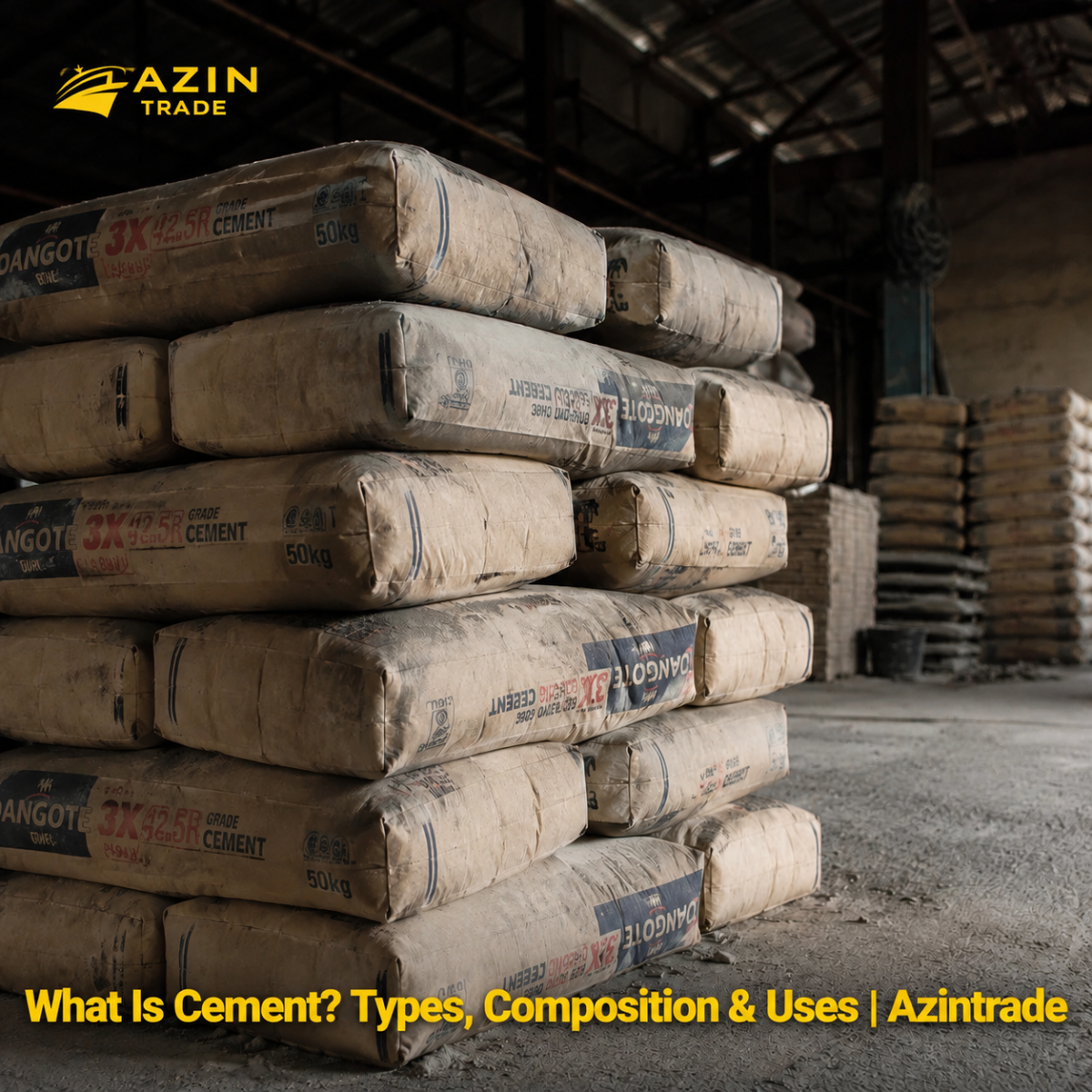
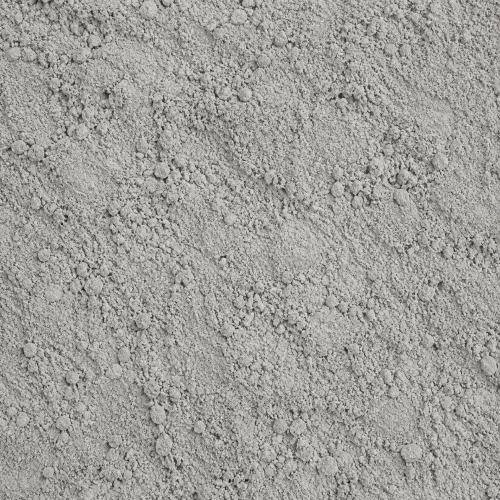
Cement is a fine powder made from clinker, gypsum, and other mineral additives that acts as a hydraulic binder. When mixed with water, it forms a paste that hardens over time and binds other materials together.
The most widely used type is Portland cement, which forms the basis of most concrete used in construction.
Simple Definition
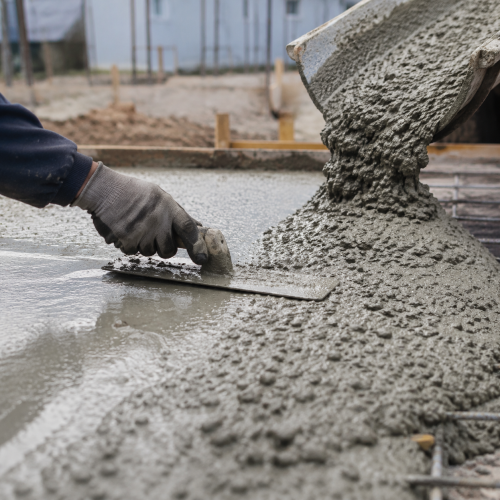
Cement is a hydraulic binding material that hardens when mixed with water and binds aggregates together to form concrete.
History of Cement
The use of cement-like materials dates back thousands of years.
| Period | Development |
|---|---|
| Ancient Egypt | Early lime mortars used in construction |
| Roman Empire | Development of hydraulic cement using volcanic ash |
| 1824 | Joseph Aspdin patented Portland cement |
| Modern era | Industrial production using rotary kilns |
Roman concrete structures like the Pantheon still stand today, demonstrating the durability of early cement technologies.
Main Components of Cement
Cement is primarily produced from clinker, which is formed by heating limestone and clay at high temperatures.
| Component | Percentage | Function |
|---|---|---|
| Clinker | 90–95% | Provides strength and hydraulic properties |
| Gypsum | 3–5% | Controls setting time |
| Mineral additives | 0–5% | Improves durability or sustainability |
Chemical Composition of Cement
The main oxides present in cement determine its chemical and mechanical properties.
| Compound | Formula | Role |
|---|---|---|
| Calcium Oxide | CaO | Main strength-forming element |
| Silicon Dioxide | SiO₂ | Forms calcium silicates |
| Aluminum Oxide | Al₂O₃ | Affects early strength |
| Iron Oxide | Fe₂O₃ | Improves clinker formation |
| Magnesium Oxide | MgO | Influences expansion |
Cement Manufacturing Process
Cement production is a complex industrial process that involves several stages.
-
Raw Material Extraction
Limestone, clay, and other materials are extracted from quarries using blasting and heavy machinery.
-
Crushing and Raw Material Preparation
The extracted rocks are crushed into smaller pieces and blended to ensure a consistent chemical composition.
-
Raw Meal Grinding
Crushed materials are ground into a fine powder called raw meal.
-
Preheating and Calcination
The raw meal is heated in a preheater tower where temperatures reach around 900°C.
During calcination:
CaCO₃ → CaO + CO₂
-
Clinker Production in Rotary Kiln
Inside the rotary kiln, temperatures reach approximately 1450°C, forming clinker nodules.
-
Clinker Cooling and Cement Grinding
Clinker is cooled rapidly and then ground with gypsum to produce cement powder.
Types of Cement
Different construction applications require different types of cement.
| Type of Cement | Key Feature | Common Applications |
|---|---|---|
| Ordinary Portland Cement | Standard strength | General construction |
| Rapid Hardening Cement | Fast strength gain | Road repair |
| Sulfate Resistant Cement | Resistant to sulfate attack | Marine structures |
| White Cement | Low iron content | Decorative applications |
| Low Heat Cement | Reduced heat generation | Large dams |
Cement vs Concrete
Many people confuse cement with concrete.
| Feature | Cement | Concrete |
|---|---|---|
| Form | Fine powder | Composite material |
| Composition | Clinker + gypsum | Cement + sand + aggregate + water |
| Usage | Binding agent | Structural material |
Major Uses of Cement
Cement is essential in nearly every infrastructure project.
Common applications include:
- concrete production
- road construction
- bridges and tunnels
- dams and reservoirs
- residential and commercial buildings
- precast concrete products
Global Cement Industry
The cement industry is one of the largest industrial sectors in the world.
| Country | Production Share |
|---|---|
| China | ~50% |
| India | ~8% |
| Vietnam | ~6% |
| USA | ~4% |
| Turkey | ~3% |
Global cement production exceeds 4 billion tons per year.
International suppliers and trading companies such as Azintrade help connect cement producers, clinker exporters, and construction companies across global markets.
Environmental Impact of Cement Production
Cement manufacturing is responsible for approximately 7–8% of global CO₂ emissions.
Main emission sources include:
- limestone calcination
- fuel combustion in kilns
- electricity consumption
Future of Cement and Sustainable Alternatives
To reduce environmental impact, the cement industry is developing new technologies:
- low‑clinker cement
- limestone calcined clay cement (LC3)
- carbon capture systems
- alternative binders
These innovations aim to maintain cement performance while reducing carbon emissions.
Frequently Asked Questions About Cement
What is cement made from?
Cement is mainly produced from limestone, clay, and gypsum.
What is the difference between cement and concrete?
Cement is a binder, while concrete is a mixture of cement, aggregates, and water.
Why is cement important in construction?
Cement provides the binding strength that holds concrete structures together.
Start Working with azintrade Today
If you are tired of unreliable suppliers, inconsistent quality, and unexpected delivery problems, it’s time to upgrade.
Start your next shipment with azintrade —
the supplier that values your business, your deadlines, and your success.
Contact azintrade now and build a strong, stable, and profitable supply chain for ceramic and porcelain tiles in Azerbaijan.