
Clinker Export From Iran: Complete Market Guide 2026
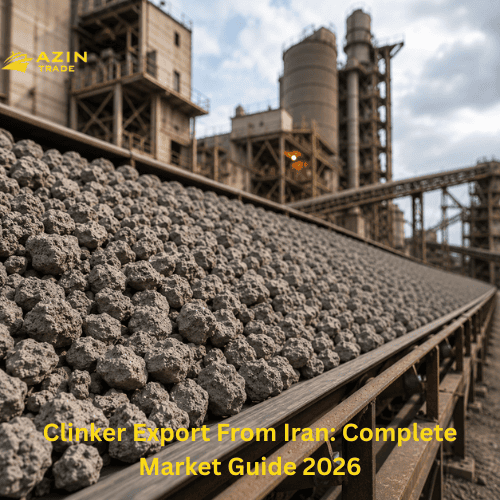
Clinker export from Iran has grown into one of the country’s most strategically important trade categories. Iran ranked as the world’s 10th largest clinker exporter by value in 2023, shipping $125 million worth of cement clinker, according to the Observatory of Economic Complexity. The country now holds a nominal cement capacity of roughly 109.5 million tonnes per year, alongside nearly 100 million tonnes of clinker capacity, based on CemNet’s recent industry coverage. This guide breaks down where that clinker goes, how pricing works, and what buyers should expect when sourcing from Iranian producers.
The picture is not static, though. In the first quarter of the Iranian fiscal year 1404, clinker exports actually fell 36.3% year-on-year, even as finished cement exports rose 17.1%. This shift matters for buyers planning long-term contracts. Therefore, understanding current trade flows, not just historical averages, is essential for anyone evaluating clinker export from Iran today.
Where Iranian Clinker Actually Goes
Clinker export from Iran concentrates heavily around a small number of markets. Iraq and Kuwait alone account for roughly three-quarters of total clinker export volume.
- Overall, Iraq is the largest single destination by a wide margin. In fact, official Iranian customs data show Iraq imported over 7 million tonnes of Iranian cement and clinker combined in FY1402, close to 40% of total exports.
- Kuwait ranks first by export value rather than volume. According to IndexBox trade data, Kuwait paid the highest average price per tonne among Iran’s major clinker markets in 2024.
- Afghanistan and Central Asia round out the top tier. Afghanistan alone imported close to 2 million tonnes in FY1402, while Turkmenistan, Tajikistan, and Uzbekistan combined for over 1.5 million tonnes.
Markets Under Pressure or Restriction
Not every historical market remains open, and this matters for buyers doing due diligence. Some previously important destinations have pulled back sharply.
- India, Bangladesh, and Sri Lanka have cut Iranian clinker purchases significantly. This decline lines up with those countries’ adherence to UN-backed sanctions frameworks.
- Armenia has restricted cement and clinker imports from Iran since January 2022. The restriction has been repeatedly extended since then, most recently through mid-2025, according to Global Cement’s Iran coverage. Buyers eyeing Armenia specifically should verify current import rules before planning shipments.
- This is a useful reminder that clinker export from Iran involves country-specific regulatory risk. Even neighboring, historically friendly markets can shift policy with little warning.
Shipping Routes and Ports
Logistics shape almost every clinker export from Iran decision, since clinker is a heavy, low-margin bulk commodity. Route choice depends heavily on the destination.
- Specifically, Bandar Abbas and Bushehr serve as the main bulk shipping ports. Exporters use bulk carriers from these ports for Gulf and South Asian destinations.
- Rail transport is the preferred route into Central Asia. The Sarakhs border crossing in Khorasan Razavi Province handles a significant share of rail-based clinker and cement shipments northward.
- Land routes by truck dominate trade with Iraq and Afghanistan. This keeps transport costs low and delivery times short compared with sea freight.
Clinker Pricing and What Drives It
Pricing for clinker export from Iran varies significantly by destination and shipping method. Several factors explain the spread.
- Distance and transport mode matter most. Land-delivered clinker to Iraq or Afghanistan typically costs less to move than clinker shipped by sea to Kuwait or beyond.
- Currency volatility adds real uncertainty. Because Iran’s rial has weakened significantly against major currencies, dollar-denominated export prices can shift even when underlying production costs stay flat.
- Freight rates add another layer of unpredictability. Rising ocean shipping costs have periodically squeezed margins on Iran’s longer-haul clinker exports, according to industry monitoring from Global Cement.
Clinker vs. Finished Cement: Which Should Buyers Choose?
Not every buyer wants the same product. Clinker export from Iran typically makes up close to a third of the country’s total cement-sector exports, with finished cement covering the rest.
- Generally, raw clinker suits buyers with their own grinding capacity. This includes cement companies that want to blend, grind, and brand the final product locally.
- Finished cement suits buyers without milling infrastructure. It also simplifies logistics since no further processing is required after import. For a deeper look at how these categories compare, see our cement clinker guide.
- Buyers weighing product types should also understand cement grade differences. Our guide to the difference between OPC and SRC cement is a useful next step.
Challenges Facing Clinker Export From Iran
Several structural challenges shape how this trade operates day to day. None of them are new, but all remain active.
- Banking and payment settlement remain difficult. Limited access to international banking systems complicates currency transfers for both exporters and buyers.
- In practice, domestic demand competes directly with export volume. When infrastructure spending slows at home, more clinker becomes available for export, and vice versa.
- Idle kiln capacity has become a growing concern. Energy supply disruptions have reportedly left dozens of kilns offline at times, tightening available clinker reserves.
Growth Markets to Watch
Despite the challenges, new demand pockets are opening up for clinker export from Iran and other regional suppliers.
- West Africa and parts of South America are showing rising interest in imported clinker, driven by local construction booms and limited domestic grinding capacity.
- Global cement and clinker shipping volume grew 13% year-on-year in 2025, with much of that growth concentrated along Africa’s Atlantic coast.
- Qatar and Armenia’s trade patterns (restrictions aside) show that smaller, high-value markets can still matter, even without massive volume.
- Buyers looking for scale context can compare Iran’s position against major global producers in our Top Grey Cement Suppliers 2026 guide.
A Buyer’s Checklist Before Sourcing
- First, confirm current import regulations for your country. Rules can change quickly, as Armenia’s ongoing restrictions demonstrate.
- Second, clarify whether you need raw clinker or finished cement. This decision affects pricing, logistics, and required import infrastructure.
- Third, ask for documentation upfront. Certificates of origin, standard certificates, bills of lading, and weight certificates should all be confirmed before shipment.
- Fourth, discuss payment structure early. Given ongoing banking constraints, a clear settlement plan avoids costly delays later in the process.
- Finally, compare pricing across shipping modes. Land, rail, and sea routes each carry different cost and timeline tradeoffs depending on your location.
Conclusion
Clinker export from Iran remains a significant part of global trade, anchored by Iraq and Kuwait, supported by Afghanistan and Central Asia, and increasingly shaped by currency pressure and shifting sanctions compliance elsewhere. Recent data shows clinker volumes softening even as finished cement exports grow, a trend worth watching closely. Therefore, buyers who track destination-specific rules and logistics options will make far better sourcing decisions than those relying on outdated averages.
Ready to source clinker directly from Iranian producers? Explore our 2026 clinker suppliers guide for supplier options, or read our cement market analysis for the bigger global pricing picture.