
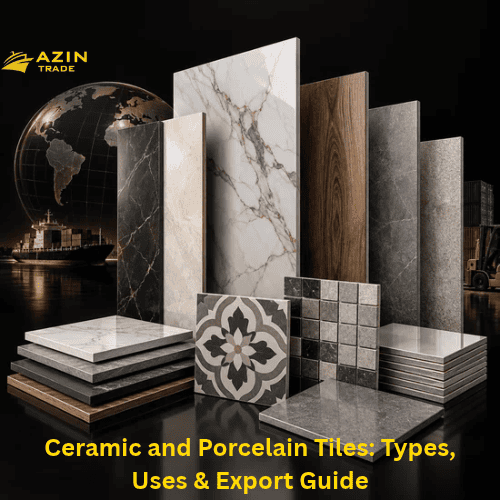
Ceramic and Porcelain Tiles: Types, Uses, Quality Standards & Export Guide
Ceramic and porcelain tiles are essential building materials used in residential, commercial, and architectural projects worldwide. They combine decorative flexibility with a wide range of technical properties, making them suitable for different flooring, wall covering, and interior design applications. For international buyers, selecting the right tiles requires more than comparing colors and prices. Product specifications, dimensions, surface finish, quality consistency, packaging, and export logistics all influence the success of a tile purchase.
As demand for construction materials continues across international markets, importers and distributors increasingly look for reliable suppliers that can provide suitable products and clear commercial information. Understanding the differences between ceramic and porcelain tiles helps buyers choose materials according to project requirements.
This guide explains the main types of ceramic and porcelain tiles, their applications, important quality standards, and key considerations when sourcing tiles for international construction projects.
1. What Are Ceramic and Porcelain Tiles?
Ceramic tiles are manufactured from clay and other inorganic raw materials. They are shaped, dried, and fired at temperatures sufficient to develop the required properties. Ceramic tiles can be glazed or unglazed and are commonly used as coverings for walls and floors.
Porcelain tiles are a specific category of ceramic tiles characterized by a highly vitrified body and water absorption of 0.5% or less by mass under the relevant classification. This low absorption characteristic is one of the primary distinctions between porcelain tiles and other ceramic tile categories.
Although the two products share similar manufacturing principles, their properties, production specifications, and applications can differ. Buyers should evaluate the technical data of each product instead of assuming that every ceramic or porcelain tile has identical performance.
The international standard ISO 13006:2018 defines classifications, characteristics, and marking requirements for ceramic tiles. The ISO 10545 series provides relevant test methods for determining tile properties.
2. Main Types of Ceramic and Porcelain Tiles
The tile market includes a wide range of products designed for different aesthetic and technical requirements. Understanding the main categories helps importers and project buyers select appropriate materials.
2.1 Ceramic Wall Tiles
Ceramic wall tiles are commonly used in kitchens, bathrooms, residential interiors, and commercial spaces. They are available in different sizes, colors, patterns, and surface finishes.
Wall tiles are selected primarily according to their intended application, appearance, moisture exposure, and installation requirements. Not every wall tile is suitable for floor use, so buyers should verify the manufacturer’s application recommendations.
Common characteristics include:
- Variety of decorative designs.
- Different glazed surface finishes.
- Availability in multiple formats.
- Applications in residential and commercial interiors.
- Easy integration with different architectural styles.
2.2 Ceramic Floor Tiles
Ceramic floor tiles are manufactured for flooring applications and should be evaluated according to the expected traffic, mechanical requirements, and installation environment.
Residential floors, retail stores, offices, and other commercial spaces may require different performance characteristics. Important considerations include surface durability, slip resistance, dimensions, and cleaning requirements.
Buyers should request technical information before selecting a product for high-traffic or specialized applications.
2.3 Porcelain Floor Tiles
Porcelain floor tiles are frequently used in residential, commercial, and hospitality projects. Their low water absorption and available range of finishes make them suitable for various applications when the product specification matches the environment.
Porcelain tiles may be available in polished, matte, textured, and other surface treatments. The surface finish affects appearance and may influence maintenance and slip performance.
The suitability of a porcelain tile depends on its complete technical specification, not water absorption alone.
2.4 Polished Tiles
Polished tiles have a smooth, reflective surface that can create a contemporary and spacious visual effect. They are commonly selected for living areas, hotel interiors, commercial spaces, and decorative projects.
When purchasing polished tiles, buyers should consider:
- Surface appearance.
- Scratch and stain resistance, where relevant.
- Cleaning and maintenance requirements.
- Shade consistency.
- Suitability for the intended location.
Polished surfaces may have different slip characteristics from matte or textured finishes. The product’s technical data should be reviewed for the intended application.
2.5 Matte and Textured Tiles
Matte and textured tiles provide alternatives to highly reflective surfaces. They can be used in contemporary, minimalist, industrial, and natural-look designs.
Textured products may be selected for particular flooring or exterior applications, subject to their technical characteristics. Slip resistance should be assessed using an appropriate test method and the requirements of the project.
3. Common Uses of Ceramic and Porcelain Tiles
Ceramic and porcelain tiles are used across different segments of the construction industry. The choice of product depends on the building type, design objectives, environmental conditions, and technical requirements.
Residential Buildings
Tiles are widely used in:
- Living rooms.
- Kitchens.
- Bathrooms.
- Bedrooms.
- Hallways.
- Balconies.
- Residential entrances.
Homeowners and developers often compare design, maintenance, product availability, and cost when selecting tiles for residential projects.
Commercial Buildings
Commercial applications include hotels, offices, restaurants, retail stores, and shopping centers. These projects may require consistent tile appearance, appropriate durability, and specifications suitable for the expected traffic.
For large projects, purchasing teams should coordinate tile selection with architectural specifications and installation requirements.
Hospitality Projects
Hotels and resorts often use tiles for guest rooms, lobbies, bathrooms, restaurants, and outdoor areas. Design consistency can be important when the same visual concept is used across different spaces.
Buyers should consider the balance between appearance, maintenance, slip resistance, and the intended environment.
Outdoor Applications
Certain ceramic and porcelain products can be suitable for outdoor areas. However, outdoor selection requires careful consideration of weather exposure, water absorption, slip resistance, thermal conditions, and other relevant properties.
Tiles intended for freezing environments should be assessed for frost resistance. Product suitability should be confirmed through the manufacturer’s technical information and applicable project requirements.
4. Ceramic vs. Porcelain Tiles: Key Differences
Ceramic and porcelain tiles are related products, but their classifications and technical characteristics are not identical.
| Feature | Ceramic Tiles | Porcelain Tiles |
|---|---|---|
| Product category | Broad category of fired ceramic materials | Specific category of ceramic tiles |
| Water absorption | Depends on classification | 0.5% or less for porcelain classification |
| Applications | Walls, floors, and decorative uses according to specification | Floors, walls, and other suitable applications |
| Design options | Wide variety of colors and finishes | Wide variety of colors and finishes |
| Selection criteria | Intended use and technical properties | Intended use and technical properties |
| Standards | ISO 13006 and relevant test methods | ISO 13006 and relevant test methods |
Porcelain classification is based on the applicable standard requirements. A buyer should not assume that porcelain is automatically the correct choice for every project.
The relevant specifications should be compared with the requirements of the destination market and construction application.
5. Important Quality Standards for Tiles
Quality verification is an important part of international tile purchasing. A technical data sheet helps buyers understand the characteristics of a product before approving a bulk order.
Water Absorption
Water absorption measures the amount of water absorbed by the tile body under the relevant testing procedure. It is used in ceramic tile classification and can help buyers evaluate suitability for different applications.
ISO 10545-3:2018 addresses the determination of water absorption, apparent porosity, apparent relative density, and bulk density.
Dimensions and Surface Quality
Tile dimensions and surface quality influence installation and visual consistency. Buyers may need information about length, width, thickness, dimensional tolerances, and surface defects.
ISO 10545-2:2018 addresses the determination of dimensions and surface quality for ceramic tiles.
Breaking Strength
Breaking strength and modulus of rupture are relevant mechanical properties for tile evaluation.
ISO 10545-4:2019 specifies a test method for determining the modulus of rupture and breaking strength of ceramic tiles.
The appropriate requirements depend on the product category and intended application.
Surface Finish and Appearance
Surface finish affects the visual result of a project. Buyers should specify whether they require polished, matte, glossy, textured, or another finish.
Shade consistency and surface quality should be reviewed according to the agreed product requirements and inspection procedures.
Quality Inspection
ISO 10545-1:2014 specifies rules relating to batching, sampling, inspection, and acceptance or rejection of ceramic tiles.
For bulk purchases, the buyer and supplier should agree on inspection arrangements, acceptance criteria, and the reference product specifications before shipment.
6. How to Select Tiles for an International Construction Project
Selecting tiles for export requires coordination between product design, technical suitability, commercial terms, and delivery requirements.
Step 1: Define the Project Requirements
Before contacting a supplier, identify the following information:
- Intended application.
- Tile type.
- Dimensions and thickness.
- Surface finish.
- Required quantity.
- Destination country.
- Technical specifications.
- Packaging requirements.
A clear inquiry allows suppliers to identify suitable products and prepare more relevant quotations.
Step 2: Review Technical Documentation
Ask the supplier for available product specifications, technical data sheets, and relevant test information.
The documentation should be reviewed against the requirements of the project and the destination market. A general product description is not a substitute for technical verification.
Step 3: Request Samples
Samples can help buyers review color, finish, pattern, and overall appearance. For projects requiring multiple batches, it is useful to establish a reference sample and clarify acceptable variations.
Samples should be considered alongside technical specifications rather than as the only quality assessment.
Step 4: Confirm Commercial Terms
Before placing a purchase order, clarify:
- Unit price and currency.
- Quantity and measurement unit.
- Payment terms.
- Packaging details.
- Delivery conditions.
- Inspection arrangements.
- Shipment schedule.
The applicable Incoterm should be clearly stated in the commercial agreement.
Step 5: Coordinate Shipment
Tile shipments require attention to packaging, pallet arrangement, container loading, handling, and documentation.
The specific arrangement depends on the tile size, weight, packaging format, and transportation route.
7. Ceramic and Porcelain Tile Export from Iran
Iran is a source of building materials, including ceramic and porcelain tiles. Buyers considering Iranian suppliers should assess each supplier’s product range, manufacturing arrangements, quality control, and export capabilities.
A successful sourcing process begins with clear communication between the buyer and exporter.
Product Availability
International buyers may have different requirements for tile sizes, colors, finishes, and applications. Suppliers should confirm which products are available and whether the requested specifications can be supported.
Bulk Supply
Large orders require attention to product consistency, quantities, packaging, and delivery planning. Buyers should confirm the available production and supply arrangements before finalizing a purchase.
Export Documentation
The documentation required for an international shipment depends on the destination country, product category, commercial terms, and applicable regulations.
Buyers and exporters should coordinate the relevant documents before dispatch.
Market-Specific Requirements
Importers are responsible for confirming the requirements applicable to their destination. Depending on the market, these may include product conformity, labeling, customs, and other regulatory obligations.
For example, Saudi Arabia has product conformity procedures administered through SASO and the SABER system. Buyers should verify the current requirements for their specific tile products before shipment.
8. Ceramic Tiles for GCC and International Markets
The Gulf Cooperation Council region includes the UAE, Saudi Arabia, Qatar, Kuwait, Bahrain, and Oman. These markets contain diverse construction and property development segments.
Tile buyers may source products for residential projects, commercial buildings, hotels, retail properties, and other developments.
When sourcing ceramic and porcelain tiles for GCC markets, buyers should consider:
- Intended project application.
- Product dimensions and finishes.
- Technical documentation.
- Destination-specific conformity requirements.
- Packaging and shipment arrangements.
- Commercial terms and delivery conditions.
The suitability of a product should be assessed according to the project and applicable regulations rather than relying on a general market assumption.
9. Tile Packaging and Export Logistics
Ceramic tiles are fragile building materials that require appropriate handling throughout transportation. Inadequate packaging or unsuitable loading arrangements may increase the risk of breakage.
A tile export plan should address the following areas.
Carton and Pallet Protection
Packaging should be selected according to tile weight, size, surface finish, and transportation requirements.
The supplier and buyer should discuss carton strength, pallet arrangement, and protection against movement.
Container Loading
Container loading arrangements should account for the weight and distribution of the shipment. The final loading plan depends on packaging, pallet configuration, and the logistics provider’s procedures.
Pre-Shipment Inspection
The buyer may request inspection arrangements before dispatch, depending on the commercial agreement and project requirements.
Inspection scope and acceptance criteria should be agreed upon in advance.
Shipping Documents
The exporter and buyer should coordinate the documents required for the shipment, customs process, and destination market.
The exact documentation depends on the trade route, commercial terms, and applicable regulations.
10. Factors That Influence Tile Purchasing Costs
Tile purchasing costs depend on multiple factors, and the quoted price per square meter does not represent every expense associated with an international order.
Buyers should compare quotations using consistent product and delivery specifications.
Relevant cost factors may include:
- Product type and quality specifications.
- Dimensions and surface finish.
- Order quantity.
- Packaging.
- Inland transportation.
- Freight and insurance, where applicable.
- Customs duties and destination charges.
The final landed cost depends on the commercial agreement, shipment details, and destination country.
A transparent quotation should clarify which costs are included and which are excluded.
11. Why Product Consistency Matters for Tile Distributors
Distributors and project buyers may need to maintain a consistent product offering across multiple orders. Variations in color, finish, dimensions, or technical properties can affect installation and customer satisfaction.
To support consistency, buyers should consider:
- A defined product reference.
- Clear specifications.
- Batch and shade information, where relevant.
- Agreed inspection criteria.
- Communication regarding repeat orders.
The practical requirements vary according to the product and purchasing agreement.
12. AzinTrade: Building Materials Export Supply from Iran
AzinTrade connects international buyers with building materials supply from Iran. Our product portfolio includes ceramic and porcelain tiles, cement, clinker, gypsum products, rebar, and building stones.
For buyers seeking ceramic and porcelain tiles, a clear inquiry helps establish the required product specifications and commercial expectations.
We support inquiries concerning product type, dimensions, quantity, destination, and intended application.
Our broader building materials offering also includes:
For specific tile requirements, international buyers can contact AzinTrade directly.
Email: info@azintrade.com
Whether you are a distributor, importer, contractor, or project buyer, share your requirements to discuss suitable building materials sourcing options.
13. How to Prepare a Ceramic Tile Import Inquiry
A well-prepared inquiry makes communication between buyers and exporters more efficient.
Include the following information in your initial request:
Product Details
Specify the tile category, dimensions, thickness, surface finish, and preferred design.
Quantity
State the required quantity in square meters, cartons, pallets, or another agreed unit.
Destination
Provide the destination country and, where necessary, the delivery location or port.
Technical Requirements
Mention any required specifications, standards, test reports, or conformity documentation.
Delivery and Commercial Preferences
Indicate your preferred delivery terms, expected purchasing schedule, and any packaging requirements.
A detailed inquiry allows the supplier to review the request and respond with relevant information.
Frequently Asked Questions About Ceramic and Porcelain Tiles
1. What is the difference between ceramic and porcelain tiles?
Porcelain tiles are a category of ceramic tiles with specific technical characteristics, including water absorption of 0.5% or less by mass under the applicable classification. Ceramic tiles cover a broader range of products.
2. Are porcelain tiles suitable for outdoor use?
Some porcelain tiles are suitable for outdoor applications. The correct selection depends on technical characteristics such as frost resistance, slip performance, and the environmental conditions of the project.
3. What quality standards apply to ceramic tiles?
ISO 13006 defines ceramic tile classifications, characteristics, and marking requirements. The ISO 10545 series includes test methods for properties such as water absorption, dimensions, and breaking strength.
4. How can I buy ceramic tiles from Iran?
Contact a suitable exporter with your required tile specifications, quantity, destination country, and preferred design. The supplier can review your inquiry and provide relevant commercial information.
5. What should I check before importing porcelain tiles?
Review product dimensions, water absorption, surface finish, mechanical properties, packaging, inspection arrangements, and applicable destination requirements.
6. Are ceramic tiles suitable for commercial projects?
Ceramic tiles can be used in commercial projects when their specifications meet the requirements of the intended application. Product selection should consider traffic, maintenance, surface performance, and design requirements.
7. What information should I include when requesting a tile quotation?
Include the product type, size, thickness, finish, quantity, destination, technical requirements, and preferred delivery conditions.
8. Can AzinTrade help with bulk building materials inquiries?
AzinTrade handles inquiries relating to building materials supply from Iran, including ceramic and porcelain tiles. Buyers can contact info@azintrade.com with their requirements.
Conclusion
Ceramic and porcelain tiles serve a wide range of residential, commercial, and architectural applications. Choosing the right product requires attention to technical specifications, design, quality verification, packaging, and delivery requirements.
For international buyers, a structured sourcing process helps clarify product expectations and commercial arrangements before placing an order.
AzinTrade provides a channel for international buyers to discuss ceramic and porcelain tile sourcing from Iran, alongside other building materials.
To discuss your requirements, contact info@azintrade.com.