
Clinker Export from Iran to Russia — A Detailed, Practical & Sales-Ready Guide
Exporting clinker from Iran to Russia can be a high-volume, repeatable trade—if it is built on three pillars: consistent quality, predictable logistics, and contract clarity. Unlike “one-off” commodity sales, clinker buyers in Russia (and Russian-linked traders) reward suppliers who deliver the same chemistry, the same strength behavior, and the same shipment discipline every time.
This article is written to be usable for real business: it explains what Russian buyers typically ask for, how Iranian exporters can structure offers, how to avoid common disputes, which routes and Incoterms usually make sense, and how to protect your margin when logistics and payments become complicated.
Why Russia Imports Clinker (and Where Demand Usually Appears)
Russia is a major cement producer, but clinker imports still happen for tactical reasons. Demand tends to appear when one or more of the following conditions exist:
Regional Supply Gaps and Freight Economics
Russia is geographically huge. Even if total national capacity is enough, some regions experience shortages because moving clinker (or cement) long distances can be expensive. Importing through the nearest viable port or border can be cheaper than domestic long-haul transport.
Seasonal Construction Peaks
Construction in many regions is seasonal. During peak months, grinders and cement terminals may need additional clinker to maintain output.
Operational Optimization (Grinding in Russia)
Some companies prefer importing clinker and grinding locally to:
- control cement recipes,
- reduce transport cost of finished cement,
- use local gypsum/additives.
Project-Driven Demand
Large infrastructure projects (roads, ports, housing, industrial zones) can temporarily raise cement and clinker needs and trigger import buying.
Why Iranian Clinker Can Be Competitive in Russia
Iran’s competitiveness usually comes from a combination of:
Capacity and Continuity
Many Iranian producers can offer stable monthly tonnage. For Russian buyers, continuity often matters more than a “cheap spot price.”
Geographic Advantage via the Caspian and Eurasian Corridors
Northern Iran provides a relatively short path to Russia compared to long ocean routes. When the logistics chain is efficient, Iran can be very competitive.
Cost Structure (But Only If Logistics Is Controlled)
Clinker is heavy and relatively low value per cubic meter. This means small changes in freight, port charges, demurrage, or handling losses can swing the deal from profit to loss. The seller who manages logistics and contract terms best usually wins.
Understanding the Product — What Buyers Mean by “Clinker”
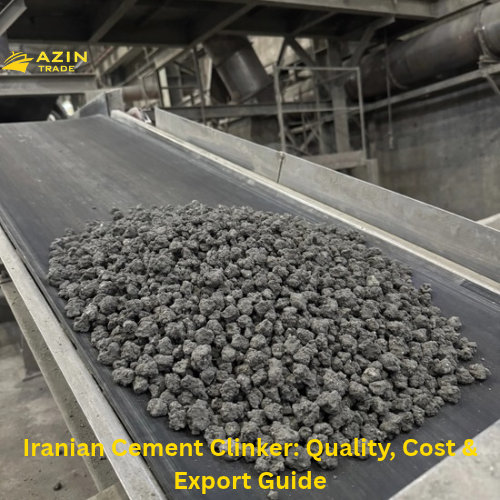
Clinker is the intermediate product made in a cement kiln. It is shipped as nodules and later ground into cement. Russian buyers evaluate clinker based on how reliably it produces cement meeting their performance targets (strength development, setting behavior, durability).
Common Clinker Types Exported
- Ordinary Portland Clinker (OPC clinker): the most common for general cement.
- Sulfate Resistant (SR) clinker: relevant for aggressive environments, industrial zones, or certain infrastructure requirements.
- Low-alkali clinker: requested when projects require control of alkali–silica reaction risks.
Quality Expectations — What Russian Buyers Typically Ask For
To Russian buyers, “quality” is not a marketing word. It is a set of measurable numbers, and more importantly, the ability to repeat those numbers shipment after shipment.
Typical Chemical & Mineral Requirements (Commercial Practice)
Most RFQs and contracts focus on:
- Free Lime (f-CaO): too high can cause expansion and quality claims.
- MgO: excessive MgO can create long-term expansion risks.
- Alkalis (Na₂Oeq): important for ASR risk management.
- SO₃ and sulfide-related concerns: can affect setting and compatibility.
- Chlorides (Cl⁻): more sensitive in marine/port environments.
- L.O.I. (Loss on Ignition) and insoluble residue: red flags for contamination or inconsistent burning.
- Mineral phases (C3S, C2S, C3A, C4AF): buyers correlate these with early/late strength and heat of hydration.
Physical and Performance-Related Expectations
Even when the buyer is importing clinker (not cement), they will still care about:
- Grindability behavior (how easily clinker grinds in their mills)
- Strength profile after grinding (early vs late strength targets)
- Color/appearance consistency (often a proxy for burning stability)
Certificates and Testing Routine
Typical practice for serious buyers:
- COA (Certificate of Analysis) per lot / per vessel parcel
- Defined sampling procedure (where, when, and by whom samples are taken)
- Retention samples kept by seller and/or inspector for dispute resolution
- Third-party inspection (SGS, BV, or agreed local inspector) especially for first shipments or higher-risk payment terms
Standards and Compliance — How Deals Are Actually Structured
Russia uses GOST-related frameworks for cement products, and buyers may mention them. In real trade, many contracts work like this:
- The buyer states target parameters and tolerances.
- The seller provides COA and sometimes a third-party report.
- Acceptance is based on agreed testing and tolerances, not “opinions.”
The Best Practice: Contract Specs + Acceptance Protocol
A strong clinker export contract should define:
- exact parameters and tolerances,
- lab method or standard reference,
- which lab is authoritative in a dispute,
- claim time window (e.g., within X days after discharge),
- remedies (discount, replacement, rejection).
Packaging & Shipment Options (And When Each Makes Sense)
Bulk Clinker (Most Common for Large Volumes)
Best for: 10,000+ tons per shipment, professional terminals.
Pros: lowest cost per ton.
Cons: requires reliable bulk handling; higher risk of moisture and spillage if terminals are weak.
Operational details that matter:
- Covered vs uncovered storage at port
- Loading rate (tons/hour)
- Dust control
- Moisture protection during waiting time
Big Bags (Jumbo Bags)
Best for: smaller buyers, inland distribution, weak bulk infrastructure.
Pros: better control, less contamination, easier inventory.
Cons: packing cost, bag cost, more loading time.
Containers (Less Common for Clinker)
Usually not the first choice unless:
- the shipment is small,
- the destination is inland and container logistics are cheaper than bulk handling,
- the buyer insists on container control.
Logistics from Iran to Russia — Routes, Reality, and Hidden Costs
Clinker export success is often decided by logistics, not production.
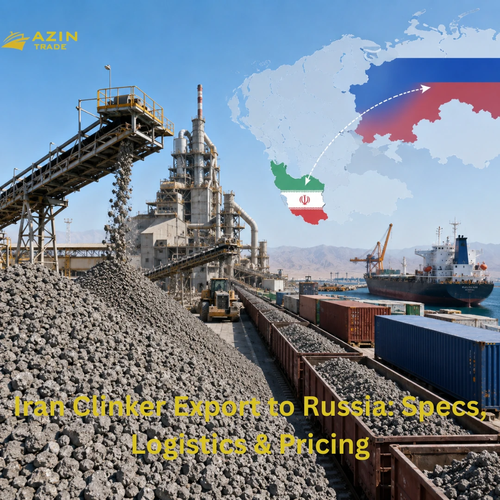
Caspian Sea Route (Often the First Choice)
Typical chain:
- Iranian plant → trucking/rail to northern port → Caspian vessel → Russian port → discharge → inland move
Advantages
- Shorter distance
- Can be competitive for bulk volumes
- Frequent use in regional trade
Challenges
- Vessel availability and schedule uncertainty
- Terminal performance variability (loading/discharge speed)
- Weather/season constraints
- Demurrage risk if discharge is slow
Land/Rail Corridors (Use Case Dependent)
Possible advantages:
- Faster to specific inland regions
- Less port uncertainty (sometimes)
Typical issues:
- Wagon availability
- Border procedures and delays
- Rate volatility and administrative complexity
The “Hidden Cost” Checklist (Where Margins Disappear)
- port storage charges for waiting cargo
- demurrage (ship waiting due to slow loading/discharge)
- re-bagging costs if buyer changes plan last minute
- losses due to moisture (weight and quality disputes)
- document mismatch penalties and customs delays
Incoterms Strategy — How to Choose Without Losing Your Margin
Choosing the wrong Incoterm is one of the fastest ways to turn a profitable offer into a painful lesson.
EXW / FCA — Minimum Logistics Risk for Exporter
Use when: buyer controls freight and port handling.
Exporter benefit: less exposure to shipping and discharge delays.
Exporter responsibility: still must provide correct export documents and assist with loading arrangements.
FOB — Common for Bulk Commodity Trade
Use when: you can manage loading efficiently and the buyer arranges freight.
Key points:
- define loading port clearly,
- define laytime and loading rate expectations,
- avoid last-minute vessel surprises by confirming specs in advance.
CFR/CIF — More Competitive on Paper, Riskier in Practice
Use when: you can secure reliable freight and understand destination discharge reality.
You take more operational risk:
- freight and scheduling risk
- demurrage exposure (depending on contract wording)
- possible buyer pressure after arrival (“slow discharge = discount request”)
Practical rule: if you don’t control destination discharge performance or you don’t know the terminal, don’t over-promise on delivery terms.
Export Documentation — A Clean Document Set Prevents 80% of Problems
A professional document set reduces customs delays, payment delays, and claims.
Typical Documents for Clinker Export
- Commercial Invoice
- Packing List / Shipment Details
- Bill of Lading (B/L) for sea shipments (or rail/road equivalents)
- Certificate of Origin (COO)
- COA (Certificate of Analysis) per shipment/lot
- Insurance Certificate (if CIF/CIP)
- Inspection Certificate (if required by contract)
- Any compliance letters required by counterparties/banks
Document Discipline Tips
- Keep HS code consistent across invoice, COO, and shipping documents.
- Align company names, addresses, and product description exactly (avoid spelling variants).
- Put the contract number on all documents to reduce buyer “paper excuses.”
Customs & Import Side Considerations (Practical Notes)
Most exporters do not clear Russian customs themselves, but you should understand what triggers delays:
- inconsistent HS code or unclear product description,
- missing COO or mismatch of origin information,
- unclear weights (gross/net) for bulk cargo,
- incomplete or late documents.
Make the Buyer’s Job Easy
If the buyer’s customs broker struggles, you pay indirectly via delays, demurrage disputes, and pressure for discounts.
Pricing — How to Quote Like a Serious Supplier
Clinker pricing is typically built from:
- ex-works cost (or FOB base)
- inland transport to port
- port handling and loading
- freight (if CFR/CIF)
- insurance (if CIF)
- financing/payment risk premium
- expected losses (spillage/moisture)
What You Should Ask Before Quoting
To avoid underpricing, confirm:
- destination port and discharge capability,
- target shipment size,
- packaging (bulk vs bag),
- Incoterm,
- required inspection,
- payment method and timing.
Payment Terms — The Most Sensitive Part of the Deal
Common options:
- Advance payment: best for exporter, often negotiated down.
- LC: can be complex depending on banking channels and restrictions.
- CAD / documents against payment: workable with trusted channels.
- Open account: only for established relationships.
Export rule: don’t ship on “trust” if you cannot absorb a delayed or disputed payment.
Contract Structure — Clauses That Save Deals
A good contract prevents disputes or makes them solvable.
Must-Have Clauses
- Product specification and tolerances
- Inspection and sampling method (where, who, standard)
- Acceptance criteria and claim deadline
- Moisture/contamination handling rules
- Incoterm + named port/terminal
- Laytime, demurrage/despatch terms (if applicable)
- Force majeure (including banking and logistics disruptions if relevant)
- Dispute resolution (jurisdiction/arbitration, language of contract)
Claims Management (Don’t Leave It Vague)
Define whether the buyer can:
- reject cargo,
- apply a discount formula,
- request replacement,
and what evidence they must provide.
Step-by-Step Export Process (From RFQ to Repeat Orders)
1) RFQ Intake (Get the Right Data)
Collect:
- specs required,
- monthly volume and shipment size,
- packaging,
- destination and delivery term,
- payment expectations.
2) Offer & Technical Pack
Send:
- price and validity,
- spec sheet,
- COA samples from recent production,
- proposed inspection approach,
- loading window.
3) Contract & Payment Security
Finalize:
- Incoterm and port/terminal,
- inspection,
- payment,
- claims clauses.
4) Production Planning and Lot Control
Allocate kiln runs to maintain consistency and avoid mixing high-variance lots.
5) Pre-Shipment Inspection and Document Prep
If inspection is required, schedule it early. Prepare documents in parallel to avoid late B/L and payment delays.
6) Shipment Execution and Post-Shipment Support
Coordinate loading, provide document set quickly, support buyer customs clearance, and manage any claim within defined timelines.
H2: FAQ (English)
H3: What is the most important quality number for clinker exports?
There isn’t a single number, but free lime consistency and overall COA repeatability are among the top factors that trigger acceptance or claims.
Should I offer FOB or CFR to Russian buyers?
If you’re not fully confident about freight reliability and destination discharge speed, FOB/FCA is usually safer. CFR can win deals but can also destroy margin via delays.
Do Russian buyers require GOST compliance?
Some reference GOST-related standards, but many transactions are governed by contractual specs + acceptance testing. Always define the acceptance protocol in the contract.
Bulk or big bags—what do Russian buyers prefer?
Large grinders usually prefer bulk for cost. Traders and smaller buyers often prefer big bags for flexibility and inland distribution.
How can I reduce the risk of post-arrival discount requests?
Use: (1) independent inspection, (2) clear sampling rules, (3) retention samples, and (4) a strict claim deadline clause.
What are the biggest non-obvious risks?
Demurrage, moisture exposure, port congestion, document mismatches, and payment route failures.
Can I build a long-term clinker supply contract with Russia?
Yes—buyers value stable monthly supply. Long-term success usually depends on consistent COA, reliable shipment windows, and transparent dispute handling.
Russian Text (Русский)
Экспорт клинкера из Ирана в Россию — подробное практическое руководство
Экспорт клинкера из Ирана в Россию может стать стабильным высокообъемным бизнесом, если он выстроен на трёх ключевых элементах: стабильное качество, предсказуемая логистика и четкие условия договора. Российские покупатели и трейдеры ценят поставщиков, которые способны повторять показатели химии и качества от партии к партии и предоставлять документы без ошибок и задержек.
Почему Россия импортирует клинкер
Региональные дефициты и логистика
Даже при достаточной общей мощности внутри страны отдельные регионы могут испытывать нехватку из‑за высокой стоимости перевозки на большие расстояния. Импорт через ближайшие порты или коридоры иногда экономически выгоднее.
Сезонный пик строительства
В периоды активного строительства спрос на клинкер у помольных площадок возрастает, и появляется импортный спрос.
Модель “импорт клинкера — помол в России”
Некоторые компании импортируют клинкер и производят цемент на месте, чтобы контролировать рецептуру и снизить стоимость доставки готового цемента.
Конкурентные преимущества иранского клинкера
Производственные объёмы и стабильность
Иранские производители часто могут обеспечить регулярные месячные объемы, что особенно важно для крупных покупателей.
География (Каспий и евразийские маршруты)
Короткое логистическое плечо через Каспий при грамотной организации дает конкурентные преимущества.
Требования к качеству
Часто запрашиваемые параметры (коммерческая практика)
- свободная известь (f-CaO);
- MgO;
- щелочи (Na₂Oэкв.);
- SO₃;
- хлориды;
- LOI и нерастворимый остаток;
- минеральный состав (C3S/C2S/C3A/C4AF);
- COA на каждую партию/отгрузку.
Как снизить споры по качеству
- согласовать правила отбора проб и лабораторию;
- хранить контрольные образцы (retention samples);
- использовать независимую инспекцию при первых поставках или рискованных платежах.
Упаковка и отгрузка
Навалом (bulk)
Самый экономичный вариант для больших объемов, но требует надежных терминалов и контроля влажности.
Биг‑бэги
Удобно для меньших объемов и дальнейшей внутренней логистики, но дороже по упаковке.
Инкотермс и риски
FCA/FOB часто безопаснее для экспортера, поскольку снижают риски фрахта и выгрузки. CFR/CIF возможны, но требуют уверенного контроля логистики и условий простоя (демереджа).
Документы и дисциплина оформления
- инвойс;
- упаковочный лист/детали партии;
- коносамент или накладные;
- сертификат происхождения;
- COA;
- страхование (если CIF/CIP);
- инспекционные документы (при необходимости).
FAQ (Русский)
Что чаще всего вызывает претензии?
Нестабильность показателей от партии к партии, влажность, а также спорные правила приемки и отбора проб.
Что выгоднее — FOB или CFR?
Для экспортера часто безопаснее FOB/FCA, а CFR может быть выгоден только при хорошем контроле фрахта и терминалов.
Какие скрытые расходы самые опасные?
Демередж, портовые сборы, потери от влаги, задержки из‑за ошибок в документах и сложности платежей.