
Export Building Stones to Tajikistan: A Complete Guide to Prices, Stone Types, Export Requirements, and the Tajik Market
If you plan to export building stones to Tajikistan, you need more than a price list — you need to understand the market, the paperwork, and the buyers. Tajikistan’s construction sector has grown steadily, and travertine, marble, onyx, and granite are all in real demand. This guide walks through everything an exporter needs before the first shipment leaves the yard.
Tajikistan’s Building Stone Market
Local quarries cannot cover the demand for decorative stone, so most finishing-grade material comes from abroad.
Tajikistan’s own stone reserves exist, but most of what is quarried locally goes into low-cost construction, not architectural finishing. This gap is exactly why exporters who want to export building stones to Tajikistan find real opportunity here. Government building projects in Dushanbe, plus a slow rise in private construction, keep demand for polished slabs and tiles steady. The market is smaller than Uzbekistan’s or Kazakhstan’s, but it also has fewer competing suppliers.
Stone Imports from Iran to Tajikistan
Iran holds a natural edge in this corridor, and shipments have grown steadily over the past decade.
Iranian travertine and marble already carry a strong reputation across Central Asia for consistent quality and fair pricing. Tajik and Farsi speakers understand each other easily, and trade corridors through Turkmenistan and Uzbekistan connect the two countries directly. These factors make Iran a natural partner for anyone who wants to export building stones to Tajikistan rather than compete from farther away. Iranian exporters still compete with Chinese and Turkish suppliers here, so pricing discipline and reliable delivery matter.
Best Building Stones to Export to Tajikistan
Not every stone type sells well here. Climate, construction style, and price sensitivity all shape what actually moves.
Tajikistan’s hot summers and cold winters favor stones with good thermal stability and low water absorption. This rules out some porous options unless they’re properly treated first. Tajik buyers also lean toward mid-range pricing over ultra-premium finishes, since most projects are mid-size commercial or residential builds, not luxury developments. Light-toned travertine and beige or cream marble consistently outsell darker or more exotic stones.
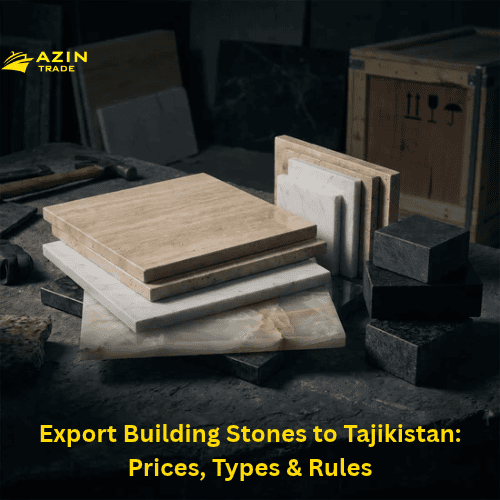
Travertine, Marble, Onyx, and Granite for the Tajik Market
Each of these four stone types serves a different slice of demand, and knowing the split helps exporters plan inventory correctly.
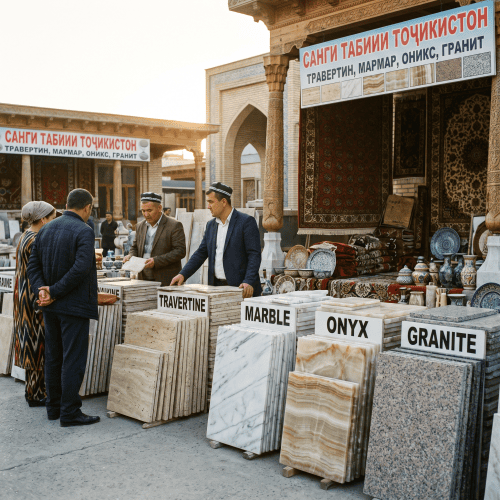
- Travertine sells in the highest volume. Its warm, neutral tones suit interiors and exteriors alike, and Iranian travertine from Mahallat and Azarshahr is known for consistent veining.
- Marble moves well for flooring and wall cladding in commercial buildings, especially cream and beige tones that show up well in architectural renderings.
- Onyx is a smaller but higher-margin category, used mainly in feature walls and backlit décor in upscale hotels and offices.
- Granite works for exterior facades, staircases, and high-traffic flooring, thanks to its durability, though it ships in smaller volumes than travertine or marble.
Export Stone Prices to Tajikistan
Logistics shape pricing here almost as much as the raw material does, since transport distance and border crossings add real cost.
FOB prices for standard-grade Iranian travertine tiles usually sit in the lower-to-mid range of the global market. Book-matched marble slabs and premium onyx cost noticeably more per square meter. Granite typically prices above travertine but below high-grade marble, mostly because of processing costs. Prices shift with currency rates, fuel costs, and Tajikistan’s construction calendar, which peaks in spring and summer. Always request a dated quotation instead of relying on a published price list, since those go stale within weeks.
Best Stone Dimensions and Thicknesses for Tajikistan
Dimension standards here favor practicality, mostly because local fabrication crews are set up for conventional sizes.
Standard tiles measuring 60×60 cm and 60×30 cm dominate the flooring market. Slabs in the 2.5–3 cm thickness range are the norm for both flooring and cladding. Thicker slabs of 5 cm or more see limited demand and mostly appear in high-end commercial projects or exterior stairs where load matters. Custom sizing is possible, but it adds cost and lead time. Confirm dimensions with the buyer before cutting, not after.
Stone Slabs, Tiles, and Stair Treads
Order mix tends to follow the construction calendar, so timing matters almost as much as the product itself.
Buyers order slabs mainly for large commercial and hospitality projects. Tiles dominate residential and mid-size commercial flooring. Stair treads and risers form a steady but smaller category tied to both public buildings and private homes. Interior tiles usually come in a polished finish, while exterior stair treads and high-traffic flooring favor honed or flamed finishes for better slip resistance. Bundling these product types into one shipment is common and can cut per-unit freight costs.
Stone Buyers and Importers in Tajikistan
The buyer landscape here is smaller and far more relationship-driven than in larger markets, and that changes how outreach should work.
A relatively small group of established construction material importers in Dushanbe handle most stone imports, with smaller hubs in Khujand and Kulob. These importers usually supply both retail showrooms and contractors directly, so one solid relationship can open access to many downstream buyers. Government-linked projects add real demand too, though they usually run through formal tenders rather than direct sales. Anyone who wants to export building stones to Tajikistan successfully should build a short list of verified importers through trade fairs, chamber introductions, or existing distributor networks rather than cold outreach to unknown contacts.
Export Regulations and Required Documents
Paperwork causes more shipment delays into Tajikistan than almost anything else, so handle it carefully before goods leave Iran.
The U.S. Commercial Service’s Tajikistan guide notes that importing goods into the country can take time, and full details on the process sit on the Tajik Customs Agency website at customs.tj. Importers must generally show a certificate of registration, a taxpayer identification number, and a customs cargo declaration covering the shipment’s contents, ownership, and destination. Shipments also typically need a power of attorney for the customs broker, the sales contract, and full shipping documents, though requirements vary by product.
Tajikistan belongs to the World Trade Organization and keeps fairly liberal tariff rates, generally between zero and fifteen percent, with an average trade-weighted tariff near seven percent. Since January 2024, Tajikistan has phased in VAT reductions too, lowering the rate on non-cash transactions to fourteen percent through 2026. This can affect final landed pricing, so factor it into quotes. A certificate of origin from a recognized chamber of commerce, plus a quality certificate, usually rounds out the document list. Always check current requirements directly with Tajik Customs before shipping, since procedures can change with little notice.
Shipping Methods from Iran to Tajikistan
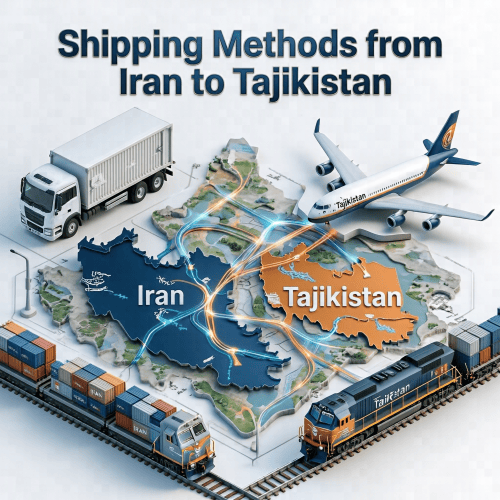
Tajikistan is landlocked, so every route into the country depends on transit through neighboring states.
Most Iranian stone exporters ship overland by truck through Turkmenistan and Uzbekistan, which balances cost and speed well for palletized stone. Rail offers an alternative that lowers per-ton costs on larger shipments, though extra handling raises breakage risk for fragile slabs. Tajikistan has belonged to the TIR Carnet convention since 1996, which simplifies cross-border trucking and is worth using whenever possible. Sea freight isn’t a direct option given Tajikistan’s geography, so any maritime leg from an Iranian port still needs overland transit afterward.
Export Packaging and Standards for Tajikistan Shipments
Stone is heavy and brittle, and the long overland trip to Tajikistan makes packaging even more critical than on shorter routes.
Pack slabs in reinforced wooden A-frame or L-frame crates with cushioning between each piece, since the route involves multiple loading stages. Pack tiles in wooden crates lined with foam or cardboard separators, and label each box clearly with stone type, dimensions, and quantity to speed up customs checks. Moisture protection matters here too, given the temperature swings goods face crossing several borders, so add waterproof wrapping under the wooden packaging.
Iran vs. China, Turkey, and Uzbekistan in the Tajik Stone Market
Go in with a clear view of the competition, because Tajik importers actively compare suppliers on price, quality, and reliability.
China competes mainly on price for lower-grade tiles and engineered stone, but it generally lags behind Iran on natural stone quality and color consistency in premium travertine and marble. Turkey offers strong quality and design variety, usually at a premium, and it holds an established reputation across Central Asia — making it Iran’s closest competitor in the mid-to-premium segment. Uzbekistan, as a neighbor with limited stone production of its own, mostly re-exports or supplies smaller volumes rather than competing directly in premium categories, though its location gives it a logistics edge. Iran’s strongest position remains the mid-range travertine and marble segment, where quality-to-price ratio tends to beat both Chinese and Turkish alternatives.
How to Find Tajik Stone Buyers
Finding legitimate, creditworthy buyers takes more than a general trade directory search in a market this size.
Construction material trade fairs in Dushanbe offer one of the most reliable entry points, since they bring together importers who are already sourcing actively. Regional chambers of commerce and trade promotion offices, both Iranian and Tajik, can also arrange verified introductions — useful in a market this relationship-driven. Working with an established export partner that already has a distributor network in Central Asia, such as Azin Trade, can save months of cold outreach. Whatever channel you use, verify an importer’s registration and trade history before shipping on credit terms.
FAQ: Export Building Stones to Tajikistan
Is Iranian building stone in demand in Tajikistan? Yes. Iranian travertine and marble carry a strong reputation across Central Asia, and Tajikistan’s limited domestic production means most decorative stone gets imported.
What is the best stone type to export to Tajikistan? Travertine sells the most, especially in light and beige tones, followed by cream marble for commercial flooring and cladding.
What documents do I need to export building stones to Tajikistan? You’ll generally need a customs cargo declaration, certificate of origin, sales contract, and shipping documents, plus the importer’s registration and tax details on the receiving end.
How does stone ship from Iran to Tajikistan? Since Tajikistan is landlocked, shipments usually move overland by truck or rail through Turkmenistan and Uzbekistan, often under TIR carnet procedures.
How does Iran compare with China and Turkey in this market? Iran generally offers a stronger quality-to-price ratio in mid-range travertine and marble, while China competes on low-cost tiles and Turkey competes on premium design variety.
Where can I check current prices and connect with real buyers? Contact Azin Trade directly for up-to-date pricing and buyer connections in Central Asian markets, including Tajikistan.
Sources: Tajikistan Country Commercial Guide – Import Requirements, Tajikistan Country Commercial Guide – Import Tariffs, Tajikistan Country Commercial Guide – Customs Regulations, Tajikistan Country Commercial Guide – Temporary Entry, Tajik Customs Service, Natural Stone Institute.