
Gypsum Powder Export from Iran to Pakistan: The Complete Guide for Importers and Traders
If you’ve searched for guidance on gypsum powder export to Pakistan, you’ve probably noticed the same gap I did while researching this. Most pages are either raw trade-data dumps or a supplier’s product listing with a price and nothing else. None of them walk through the actual route, the paperwork, or how to tell a serious exporter from someone just repeating buzzwords on a webpage. This guide fills that gap.
Why Pakistan Is a Growing Market for Iranian Gypsum Powder
Construction and cement production in Pakistan both depend on a steady gypsum supply, and domestic output doesn’t fully cover that need.
Pakistan’s cement industry uses gypsum as a setting-time regulator in almost every batch produced, and its construction sector separately uses gypsum powder for plastering, wallboard, and decorative finishing. Domestic Pakistani gypsum deposits exist, but quality and processing capacity vary by region. That gap has kept the door open for imported gypsum, and Iran sits right next door with both the raw material and the processing capacity to fill it.
Pakistan’s own construction sector has grown steadily despite broader economic pressures, with residential building, government housing schemes, and commercial development all contributing to steady plaster and wallboard demand. Karachi, Lahore, and Islamabad remain the largest consumption centers, but demand in Quetta and other Baluchistan cities matters more for this specific trade route, simply because they sit closest to the Iranian border and receive shipments with the shortest transit times.
Iran’s Gypsum Industry: Scale and Export Growth
Numbers tell you more about a market’s real direction than a supplier’s sales pitch ever will.
According to Azintrade’s own gypsum stone export data, Iran’s raw gypsum rock exports reached $70 million in 2025 — a 40% increase from 2020. Gypsum powder exports grew even faster over the same period, more than doubling to reach $34 million. That shift toward processed powder rather than raw stone reflects growing investment in Iranian calcining and milling capacity, not just mining output. Iraq, Kuwait, the UAE, Oman, India, Pakistan, and Afghanistan all appear consistently among the top destinations for this material.
What Is Gypsum Powder and How Is It Made?
Before comparing suppliers or prices, it helps to know exactly what you’re buying.
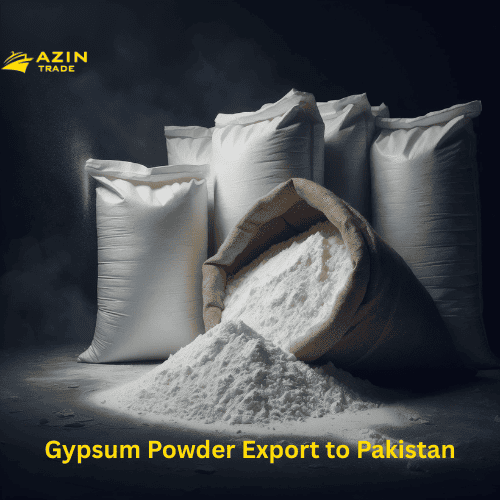
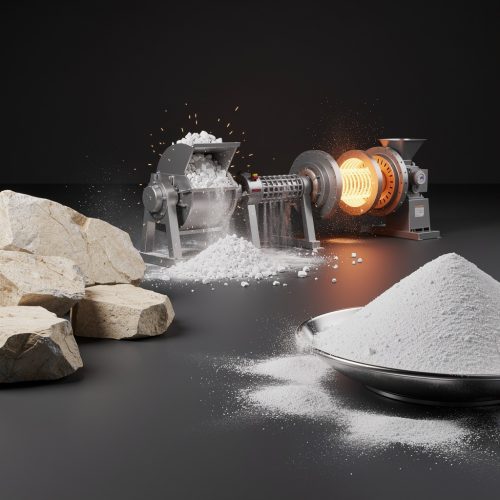
Gypsum powder — also called calcined gypsum or Plaster of Paris — starts as raw gypsum rock (calcium sulfate dihydrate). Producers crush the rock, then heat it in a calciner to drive off most of its chemical water content. This process converts it into a fine powder that sets and hardens quickly once mixed with water again. In international trade classification, calcined gypsum powder typically falls under HS code 25202010, which matters when you’re filing customs paperwork on either side of the border.
The calcining temperature matters more than most buyers realize. Beta-hemihydrate gypsum, produced through open-kettle or rotary calcining around 150°C, is the standard used for construction plaster and wallboard. Higher-temperature or pressure-calcined alpha-hemihydrate gypsum produces a denser, harder-setting product used in specialized industrial and dental applications, though it’s far less common in bulk export shipments. Most Pakistan-bound gypsum powder falls into the beta-hemihydrate category, since that’s what construction plastering and cement-industry buyers actually need.
Why Pakistani Buyers Choose Iranian Gypsum Powder
Buyers don’t switch suppliers out of habit — they switch because the numbers and the reliability both work in their favor.
A few factors consistently come up when Pakistani importers explain why they source from Iran:
- Geographic proximity — Iran and Pakistan share a direct land border, cutting out the shipping time and cost that Chinese or Middle Eastern sea-freight competitors can’t avoid.
- High natural purity — Iranian gypsum deposits, particularly in Semnan and Hormozgan provinces, are known for consistent chemical purity with low impurity levels.
- Competitive pricing — as noted on Azintrade’s overview of gypsum’s global demand, Iranian producers combine strong raw material access with relatively low production costs.
- Flexible order sizes — Iranian exporters commonly serve both large cement-plant contracts and smaller construction-grade orders in the same product line.
Iran-Pakistan Border Routes for Gypsum Shipments
Getting a competitive quote means nothing if the shipment gets stuck at a border crossing for two weeks.
Land transport dominates this trade route, and two crossings handle almost all of it.
Mirjaveh-Taftan: The Main Crossing
This is the primary and most established route between the two countries. Mirjaveh sits on the Iranian side in Sistan-Baluchestan province, connecting directly to Taftan on the Pakistani side. The crossing supports both road and rail transport, with the rail line running from Zahedan through to Quetta on the Pakistani side. From Quetta, cargo continues onward to Karachi or other major Pakistani markets by road. According to The Diplomat’s reporting on Iran-Pakistan border trade, this corridor supports bilateral trade worth around $1.5 billion annually, even accounting for periodic security-related closures.
Gabd-Rimdan: The Coastal Alternative
A second, less-traveled crossing exists further south along the coast, offering an alternative route when Mirjaveh-Taftan faces congestion or temporary closures. It’s used less frequently for bulk mineral shipments like gypsum powder, mostly because road infrastructure on this route is less developed, but it remains a fallback worth knowing about for time-sensitive orders.
Cooperation on this border keeps evolving. As recently as mid-2026, Pakistani and Iranian officials met in Zahedan specifically to discuss expanding trade connectivity along the more-than-920-kilometer shared border, with the Mirjaveh-Taftan crossing named as a direct priority.
Documents Required to Export Gypsum Powder to Pakistan
Missing paperwork is the single most common reason a shipment sits idle at the border instead of moving.
At minimum, expect to prepare:
- A commercial invoice and detailed packing list
- A certificate of origin
- A quality or lab analysis certificate confirming purity and specification
- Road transport documentation, ideally under a TIR carnet for smoother customs clearance
- Any import permits Pakistani customs authorities require for bulk mineral shipments
A practical 2026 guide to transit cargo through Iran to Pakistan confirms that TIR carnets remain the recommended approach for road shipments on this corridor, since they significantly reduce inspection delays compared to shipments without one.
Packaging Standards for Gypsum Powder Shipments
Gypsum powder is sensitive to moisture, and a shipment that looks fine leaving the factory can arrive caked and unusable if packaging wasn’t handled properly.
Standard packaging options include:
- 25 kg or 40 kg multi-layer paper or polypropylene bags for retail and small contractor use
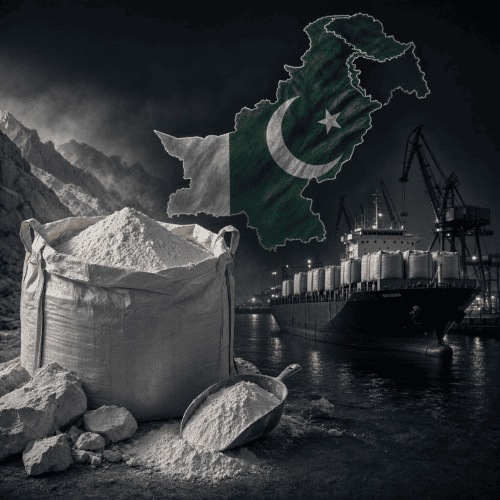
- Jumbo bags (1 to 1.5 tons) for bulk construction and cement-plant buyers
- Bulk tanker trucks for the largest recurring orders, bypassing bagging entirely
Whatever the format, moisture-resistant lining matters more on this route than on shorter ones, simply because road transit time through Zahedan and Quetta can stretch over several days depending on customs processing.
Gypsum Powder Price Factors for the Pakistan Route
The number on a supplier’s price sheet is a starting point, not the number you’ll actually pay once the shipment lands.
Several factors shift the final cost:
- Mesh size and fineness — finer, more processed powder (200 mesh) typically costs more than coarser grades (100 mesh).
- Purity grade — construction-grade and industrial-grade gypsum powder price differently based on calcium sulfate content and whiteness.
- Order volume — bulk tanker or jumbo bag orders reduce per-ton freight costs significantly compared to smaller bagged shipments.
- Border conditions — periodic congestion or temporary closures at Mirjaveh-Taftan can add unplanned transit costs.
- Currency fluctuations — since most contracts settle in US dollars, exchange rate shifts on either side of the deal affect final landed cost.
Where Gypsum Powder Actually Gets Used in Pakistan
Understanding the end use behind an order helps explain why specification details matter as much as price.
Cement plants blend a small percentage of gypsum powder into every batch of Portland cement to control setting time — without it, cement would harden too fast to work with on site. Construction crews use plaster-grade gypsum powder directly on interior walls and ceilings, valued for its smooth finish and relatively fast drying time compared to cement-based plaster. Wallboard and drywall manufacturers represent a smaller but growing segment in Pakistan, as prefabricated interior construction methods slowly gain ground over traditional brick-and-plaster techniques. Agricultural buyers occasionally source gypsum powder too, using it as a soil conditioner for saline or compacted soils, though this typically involves a different grade and specification than construction-grade material.
Grades and Mesh Sizes: Matching Product to Application
Not every gypsum powder grade suits every buyer, and ordering the wrong one is a common — and costly — mistake.
Construction-grade gypsum powder, usually ground to 100 mesh, suits general plastering and wallboard production. Finer 200-mesh powder suits more detailed decorative work and specific industrial formulations. Cement-plant buyers typically care less about mesh fineness and more about consistent calcium sulfate content, since gypsum’s role there is regulating cement setting time rather than surface finish. A good exporter should ask which application you’re buying for before recommending a grade, not just sell you their standard stock.
Iran vs. Other Gypsum Exporters for the Pakistani Market
Pakistani buyers do compare Iran against other sourcing options, and it’s worth being straightforward about where each one stands.
China ships gypsum powder globally at competitive prices, but sea freight into Pakistan adds cost and transit time that overland Iranian shipments avoid entirely. Domestic Pakistani gypsum, mined mostly in Punjab and Baluchistan, offers zero import friction but faces more variable quality control and, in some regions, limited processing infrastructure for finer calcined grades. Iran’s position sits between these two: better logistics than any overseas competitor, and typically more consistent processing than smaller domestic Pakistani operations serving the same construction-grade market.
Common Mistakes First-Time Exporters Make on This Route
Most problems on this route come from planning gaps, not bad products, and a few of them repeat often enough to be worth naming directly.
- Assuming Mirjaveh-Taftan works like a standard sea-freight port — road border crossings run on different schedules and inspection procedures, and treating this route like a container terminal leads to unrealistic delivery timelines.
- Skipping the TIR carnet to save a small upfront fee — this almost always costs more in inspection delays than it saves in paperwork costs.
- Not confirming moisture protection standards before the first shipment — gypsum powder that clumps in transit becomes a dispute, not a delivered product.
- Ordering standard mesh size without checking the buyer’s actual application — a construction plastering buyer and a cement-plant buyer often need different specifications, even if they’re both technically “gypsum powder.”
Avoiding these four issues alone puts a new exporter ahead of a large share of the competition on this specific route.
Payment Terms Buyers Typically Encounter
Payment structure often gets discussed last, right before a contract gets signed, when it should really come up in the first conversation.
Most Iranian gypsum exporters work with new buyers on a partial advance basis, commonly 30% deposit with the balance due against shipping documents or on arrival, depending on the trust level built over previous orders. Letters of credit remain common for larger recurring contracts, giving both sides more security than a simple wire transfer arrangement. Given the banking restrictions that affect some Iranian trade routes, it’s worth clarifying early exactly how funds will move between your bank and the exporter’s, rather than assuming a standard international transfer will process the same way it does with suppliers based elsewhere. A transparent exporter walks through this before you commit to a volume, not after a deposit has already gone out.
How to Choose a Reliable Iran Gypsum Exporter
A clean website and a low quoted price tell you very little about whether a shipment will actually show up on schedule and in spec.
Before committing to an order, check:
- Lab documentation — does the exporter provide a real certificate of analysis, or just a marketing claim about “high purity”?
- Production location — Semnan and Hormozgan-based suppliers, as referenced in Azintrade’s regional clinker and gypsum export coverage, have well-established processing infrastructure for export-grade material.
- Border experience — has this exporter actually shipped through Mirjaveh-Taftan before, or only to sea-freight destinations?
- Packaging flexibility — can they adjust bag size and lining based on your storage setup in Pakistan?
My Take: Is This a Good Time to Enter the Pakistan Gypsum Market?
Since you asked for my honest read on this, here it is: yes, and the timing is better than most people sourcing from China or the Gulf seem to realize.
The $34 million gypsum powder export figure from Iran is still small relative to the country’s total gypsum production, which tells me processed powder exports specifically to Pakistan haven’t been pushed nearly as hard as raw stone exports to markets like Iraq or India. Combine that with a land border that’s actively getting more diplomatic attention in 2026, and you’ve got a market that’s underserved less because of weak demand and more because few exporters have bothered building the border-specific logistics relationships this route actually needs. My view is that exporters who invest now in reliable Mirjaveh-Taftan shipping relationships — rather than treating Pakistan as a smaller add-on behind Iraq or the UAE — will hold a real head start once more competitors catch on to the same numbers.
Why Work with Azintrade for Gypsum Powder Export to Pakistan
Sourcing gypsum powder directly from Iranian producers without a partner who understands the Mirjaveh-Taftan route can turn a straightforward order into a customs headache.
Azintrade supplies both raw gypsum stone and processed calcined gypsum powder for buyers across the Middle East, South Asia, and Central Asia, as outlined on its gypsum stone product page. For buyers comparing regional options, Azintrade’s parallel work on gypsum export to India shows how the company handles a similar overland-adjacent export relationship, and its broader clinker export coverage across regional markets confirms Pakistan sits firmly within its existing distribution network.
Frequently Asked Questions
Does Iran export gypsum powder to Pakistan?
Yes. Iran is one of the top global exporters of both raw gypsum rock and processed gypsum powder, and Pakistan is a consistent destination market alongside Iraq, Afghanistan, and the UAE.
What is the HS code for gypsum powder exports?
Calcined gypsum powder or gypsum plaster typically falls under HS code 25202010, though it’s worth confirming the exact classification with your customs broker on both sides of the shipment.
Which border crossing is used for gypsum shipments to Pakistan?
Most gypsum shipments move through the Mirjaveh-Taftan crossing, which supports both road and rail transport between Zahedan and Quetta. The Gabd-Rimdan coastal crossing serves as a secondary option.
What’s the difference between gypsum powder and raw gypsum rock?
Raw gypsum rock is the unprocessed mineral straight from the quarry. Gypsum powder (calcined gypsum) has been crushed and heated to remove most of its chemical water, giving it the fast-setting properties needed for plaster and wallboard production.
How is gypsum powder packaged for export?
Common formats include 25 kg and 40 kg bags for smaller buyers, jumbo bags of 1 to 1.5 tons for bulk construction orders, and bulk tanker trucks for the largest recurring shipments.
What documents do I need to import gypsum powder from Iran?
At minimum, a commercial invoice, packing list, certificate of origin, a quality or lab analysis certificate, and road transport documentation — ideally under a TIR carnet for faster customs clearance.
Is Iranian gypsum powder cheaper than Chinese gypsum powder in Pakistan?
Landed cost often favors Iran once freight is included, since overland shipping through Mirjaveh-Taftan avoids the sea-freight time and cost that Chinese suppliers can’t eliminate.
What mesh size of gypsum powder should I order?
100 mesh suits general construction plastering and wallboard use, while 200 mesh suits finer decorative and specific industrial applications. Cement-plant buyers typically prioritize calcium sulfate content over mesh fineness.
Request a Gypsum Powder Quote from Azintrade
If you’re comparing options for gypsum powder export to Pakistan, Azintrade can walk you through current pricing, available grades, and documentation for shipments via the Mirjaveh-Taftan border.
Contact Azintrade today to request a quotation and see how direct access to Iranian gypsum producers compares to your current sourcing options.