
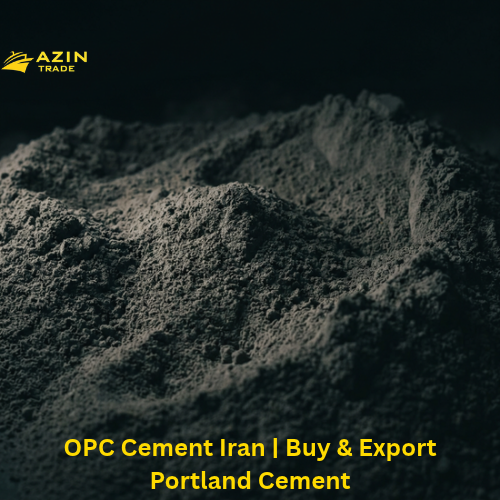
OPC Cement Iran: The Complete Guide to Buying, Specifying and Exporting Portland Cement
OPC cement from Iran supplies construction projects across the Middle East, Central Asia, South Asia and parts of Africa. Ordinary Portland Cement (OPC) is the backbone of modern construction, and Iran, with its limestone-rich geology, large installed capacity and position between major import markets, is one of the most significant producers in the region.
This guide is written for importers, traders, contractors, ready-mix producers and procurement managers. It covers what OPC is, how it is made, the grades and standards used in Iran, technical properties, applications, packaging, logistics, quality control, pricing factors and the due-diligence steps that protect a buyer.
Table of Contents
- What is OPC cement?
- An overview of Iran’s cement industry
- How OPC cement is manufactured in Iran
- Chemical composition and main compounds
- OPC grades and strength classes
- Standards and certifications
- Physical and chemical specifications
- Applications of OPC cement
- OPC vs. PPC vs. other cement types
- Packaging options
- Export routes and logistics
- Incoterms and shipping documents
- Quality control and inspection
- Factors affecting OPC cement price
- How to choose a supplier
- Storage and handling
- Compliance and sanctions considerations
- FAQ
- Conclusion
1. What Is OPC Cement?
OPC stands for Ordinary Portland Cement. It is a hydraulic binder: when mixed with water it reacts chemically (hydration), sets, hardens and gains strength, even under water. It is produced by grinding Portland cement clinker together with a small proportion of gypsum (calcium sulfate), which regulates the setting time.
In Iran, OPC is generally known as Type 1 Portland cement (Simān-e Portland Tip 1), and it is the benchmark product against which other cements, such as pozzolanic, slag, white and sulfate-resistant cements, are compared.
Because OPC contains a very high share of clinker (typically 95% or more, with limited minor additional constituents), it offers:
- Fast early-strength development
- Predictable, consistent performance
- Wide compatibility with admixtures
- Suitability for almost all general construction applications
2. An Overview of Iran’s Cement Industry
Iran has one of the larger cement industries in the world and one of the biggest in the Middle East. Cement plants operate across many provinces, including Tehran, Fars, Khorasan, Kerman, Hormozgan, Isfahan, Khuzestan, Mazandaran and others, often located close to limestone quarries.
Several factors support the industry:
Abundant raw materials. Limestone, clay/marl and gypsum are widely available, so plants can source raw materials near the factory and keep production costs low.
Substantial installed capacity. Annual capacity is well above domestic demand, which makes export a natural outlet for surplus production. Buyers should confirm current capacity and export availability with the specific producer.
Energy resources. Iran’s energy base has historically supported lower-cost kiln operation compared with many importing countries. Energy is a major share of cement production cost.
Modernization. Many plants run dry-process kilns with preheaters and precalciners, which are more energy-efficient than older wet-process technology.
Export orientation. Cement and clinker are important non-oil export products for Iran. Neighboring markets with strong construction demand are within reach by road, rail or short sea routes.
3. How OPC Cement Is Manufactured in Iran
Understanding the process helps buyers read quality certificates and ask better technical questions.
Step 1: Quarrying and crushing
Limestone (the main source of calcium oxide) is quarried and crushed. Clay, marl, iron ore and sand are added as correctives to supply silica, alumina and iron oxide.
Step 2: Raw material grinding and blending
The materials are proportioned and ground into a fine raw meal, then blended and homogenized. Consistent chemistry at this stage is the foundation of consistent cement quality.
Step 3: Pyroprocessing (the kiln)
The raw meal passes through a preheater/precalciner tower and into a rotary kiln heated to roughly 1,450 °C. The materials partially fuse and form clinker, gray, nodular material that contains the reactive cement minerals.
Step 4: Clinker cooling
Clinker leaves the kiln and is rapidly cooled in a grate cooler. Proper cooling affects clinker mineralogy and grindability.
Step 5: Cement grinding
Clinker and a controlled amount of gypsum (and, where the standard allows, limited minor constituents) are ground in ball mills or vertical roller mills to a specific fineness. Finer cement generally gains strength faster.
Step 6: Storage, packing and dispatch
Finished cement is stored in silos, tested, and then dispatched as bulk or packed in bags.
4. Chemical Composition and Main Compounds
OPC is composed mainly of four clinker minerals:
| Compound | Common name | Role |
|---|---|---|
| C₃S (tricalcium silicate) | Alite | Drives early strength and heat of hydration |
| C₂S (dicalcium silicate) | Belite | Slow hydration; contributes to long-term strength |
| C₃A (tricalcium aluminate) | Aluminate | Rapid reaction; influences setting and sulfate resistance |
| C₄AF (tetracalcium aluminoferrite) | Ferrite | Contributes color and has a minor effect on strength |
Typical oxide analysis includes CaO, SiO₂, Al₂O₃, Fe₂O₃, MgO and SO₃. Key control ratios used by producers include the Lime Saturation Factor (LSF), Silica Modulus (SM) and Alumina Modulus (AM).
If your project is sensitive to sulfate attack or heat of hydration, ask for the C₃A content and the Bogue-calculated clinker mineralogy, not only the strength results.
5. OPC Grades and Strength Classes
Strength classes are defined by the minimum compressive strength at 28 days (in MPa, tested on standard mortar prisms).
| Grade | Typical applications |
|---|---|
| OPC 32.5 | Plastering, masonry, blocks, non-structural or low-load work |
| OPC 42.5 | Structural concrete, slabs, columns, precast, general construction, the most requested export grade |
| OPC 52.5 | High-strength concrete, prestressed and post-tensioned elements, fast-track construction, cold-weather work |
Within many standards, each class may also carry a letter suffix indicating early strength (for example, N for normal and R for rapid early strength). If you need fast formwork removal or quick turnaround, specify an R-type class.
Which grade should you buy? For most buyers, OPC 42.5 is the best balance of performance, price and market acceptance. Choose 52.5 only if your mix design or engineer requires it, and 32.5 for lower-grade masonry and plaster uses where permitted by local codes.
6. Standards and Certifications
International buyers should always ask which standard a shipment is produced and tested against. Common references for Iranian OPC include:
- ISIRI 389: Iranian national standard for Portland cement, with specification and test methods.
- EN 197-1 (CEM I): European standard for common cements; widely requested by international buyers.
- ASTM C150 (Type I): American standard; common in project specifications from the Americas and for many international EPC contracts.
- BS standards / Gulf and regional specifications: Some destination markets require compliance with local or regional technical regulations.
- ISO 9001: Quality management system certification at plant level.
- ISO 14001 / ISO 45001: Environmental and occupational health systems, which increasingly matter to large corporate buyers.
Tip: Make sure the contract specifies which standard, which edition and which strength class applies. “OPC 42.5” alone is not enough. State, for example, “OPC 42.5N according to EN 197-1 CEM I” or “Type I according to ASTM C150.”
7. Physical and Chemical Specifications to Check
When comparing offers or reviewing a certificate of analysis, check these parameters:
Physical properties
- Compressive strength: 2-day or 7-day (early) and 28-day (standard)
- Initial setting time: typically not less than a minimum defined by the standard (e.g., 60 minutes for many classes)
- Final setting time: upper limit defined by the standard
- Fineness: Blaine specific surface area (cm²/g)
- Soundness: expansion by Le Chatelier method or autoclave
- Normal consistency
Chemical properties
- Loss on ignition (LOI)
- Insoluble residue
- Sulfate content (SO₃)
- Magnesium oxide (MgO)
- Chloride content (Cl⁻)
- Alkali content (Na₂O equivalent): important if your aggregates are potentially alkali-silica reactive
Ask for recent monthly or batch-level test records, not just a single best-case certificate. Consistency over time is what matters for large supply contracts.
8. Applications of OPC Cement
OPC is a general-purpose cement. Typical uses include:
Buildings
- Residential, commercial and institutional buildings
- Foundations, columns, beams, slabs and shear walls
- Plaster, render, screed and mortar
Infrastructure
- Roads, highways and concrete pavements
- Bridges, culverts and viaducts
- Airports, ports and railway structures
- Water tanks, canals and drainage works
Industrial and precast products
- Ready-mix concrete
- Precast panels, beams, hollow-core slabs
- Concrete blocks, pavers, kerbstones and pipes
- Prestressed elements (OPC 52.5)
Specialty uses
- Grouts and repair mortars
- Soil stabilization
- Shotcrete (with proper mix design)
When OPC may not be ideal: In sulfate-rich soils, marine environments or mass concrete where low heat of hydration is critical, a sulfate-resistant (Type 5), low-heat or blended cement (such as pozzolan or slag cement) may be a better technical choice.
9. OPC vs. PPC vs. Other Cement Types
| Type | Description | Typical strengths | Typical advantages |
|---|---|---|---|
| OPC (Type 1) | Mostly clinker and gypsum | Fast early strength | High strength, versatility, quick turnaround |
| PPC (Portland Pozzolan Cement) | OPC blended with pozzolanic material | Slower early, good long-term | Improved durability, lower heat of hydration, often lower cost |
| Type 2 | Moderate sulfate resistance and heat | Moderate | Used in moderately aggressive environments |
| Type 5 | High sulfate resistance, low C₃A | Slower early | Sulfate soils, marine and wastewater works |
| White cement | Low iron content | Varies | Architectural finishes |
| Slag cement | Blended with ground granulated slag | Good long-term | Durability, lower heat |
If your priority is fast strength and wide acceptance, choose OPC. If your priority is durability in aggressive environments or lower cost, compare PPC and Type 5 options.
10. Packaging Options
Iranian suppliers typically offer three options:
50 kg bags
- Paper bags or woven polypropylene (PP) bags, sometimes with an inner liner
- Common for retail distribution and small to medium orders
- Palletized and shrink-wrapped when requested
Jumbo bags (big bags)
- Capacity of roughly 1 to 1.5 tonnes
- Convenient for crane loading and for projects with on-site handling equipment
Bulk cement
- Loaded into pneumatic bulk tankers or bulk vessels
- Best for large-volume buyers with silo and unloading infrastructure
- Typically lower cost per tonne than bagged cement
Packaging checklist for buyers:
- Bag weight tolerance
- Bag material and moisture protection
- Printing and labeling (brand, grade, standard, batch number, production date)
- Palletization and shrink wrapping
- Container loading method (loose-loaded, palletized, or jumbo)
11. Export Routes and Logistics
Iranian cement reaches buyers through several routes:
By road
Trucks carry cement to neighboring countries such as Iraq, Afghanistan, Turkmenistan, Armenia and Azerbaijan, depending on border conditions and trade arrangements.
By rail
Rail connections link Iran with Central Asia and parts of the wider region, which suits steady bulk volumes.
By sea
Ports on the Persian Gulf and the Gulf of Oman, including Bandar Abbas, are the main sea gateways for shipping to Gulf states, South Asia, East Africa and beyond. Cement is shipped in bulk vessels or bagged in containers and break-bulk cargo.
Choosing the best route depends on destination, volume, delivery schedule, port infrastructure and current regulations. For large annual contracts, buyers often combine routes to manage risk.
12. Incoterms and Shipping Documents
Common Incoterms
- FOB (Free on Board): The seller delivers to the vessel at the Iranian port; the buyer arranges main freight.
- CFR / CIF: The seller pays freight (and insurance under CIF) to the destination port.
- FCA / EXW: Used for road or rail pickup at the plant or terminal.
- DAP / DDP: The seller delivers to a named place; the buyer’s responsibility for customs varies.
Typical documents
- Commercial invoice
- Packing list
- Bill of lading (or CMR/rail consignment note)
- Certificate of origin
- Certificate of analysis / mill test certificate
- Inspection certificate (third-party)
- Insurance certificate (if applicable)
- Phytosanitary and fumigation documents are generally not relevant to cement, but destination countries may have their own import requirements
Clarify at the start who handles loading, demurrage, customs clearance, port fees and inspection costs.
13. Quality Control and Independent Inspection
A professional OPC cement supply chain uses layers of quality control:
At the plant
- Continuous raw meal and clinker monitoring
- Online analyzers and laboratory testing
- Batch sampling during dispatch
At the buyer’s side
- Review of the COA for each batch
- Independent pre-shipment inspection by recognized firms such as SGS, Bureau Veritas, Intertek or a comparable inspector
- Sampling at loading, with retained samples
- Testing at an accredited laboratory in the destination country
Practical advice:
- Order a trial shipment before committing to a long-term contract.
- Agree in writing on acceptance criteria and what happens if a batch fails.
- Keep retained samples from each shipment in case of disputes.
- Check that bags are sealed, dry and clearly labeled.
14. Factors Affecting OPC Cement Price
OPC prices are not fixed. They move with a combination of production, logistics and market factors:
- Strength class and standard (52.5 usually costs more than 42.5, which costs more than 32.5)
- Packaging type (bulk is generally the cheapest; jumbo and 50 kg bags add cost)
- Order volume and contract duration
- Plant location, including distance to the port or border
- Energy and fuel costs
- Inland transport and port handling charges
- Sea freight rates and insurance
- Exchange rates and payment method
- Seasonal demand and construction activity in destination markets
- Regulatory factors, such as export duties or licensing requirements, if any apply
How to request an accurate quote: Send your supplier the grade, standard, quantity per shipment and per year, packaging type, delivery port or place, target Incoterm and delivery timeline.
15. How to Choose a Reliable OPC Cement Supplier in Iran
Use this checklist before signing a contract:
- Verify the producer. Confirm whether you are dealing directly with a plant, an authorized exporter or a trader. Ask for the plant name, location, license and production capacity.
- Check certifications. Request ISO certificates and standard compliance documents, and confirm they are current.
- Review test history. Ask for recent batch test results, not only a sample certificate.
- Test a sample. Run lab tests on a sample before ordering at scale.
- Use independent inspection. Appoint a third-party inspector for loading and quality.
- Define specifications in the contract. Include standard, grade, packaging, tolerances and testing methods.
- Agree on remedies. Include clauses for off-spec product, delays and claims.
- Verify banking and payment structure. Use secure instruments where possible and confirm they are workable in your jurisdiction.
- Check references. Ask for past export customers or case references.
- Get legal advice. Have trade and compliance counsel review the contract.
Red flags: unusually low prices, reluctance to name the plant, no testing documentation, pressure to pay in full in advance, vague specifications.
16. Storage and Handling of OPC Cement
Even high-quality OPC loses performance if it is stored poorly. Share these guidelines with your site or distribution team:
- Keep it dry. Moisture causes lumping and strength loss.
- Store bags on pallets off the ground and away from walls.
- Stack limit: avoid stacking bags too high, which can compact the lower layers.
- Use first in, first out. Cement ages; use older stock first, and ideally within about three months for bagged cement under normal conditions.
- Protect from rain and humidity with weatherproof covers or enclosed warehouses.
- For bulk cement, keep silos sealed, dry and clean, and avoid mixing batches from different sources.
- Safety: cement is alkaline and can irritate skin, eyes and lungs. Use gloves, eye protection and dust masks when handling.
17. Compliance and Sanctions Considerations
International trade involving Iran is subject to sanctions, export controls and banking restrictions that vary by country. Depending on where your company is based and how you finance the trade, these rules can affect:
- Whether a transaction is permitted
- Which banks and payment channels you can use
- Shipping, insurance and port access
- Documentation and licensing requirements
Before contracting, consult qualified legal and compliance advisers in your jurisdiction. Do not rely on this article as legal advice. Regulations can change, so re-check requirements before each new contract.
18. Frequently Asked Questions
What does OPC stand for?
Ordinary Portland Cement, the most widely used general-purpose cement worldwide.
Is OPC the same as Type 1 cement?
Yes, in practice. “Type I” is the ASTM C150 designation for ordinary Portland cement used where no special properties are required. In Iran, OPC is commonly referred to as Type 1.
What is the difference between OPC 42.5 and OPC 52.5?
The numbers represent minimum 28-day compressive strength in MPa. OPC 52.5 is higher strength and usually finer, which gives faster strength gain but may require more careful curing and mix design.
Is Iranian OPC cement good quality?
Quality depends on the individual plant and batch. Reputable producers manufacture to national and international standards and provide test certificates. Buyers should always verify with sample testing and independent inspection.
What packaging is available for OPC cement from Iran?
Typically 50 kg bags, jumbo bags and bulk cement.
What is the minimum order quantity?
It varies by supplier and route. Bulk and vessel shipments usually involve thousands of tonnes, while container shipments are smaller. Confirm directly with the supplier.
Can OPC cement be used for all construction projects?
It suits most general construction. For sulfate-rich soils, marine exposure or mass concrete, consider Type 5, low-heat or blended cements.
How long can cement be stored?
Bagged cement stored dry and off the ground typically keeps good quality for around three months, and strength declines gradually afterward. Bulk cement in sealed silos can last longer.
How should I verify cement quality?
Ask for a COA, test an independent sample in an accredited lab and use pre-shipment inspection.
Does Iran export OPC cement?
Yes, Iranian producers export OPC cement to several regional markets. Routes, payment methods and legal requirements depend on the destination country and current regulations.
19. Conclusion
OPC cement from Iran combines abundant raw materials, large production capacity, access to regional markets and competitive pricing. It can be a strong sourcing option for importers, traders and contractors, provided buyers do their homework: choose the right grade and standard, verify the supplier, test samples, use independent inspection, define clear contract terms and address compliance requirements from the beginning.
Ready to source OPC cement from Iran? Send us your required grade, standard, quantity, packaging, destination and timeline, and we will prepare a tailored quotation and technical data sheet.