
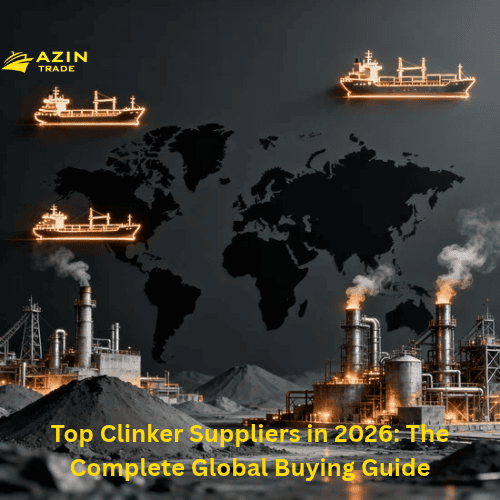
Top Clinker Suppliers in 2026: The Complete Global Buying Guide for Cement Buyers and Importers
If you’ve searched for clinker suppliers before, you’ve probably run into the same thing everywhere. A short list of country names. A few company logos. Export figures from years ago. That’s not enough to actually place an order with confidence. This guide goes further. It walks through who the real top clinker suppliers are right now, what separates a serious exporter from a reseller, and why Iran has quietly become one of the more interesting sourcing options for buyers who want quality without paying a premium for it.
Why the Clinker Trade Looks Different in 2026 Than It Did a Few Years Ago
Global clinker flows shift every year. Relying on old numbers can steer you toward suppliers that no longer lead the market.
Global clinker production capacity reached roughly 3.8 billion metric tons in 2024. China alone accounted for about 2 billion metric tons of that — more than half the world’s capacity. But production capacity and export activity aren’t the same thing.
The countries actually shipping clinker abroad in volume have shifted noticeably in the past two years. Vietnam’s cement and clinker exports climbed 21.7% through the first eleven months of 2025, reaching 33.4 million metric tons. Its industry association projects a full-year total near 37 million metric tons. Indonesia’s clinker exports rose 12.8% year-over-year to 12.3 million metric tons in 2025, with Bangladesh absorbing about 73% of that volume. Turkey pushed clinker exports to roughly 6.85 million metric tons in the first eleven months of 2025 alone. That’s already ahead of its full 2024 total of 5.22 million metric tons, with Italy and Romania as its top buyers.
If a supplier list you’re reading still leans on 2018 export rankings, it’s missing this shift entirely.
Top Clinker Suppliers by Country: An Updated Look
Rankings change as fast as production capacity and shipping lanes do. It pays to check which countries are actually active exporters right now, not just which ones topped the list years ago.
Based on the most recent trade data available, the countries shipping the largest volumes of clinker internationally include:
- Vietnam — the largest overall exporter of cement and clinker combined, with roughly 37 million metric tons projected for 2025. Shipments spread across the Philippines, Malaysia, Bangladesh, and emerging markets like Brazil and Angola.
- Indonesia — over 12 million metric tons of clinker exported in 2025, concentrated heavily on Bangladesh, Taiwan, and Australia.
- Turkey — nearing 7 million metric tons in 2025. Italy, Romania, and Spain are its top clients, alongside fast-growing shipments to markets like Guatemala and Benin.
- Thailand, UAE, and India — all remain consistent mid-to-large exporters, particularly into South Asian and African markets.
- Iran — a smaller volume exporter by global standards but a rapidly growing one. It carries strong cost advantages into the Middle East, the Caucasus, and Central and South Asia.
According to S&P Global Commodity Insights, Turkey’s clinker shipments alone are on pace to exceed 7 million metric tons in 2025. That single figure shows how much the export map has moved since the last widely cited industry rankings.
What Actually Separates Good Clinker Suppliers from the Rest
A country ranking tells you almost nothing about whether a specific supplier can deliver consistent, spec-compliant clinker on schedule.
Buyers evaluating cement clinker suppliers should look past national export totals. Instead, dig into the details that actually determine whether a shipment will perform in your kiln or grinding mill:
- Free lime content — high free lime signals incomplete burning. It can cause soundness problems in the finished cement.
- Mineral phase balance — the ratio of C3S, C2S, C3A, and C4AF determines early strength, long-term strength, and setting behavior.
- Fineness and burnability — this affects how efficiently the clinker grinds and how much energy your plant spends doing it.
- Consistency across shipments — a supplier that tests one batch well but varies wildly between shipments will cost you more long-term than one with slightly higher prices and tighter tolerances.
Any exporter worth working with should hand over lab reports (XRF and XRD data) without being asked twice.
Why Iran Has Become a Serious Option Among Clinker Exporters
Geography and cost work in Iran’s favor in ways that don’t show up in a simple export-value ranking.
Iran’s cement market reached an estimated $4.74 billion in 2025. It continues growing at roughly 4% annually, according to ResearchAndMarkets’ Iran Cement Industry Report. That scale gives Iranian producers the capacity to serve both small trial orders and large recurring contracts.
As an Iran clinker exporter, the country holds a few structural advantages competitors in Southeast Asia simply can’t match for buyers in its region:
- Shorter shipping distances to the Persian Gulf, the Caucasus, Central Asia, and South Asia compared to Vietnamese or Indonesian suppliers.
- Overland routes into Afghanistan, Iraq, and the wider Caucasus and Central Asian markets that avoid ocean freight entirely.
- Lower landed costs for buyers in these regions once you factor in freight, not just FOB price.
- Growing production capacity backed by a cement industry that’s expanding rather than contracting.
For buyers in the Middle East, South Asia, or Central Asia specifically, an Iran clinker exporter often lands the material faster and cheaper than a supplier shipping from Vietnam or Indonesia. This holds true even when the headline FOB price looks similar on paper.
What Drives Clinker Pricing (It’s Rarely Just the Factory Price)
The number a supplier first quotes you is almost never the number you’ll actually pay once the shipment lands.
Several factors combine to determine your final delivered cost:
- Freight distance and mode — sea freight from Southeast Asia versus overland or short-sea shipping from Iran or Turkey can swing landed costs significantly.
- Order volume — bulk carrier shipments price very differently than smaller bagged or container orders.
- Currency fluctuations — most clinker trade settles in US dollars, so exchange rate swings at either end of the transaction affect your final cost.
- Fuel and energy costs at the point of production, which move with regional energy prices.
- Port and border handling fees, which vary widely depending on the route and destination country.
Any quote that doesn’t break these out separately is one you should question before signing anything.
Documents and Logistics You’ll Need to Handle
Clinker shipments involve more paperwork than most buyers expect on their first order. Missing a document can hold a shipment at port for weeks.
At minimum, expect to manage:
- A commercial invoice and packing list matching the agreed Incoterm
- A certificate of origin
- A certificate of quality or lab analysis report (XRF/XRD results)
- Bill of lading (sea freight) or CMR/TIR documentation (overland routes)
- Import permits or registration documents required by your destination country’s customs authority
An experienced clinker exporter should walk you through exactly which of these apply to your specific route and shipment size. This conversation needs to happen before you place an order, not after something gets stuck at the border.
Bulk Carrier vs. Bagged Shipments: Choosing the Right Format
The right shipping format depends more on your storage setup and order size than on price alone.
Bulk carrier shipments make sense for large-volume buyers with silo storage and their own grinding or blending facilities. They lower the per-ton freight cost substantially. Bagged clinker, while less common than bagged finished cement, sometimes suits smaller buyers or markets without bulk-handling port infrastructure. Overland shipments by truck — common on routes like Iran-to-Afghanistan or Iran-to-Iraq — typically move in bulk tipper trucks rather than bags. This keeps costs down for buyers with truck-accessible storage.
Red Flags to Watch for When Vetting a Clinker Supplier
A supplier’s website or company brochure won’t tell you whether they can actually deliver. A few direct questions usually will.
Be cautious of suppliers who:
- Refuse to provide recent lab analysis or certificates of quality
- Can’t explain their own production capacity or current utilization rate
- Quote a single all-in price without breaking out FOB, freight, and handling separately
- Have no verifiable trade history or references from past buyers
- Push you toward advance payment terms with no sample or trial shipment option
A legitimate exporter — whether based in Vietnam, Turkey, or Iran — should welcome scrutiny on all of these points rather than deflect it.
Why Buyers Work with Azintrade for Iranian Clinker
Sourcing directly from Iranian producers without a partner on the ground can mean navigating unfamiliar documentation, banking, and logistics rules on your own.
Azintrade works directly with established Iranian cement plants to supply clinker to buyers across the Middle East, the Caucasus, and Central and South Asia. That includes:
- Verified lab reports and quality documentation on every shipment
- Support with export documentation, customs coordination, and logistics planning
- Both bulk and overland shipment options depending on your route and destination
- Ongoing supply for recurring contracts, not just one-off trial orders
Whether you’re comparing an Iran clinker exporter against suppliers in Vietnam or Turkey, or you already know Iran is the right fit for your route, Azintrade can walk you through current pricing, lead times, and documentation requirements for your specific order.
Frequently Asked Questions
Who are the top clinker suppliers globally right now?
As of the most recent trade data, Vietnam, Indonesia, and Turkey lead in export volume. Thailand, the UAE, India, and Iran are also active exporters, though rankings shift year to year as production and shipping costs change.
Is Iran a reliable clinker exporter?
Yes. Iran’s cement industry has grown steadily, reaching an estimated $4.74 billion market size in 2025. Its geographic position gives it a real cost and speed advantage for buyers in the Middle East, Caucasus, and Central and South Asia.
What is the minimum order quantity for clinker exports?
This varies by supplier, but bulk carrier shipments typically start around 5,000 to 10,000 metric tons per lot, while overland truck shipments (common on Iran’s regional routes) can work in much smaller volumes.
What’s the difference between clinker and cement?
Clinker is the semi-finished nodular material produced in the kiln. Cement is what you get after grinding clinker with gypsum and other additives. You can’t use clinker directly in construction — it has to be ground first.
How long can clinker be stored before it loses quality?
Clinker stores well. Kept dry, it can sit in silos or covered stockpiles for several months without meaningful quality loss, which is part of why it trades so easily across long distances.
What documents do I need to import clinker?
At minimum, a commercial invoice, packing list, certificate of origin, quality/lab analysis report, and either a bill of lading or overland transport documentation depending on the shipping route.
How is clinker usually shipped internationally?
Large orders typically move via bulk carrier for sea routes or bulk tipper trucks for overland routes. Bagged shipments are less common but available for smaller orders.
What’s the biggest factor in clinker pricing?
Freight cost usually matters as much as the factory price itself. The same clinker can cost very different amounts landed depending on shipping distance, mode, and order volume.
How can I verify a clinker supplier before ordering?
Ask for recent lab analysis (XRF/XRD), production capacity figures, references from previous buyers, and a breakdown of FOB versus freight costs. A legitimate cement clinker suppliers list should never hide behind a single all-in price.
Get a Clinker Quote from Azintrade
If you’re comparing clinker suppliers and want pricing, lead times, and documentation details specific to your route, Azintrade works directly with Iranian producers to supply verified, lab-tested clinker for buyers across the region.
Contact Azintrade today to request a quotation. See how an Iran clinker exporter with direct manufacturer access compares to your current sourcing options.