
Iran White Cement Clinker: Why Exports Just Dropped 23% (And What It Means for Buyers)
Iran white cement clinker Every page I found on this topic tells you the same story. Iran is a top-five cement producer. White clinker is valuable. Contact us for a quote. None of them mention that Iran’s clinker exports actually fell 23% year-over-year in 2024. None mention that key buyers in Kuwait, India, Bangladesh, and Oman have been pulling back. That’s not a reason to avoid this market. It’s a reason to understand it properly before you sign a contract — which is exactly what this guide does.
What White Cement Clinker Actually Is
Before comparing suppliers or prices, it helps to know exactly what you’re buying. “White cement” and “white cement clinker” get used interchangeably, but they’re not the same thing.
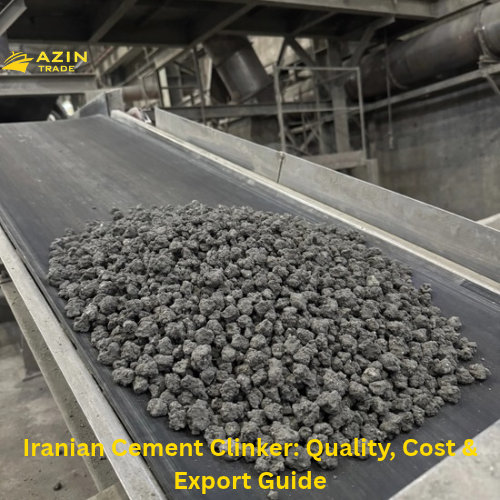
White cement clinker is the semi-finished nodular material produced in a kiln, before grinding. It later becomes white cement once mixed with gypsum. It requires high-purity limestone and low-iron clay as raw material. Even small amounts of iron oxide or manganese turn the final product gray instead of white. Manufacturers fire it in rotary kilns at roughly 1450°C, the same temperature used for standard grey clinker. The process runs under stricter conditions, though, to avoid contamination from kiln fuel or refractory materials. Buyers who operate their own grinding facilities often import the clinker directly rather than finished cement. It’s cheaper to ship, and it gives them control over the final grinding and blending process.
This distinction matters more than it might seem at first glance. A cement plant with its own grinding mills wants clinker. They can blend it with gypsum and any additives themselves. That lets them tailor the final product to local market specifications, often with better margins than buying pre-ground cement. A construction company or distributor without grinding infrastructure wants finished white cement instead, ready to use straight from the bag. Confusing these two product categories when requesting quotes is one of the most common mistakes buyers make entering this market. It’s also one of the easiest to avoid.
The Export Numbers Nobody Else Is Reporting
This is the part every sales-oriented page skips. It changes how you should approach this market.
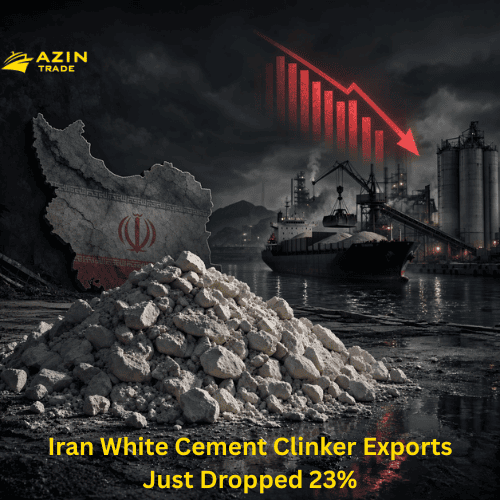
According to CemNet, a leading global cement industry publication, Iran’s clinker exports fell 23% year-over-year in the January-November 2024 period. That’s a drop from 8.101 million tons to 6.236 million tons. Iranian clinker production itself also declined, down 4.2% to 65.751 million tons over the same period. The same report places Iran as the fourth-largest clinker exporter globally, behind Vietnam, the UAE, and Indonesia. Not first, despite what several supplier pages claim. Most notably, CemNet specifically identifies Kuwait, India, Bangladesh, and Oman as key markets that have reduced their demand for Iranian clinker in recent years.
That decline doesn’t mean Iranian white cement clinker is a bad choice. It means the market has shifted. Buyers who understand why will negotiate better than those relying on outdated “Iran is booming” talking points. A few real factors likely explain part of this shift: competition from lower-cost Vietnamese and Indonesian clinker, banking and payment friction tied to sanctions on Iranian trade, and softer construction demand in some traditional Gulf buyer markets. None of this is secret information. It’s published industry data that most supplier-side content simply doesn’t mention, because it doesn’t help sell tonnage.
Domestic Iranian cement consumption tells a related story. CemNet’s data shows Iranian domestic cement sales contracted 16.5% year-over-year in November 2024 alone, even as domestic cement production rose slightly. That combination — falling domestic demand alongside relatively stable production — usually pushes producers to compete harder for export volume. For a buyer, that dynamic can actually translate into more negotiating leverage on price. Iranian producers facing softer domestic sales have real incentive to keep export contracts moving, even at tighter margins.
Where the Real Opportunity Is Right Now
Declining overall exports don’t mean every route is shrinking. One shift stands out clearly in current industry coverage.
According to a 2026 market analysis from Call2Supply, Russia has emerged as a genuinely significant new destination for Iranian cement and clinker. Over 1.2 billion kg has moved through the Caspian Sea route, as Iranian suppliers fill a gap left by European producers exiting the Russian market. The same analysis notes growing interest from West Africa and South America. Both regions are looking for competitively priced clinker to support their own construction growth. For white cement clinker specifically, high-end architectural demand in the UAE and Qatar remains strong. Iranian white cement is noted for whiteness levels exceeding 90% — a genuine technical differentiator for buyers focused on decorative and facade applications rather than bulk structural use.
Grey vs. White Clinker: Why the Price Gap Is Real
Buyers new to Iran white cement clinker sometimes assume the price difference between grey and white clinker is just marketing markup. It isn’t.
White clinker generally commands a 15–30% price premium over grey clinker. That premium reflects genuine production constraints, not arbitrary pricing. Producing white clinker requires sourcing purer limestone deposits with minimal iron content, which limits which quarries can supply the raw material at all. Kilns need more careful fuel selection and cleaning between production runs. This avoids contaminating a white batch with residue from grey clinker production. Grey clinker dominates bulk exports to markets like Iraq, the UAE, and various African countries, specifically because cost efficiency matters more than aesthetics for general construction. White clinker moves under tighter contract terms with stricter quality verification. Even minor contamination is far more visible in a white finished product than a grey one.
Purity, Whiteness, and What Actually Determines Quality
“High quality” on a supplier’s homepage tells you almost nothing without a number attached to it.
Whiteness is typically measured and reported as a percentage. Export-grade Iranian white cement commonly exceeds 90% whiteness for premium architectural applications. Low iron oxide and manganese content drive that whiteness directly. A legitimate supplier should provide a chemical composition breakdown, not just a general whiteness claim. Buyers sourcing for high-end facade or decorative precast work should request this breakdown for the specific batch being shipped. Whiteness can vary between production runs even at the same facility, depending on raw material sourcing that month.
Whiteness measurement itself isn’t perfectly standardized across every supplier. That’s worth knowing before you compare quotes side by side. Some producers report whiteness using a Hunter L-value scale, common in industrial color measurement. Others simply state a percentage without specifying the testing method behind it. Ask which measurement standard your supplier uses. If possible, request an independent lab verification for a sample shipment before committing to a large recurring order. The cost of that verification is minor compared to discovering a whiteness mismatch after a full container has already shipped to a client expecting a specific architectural finish.
Where Iran White Cement Clinker Actually Gets Used
Understanding the end application helps explain why grading and whiteness specifications matter as much as price.
High-end architectural facades represent the largest single use case. White cement’s reflective, bright finish gives buildings a distinctive appearance that grey cement simply can’t replicate. Decorative precast elements — columns, panels, and ornamental features — make up a second major category, particularly in luxury residential and commercial developments across the Gulf. Terrazzo flooring and polished wall panels rely on white cement as a base material. It doesn’t compete visually with added color pigments or aggregate the way grey cement would. Swimming pools, fountains, and other water features also commonly use white cement, valued for its clean appearance when combined with tile or exposed aggregate finishes.
Each of these applications places slightly different demands on the clinker’s specification. Facade work typically prioritizes consistent whiteness across large surface areas. Any batch-to-batch variation becomes visually obvious on a building exterior. Precast manufacturers often care more about strength development timing, since their production schedules depend on predictable curing behavior. Communicate your specific end use clearly when requesting quotes. A supplier optimizing purely for whiteness percentage may not deliver the strength characteristics a structural precast application actually needs.
Ports and Shipping Routes for Iran White Cement Clinker
Getting a competitive quote matters less if you don’t understand how the shipment actually reaches you.
Bandar Abbas, on Iran’s southern coast, handles the majority of bulk cement and clinker exports, including white clinker. It offers direct access to the Persian Gulf and established bulk-carrier infrastructure. Bushehr serves as a secondary port for bulk shipments along the same coastline. Some exporters, like Karbincement, operate specifically out of Chabahar in Iran’s southeast. That location offers more direct access to South Asian and broader Indian Ocean markets, without routing through the Strait of Hormuz. Confirm which port your specific supplier uses. Don’t assume a single standard route — that helps you estimate realistic transit times and freight costs for your destination.
Documents and Specifications to Confirm Before You Order
Every thin supplier page I reviewed said some version of “full export support provided” without listing what that actually covers. Here’s what a real order requires.
At minimum, expect to confirm or receive:
- A commercial invoice and detailed packing list
- A certificate of origin
- A chemical composition and whiteness certificate specific to your shipment, not a general product brochure
- A bill of lading matching your shipping route (Bandar Abbas, Bushehr, or Chabahar)
- The correct HS code for cement clinker (falling under HS heading 2523 in the Harmonized System)
- Any import permits or standards certification your destination country requires for bulk mineral shipments
Cement clinker generally falls under HS code 2523.10 for the unmodified product. Your customs broker should confirm the exact classification for white clinker specifically in your destination country’s tariff schedule. Some countries apply separate codes distinguishing white from grey clinker.
Payment Terms Buyers Typically Encounter
Payment structure often comes up last in supplier conversations, right before a contract gets signed. It deserves an earlier spot in the discussion.
Most Iranian white cement clinker exporters work with new buyers on a partial advance basis. This is commonly around 30% deposit, with the balance due against shipping documents or on arrival, adjusting as trust builds over repeat orders. Banking restrictions tied to sanctions on Iranian trade make payment routing worth particular attention here. Some transactions move through intermediary banking arrangements in third countries, rather than a direct wire transfer between your bank and the exporter’s. Confirm this process early. A supplier vague about how payment will actually work is often a supplier who hasn’t handled international banking friction successfully before. A transparent exporter walks you through the realistic payment timeline before you commit to an order, not after a deposit is already sent.
Pricing Factors for White Cement Clinker
The quoted FOB price is a starting point, not your actual landed cost.
Several factors shift what you’ll pay:
- Whiteness grade — higher-whiteness material for premium architectural use costs more than standard export-grade white clinker.
- Order volume — bulk carrier shipments from Bandar Abbas or Bushehr unlock significantly better per-ton pricing than smaller container orders.
- Shipping route — Chabahar-based suppliers may offer better rates for South Asian buyers specifically, while Bandar Abbas suits Gulf and broader Middle Eastern destinations.
- Banking and payment friction — sanctions-related banking restrictions can add cost and complexity that a supplier with established international banking relationships handles more smoothly than one without.
- Currency fluctuations — most contracts settle in US dollars, so exchange rate shifts on either side affect your final cost.
Ask any supplier to break these factors apart clearly rather than bundling them into one number you can’t audit.
How to Vet an Iran White Cement Clinker Exporter
A professional website and a competitive quote tell you very little about whether a supplier can actually deliver consistent quality at scale.
Before committing to a contract, check:
- Shipment-specific chemical and whiteness certification — not a general brochure claim, but documentation tied to your actual order.
- Named production facility — a supplier who can identify the specific plant supplying your order is more transparent than one offering vague sourcing language.
- Export track record on your specific route — has this exporter shipped white clinker through your relevant port before, at your required volume?
- Banking and payment clarity — does the supplier explain exactly how international payment will work given current banking restrictions, or do they leave that vague until after you’ve committed?
For a deeper technical comparison of grey and white clinker composition and cost structure, Azintrade’s grey vs. white clinker guide covers the chemistry and export considerations in more detail than this guide’s scope.
Common Mistakes Buyers Make in This Market
Most sourcing problems here come from outdated assumptions, not bad product.
- Assuming Iran is still the top global clinker exporter — it currently ranks fourth, and knowing this changes how you negotiate and which alternative suppliers you should realistically compare against.
- Treating white clinker and white cement as interchangeable terms — ordering the wrong one leads to a shipment that doesn’t match your actual production setup.
- Skipping shipment-specific whiteness certification — relying on a general brochure percentage instead of documentation for your actual batch.
- Ignoring banking and payment friction until late in the process — this can delay a shipment far more than any logistics issue at the port.
A Critical Look at What’s Already Written About This Topic
You asked for a critic’s honest take, so here it is.
Every supplier page I reviewed leads with some version of “Iran is a top cement producer.” None acknowledge that its clinker export volume actually declined sharply in the most recent reported year. Several pages conflate white cement and white cement clinker as though they’re the same product. That will genuinely confuse a buyer trying to figure out what to actually order. Two pages I found — including ones on your own site — actively recommend non-Iranian suppliers like Egyptian and Vietnamese producers. That’s a strange choice for content meant to represent an Iranian export business. Not one page mentioned the real, published shift toward Russia as a growing destination market, despite it being one of the more interesting developments in this trade over the past year.
My Take as the Writer: Is This Still a Market Worth Pursuing?
Since you asked for my honest opinion, here it is.
Yes, but with clearer eyes than most of what’s currently published offers. A 23% export decline sounds alarming in isolation. But it’s happening alongside a genuine pivot toward new markets — Russia, West Africa, South America — that suggests Iranian producers are adapting rather than simply losing ground everywhere. The traditional Gulf and South Asian buyers pulling back likely reflects a mix of price competition from Vietnam and Indonesia and payment friction tied to sanctions, not a quality problem with the clinker itself. For architectural and high-end applications specifically, Iran’s whiteness levels above 90% remain genuinely competitive. My honest recommendation: treat the declining export numbers as a negotiating data point, not a red flag. Suppliers who acknowledge this shift openly are more trustworthy than those still pushing outdated “Iran is number one” messaging.
Why Azintrade Is a Strong Partner for White Cement Clinker
Sourcing white cement clinker without a partner who understands both the current market shift and the technical distinction from white cement adds risk. That risk is avoidable with the right relationship.
Azintrade sources white cement clinker with verified chemical composition and whiteness documentation for buyers across the Middle East, South Asia, and emerging markets. For the technical background on how grey and white clinker differ in production and cost, see Azintrade’s grey vs. white clinker comparison. For broader context on white cement applications, the white cement uses guide covers where this material actually gets used in construction projects.
Frequently Asked Questions
Is Iran still the largest exporter of cement clinker?
No. According to CemNet’s industry data, Iran ranks fourth globally, behind Vietnam, the UAE, and Indonesia. Its clinker exports fell 23% year-over-year in the most recent reported period.
What’s the difference between white cement and white cement clinker?
White cement clinker is the semi-finished nodular material produced in the kiln. White cement is the finished product made by grinding that clinker with gypsum. Buyers with their own grinding facilities often import clinker directly rather than finished cement.
What HS code applies to white cement clinker exports?
Cement clinker generally falls under HS code 2523.10. Confirm with your customs broker whether your destination country applies a separate classification for white versus grey clinker specifically.
What whiteness percentage should I look for in Iranian white cement clinker?
Export-grade Iranian white cement commonly exceeds 90% whiteness for premium architectural applications. Request a shipment-specific chemical and whiteness certificate rather than relying on a general brochure claim.
Why is white clinker more expensive than grey clinker?
White clinker requires higher-purity, low-iron limestone and stricter kiln conditions to avoid contamination. This genuinely limits supply and raises production cost. The resulting price premium is typically 15–30% over grey clinker.
Which ports handle Iranian white cement clinker exports?
Bandar Abbas handles the majority of bulk shipments, with Bushehr as a secondary option. Some exporters ship from Chabahar, which offers more direct access to South Asian markets.
Why have some countries reduced imports of Iranian clinker?
Reported factors include price competition from Vietnamese and Indonesian producers, banking and payment friction tied to sanctions on Iranian trade, and softer construction demand in some traditional buyer markets.
Is Russia a growing market for Iranian white cement clinker?
Yes. Industry analysis points to Russia as an emerging destination for Iranian cement and clinker via the Caspian Sea route, filling a gap left by European suppliers exiting that market.
Should I buy white cement clinker or finished white cement?
Buyers with their own grinding facilities should buy clinker directly. It costs less to ship and gives them control over final blending. Buyers without grinding infrastructure should order finished white cement, ready to use straight from the bag.
What’s a reasonable minimum order quantity for white cement clinker from Iran?
This varies by exporter, but bulk carrier shipments from Bandar Abbas or Bushehr typically start in the thousands of tons. Smaller trial shipments may be available depending on the supplier’s flexibility and your specific route.
Request a Quote for Iran White Cement Clinker
If you’re evaluating suppliers for Iran white cement clinker, Azintrade can walk you through current pricing, whiteness grades, and shipping options via Bandar Abbas, Bushehr, or Chabahar.
Contact Azintrade today to request a quotation and get shipment-specific chemical documentation before you commit to an order.