
Azintrade Iran Export Company: What Buyers Actually Need to Know Before Ordering
I’ll be upfront about something before getting into this. Researching Azintrade, an Iran export company, means wading through more noise than it should take. Sanctions confusion and generic competitor copy get in the way. So does a completely unrelated scam forex broker with a nearly identical name muddying the search results. Let’s clear all of that up first. Then we can get into what actually matters if you’re considering this company for cement, clinker, gypsum, or tile sourcing.
First, a Name Mix-Up Worth Clearing Up
If you’ve searched for reviews of this company, you may have stumbled onto something alarming that has nothing to do with them.
There’s a forex trading operation called AZ Trades, sometimes styled “Aztrades.com.” It’s been flagged repeatedly on Trustpilot and Forex Peace Army for withdrawal problems. Several users describe it outright as fraud. It’s a currency and CFD broker registered offshore in St. Vincent and the Grenadines. It has zero connection to Azintrade, the Iranian construction materials export company this article is actually about. The naming overlap is close enough that search engines sometimes blur the two together. That’s a real annoyance if you’re doing honest due diligence on a physical goods exporter. You keep landing on forex scam complaints instead. Worth knowing before you assume the worst based on a mismatched search result.
Who Azintrade Actually Is
With that cleared up, here’s the real picture.
Azintrade is an Iranian export and trading company built around construction and industrial materials — primarily cement, clinker, gypsum, ceramic tiles, and natural stone. According to the company’s About page, the business positions itself around sourcing high-quality materials for international buyers rather than manufacturing them directly. That makes it a trading and export intermediary connecting factories to overseas markets. That’s an important distinction for buyers walking in: Azintrade isn’t a factory. It’s the layer that handles sourcing, quality verification, documentation, and logistics between Iranian producers and the buyer on the other end of the shipment.
This kind of intermediary role gets undervalued sometimes, mostly because buyers assume “cutting out the middleman” always saves money. In practice, that’s rarely true in a market as procedurally complicated as Iran’s export sector. A trading company that’s already built the relationships is doing real work. It knows which factories actually ship on time. It already has functioning payment channels. A first-time buyer would otherwise have to figure all of that out through trial and error — usually an expensive way to learn.
Why Buyers Even Need a Company Like This
It’s a fair question. If a buyer could just contact an Iranian cement plant directly, why add another party into the mix?
The honest answer comes down to three things sanctions have made genuinely difficult: banking, documentation, and trust verification. According to OFAC’s own guidance on Iran sanctions, exporting most goods or services to Iran from the US requires specific authorization. The payment channels available for legitimate trade are narrower and more complicated than they’d be with almost any other country. A detailed guide from Vitfa on securing imports from Iran makes a similar point from the buyer’s side. Verifying that an intermediary company is legitimately registered matters. Checking whether they operate as an authorized representative of the actual producer matters too. So does structuring contracts with letters of credit or bank guarantees rather than simple wire transfers. A trading company that’s already built relationships with producers removes a genuine amount of friction. A first-time buyer would otherwise have to solve that alone.
There’s also a documentation layer most buyers underestimate until they hit it. A regulatory breakdown from GlobalSilkWay walks through the actual steps. Registering shipments with Iranian Customs. Obtaining a customs tariff code. Securing a Certificate of Inspection from an INSO-approved agency. Passing a conformity assessment for regulated product categories. None of that is impossible to handle directly with a factory. But a factory’s sales team is usually optimized for production and domestic sales. Walking a foreign buyer through export paperwork they’ve never seen before isn’t their job. That gap is exactly where a trading company earns its margin — assuming it actually knows the process rather than just claiming to.
What This Iran Export Company Actually Sells
The product range matters here, because it’s genuinely broader than most competing Iranian export companies bother covering.
The Core Product Lines
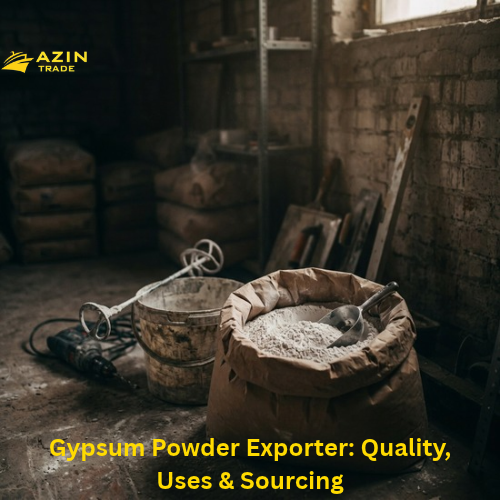
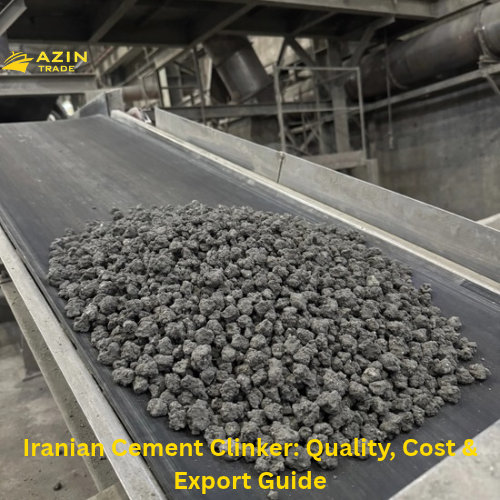
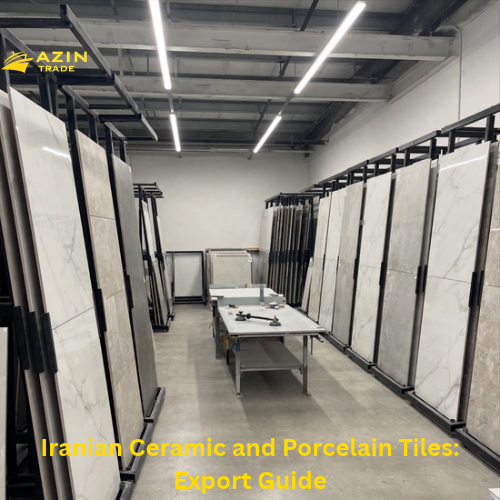
Cement makes up a core category, spanning Ordinary Portland Cement, Sulphate Resistant Cement, and White Cement. Clinker sits alongside it as a separate but related product line. It’s the semi-processed material that gets ground into cement. Some buyers prefer to import it directly if they run their own grinding operations. Gypsum, both raw stone and processed powder, forms another major line. Ceramic and porcelain tile rounds out the catalog for buyers handling finishing work rather than just structural materials. Natural building stone shows up too, with specific coverage of markets like Uzbekistan that most competitors don’t bother writing about at all.
Why the Range Itself Is the Real Pitch
That range is worth pausing on. Most Iranian export companies pick one lane — cement, or gypsum, or tile — and build their whole pitch around it. A buyer managing a real construction project usually needs more than one of these at different stages. Juggling separate suppliers for cement now and tile six months later is its own kind of headache. Azintrade’s bet, from what I can tell, is that consolidating those categories under one relationship beats finding the single cheapest specialist for each material.
Whether that bet pays off depends entirely on execution, though. Breadth is only valuable if the depth on each category actually holds up. A company that lists five product lines but only has real expertise in one isn’t offering consolidation. It’s offering a longer menu with the same thin coverage spread across more items. That’s the standard worth holding any multi-category trading company to, Azintrade included. Does each product line have its own real documentation, pricing logic, and export experience? Or is it mostly the same boilerplate copy repeated with a different product name swapped in at the top?
Where the Competition Falls Short of This Iran Export Company
I went looking at what else ranks for Iranian export and trading companies in this space, and the pattern repeats more than it should.
Generic Claims Instead of Real Numbers
Several competitors — companies with names like White Rose Group and Call2Supply show up consistently — lean almost entirely on generic reassurance language. Phrases like “we pride ourselves on quality” and “trusted by clients worldwide” appear without a single verifiable number attached to them. Others go narrow instead of shallow. A company built entirely around white cement, for instance, offers genuinely detailed technical specs. But it has nothing for a buyer who also needs clinker or tile for the same project. What’s missing almost everywhere is the boring, practical stuff that actually helps a buyer decide. Real production figures. An honest discussion of what sanctions actually mean for payment timelines. A straight answer to “can I trust an intermediary company I’ve never worked with before” rounds out the list.
The Trust Question Nobody Answers Directly
That last point deserves more attention than it usually gets. A buyer’s biggest fear sourcing from Iran isn’t product quality — Iranian cement and gypsum production is genuinely solid by regional standards. It’s whether the company on the other end of the email is who they say they are. It’s whether money sent will actually result in a shipment. Almost none of the pages I reviewed address that fear directly. They talk around it with vague trust-badge language instead of walking through what a legitimate verification process actually looks like.
I’d add one more pattern worth naming. A lot of these company sites read like they were written once, years ago, and never touched again. Pricing references and market statistics sometimes feel stuck in an earlier moment, while the actual trade relationships between Iran and its buyer countries keep shifting underneath them. A buyer doing real research can usually tell within a few minutes whether a page reflects current market conditions. That gap between “current” and “stale” matters more in a sanctions-affected market than almost anywhere else, since the rules and workarounds genuinely do change year to year.
How to Actually Vet an Iran Export Company
Since that’s the real question buyers are wrestling with, here’s what a genuine verification process involves, based on the guidance trade specialists actually give.
The Basics: Registration, Documentation, Payment Structure
Confirm the company has a real, checkable business registration, not just a polished website. Ask whether they operate as a direct representative of specific named factories. Or whether they’re reselling through unnamed intermediaries — the more hops between you and the actual producer, the more room for something to go wrong. Request documentation upfront. A certificate of origin. Quality conformity certificates from INSO where applicable. A clear answer on how customs tariff codes will be handled on your end. Structure payment through a letter of credit or bank guarantee where possible rather than a straight wire transfer. That gives you real leverage if a shipment doesn’t match what was promised.
None of this is exotic advice. It’s the same due diligence any experienced trader applies to a new supplier relationship anywhere in the world. It just carries more weight with Iran specifically. Banking delays, documentation mismatches, a shipment stuck at customs — the margin for error is genuinely tighter than sourcing from, say, Turkey or the UAE.
Smaller Signals Worth Checking Too
A few smaller signals are worth checking too, even though they rarely get mentioned. Ask how the company handles a dispute if the shipment arrives short or doesn’t match the agreed specification. A company with a real answer, involving specific steps rather than a vague “we’ll make it right,” is telling you something about how many times they’ve actually had to handle that situation before. Ask for references from existing buyers in your region if possible. Pay attention to response time and specificity during the quoting process itself. A company that answers technical questions about grade, whiteness, or purity with real numbers within a day or two behaves very differently than one that sends a generic PDF brochure and goes quiet for a week.
What Azintrade Says About Its Own Process
To Azintrade’s credit, the parts of its site dealing with specific products go further than the generic reassurance most competitors offer.
The clinker export page states compliance with ASTM and EN international standards. It references lab-tested specifications ahead of shipment, which is at least a concrete claim a buyer can ask to verify against an actual certificate. The gypsum stone coverage cites specific export figures — $70 million in raw gypsum exports in 2025, up 40% from 2020 — rather than vague growth language. That’s a meaningfully different approach than a page that just says “our gypsum is high quality” with nothing behind it. Whether every product page hits that same bar consistently is a fair question. Buyers should push for the same level of specificity on whatever category they’re actually ordering, rather than assuming it carries over automatically from one product line to another.
It’s also worth noting what a specific claim like that actually buys a buyer. A number like “$70 million in exports, up 40% since 2020” isn’t just a marketing flourish. It’s checkable, in principle, against trade data from sources like Iran’s Customs Administration or international databases tracking commodity flows. A company willing to put a specific, falsifiable number on a page is taking on a small reputational risk that a vague competitor isn’t. That’s worth rewarding with continued scrutiny rather than blind trust — ask to see the underlying data, or at least ask how the figure was calculated, if it matters to your decision.
Which Regions Azintrade Actually Serves
Product range matters less if the shipping routes don’t align with where you’re actually buying from, so it’s worth mapping this out.
Based on the company’s published regional coverage, the Middle East and Gulf region features prominently across cement, clinker, and gypsum content. That includes Iraq, Kuwait, Qatar, Bahrain, and Oman. South Asia — particularly India, Pakistan, and Afghanistan — shows up consistently for gypsum and clinker specifically. That makes sense given the overland and short-sea routes available from Iran into those markets. Central Asia gets a dedicated mention through the company’s stone export coverage focused on Uzbekistan. That suggests at least some deliberate effort to serve that region rather than treating it as an afterthought behind larger Gulf contracts.
That said, published case studies don’t necessarily capture the full extent of where a company can actually ship. A buyer in a region not explicitly covered — East Africa, say, or parts of the Caucasus — shouldn’t assume the company can’t serve them. It just means there’s less public documentation to lean on. It’s worth asking directly about shipping experience to your specific destination rather than assuming silence means no.
The Honest Gaps Worth Asking About
A critic’s job is to point out what’s missing, not just what’s there, so here’s where I’d push back if I were evaluating this company as a buyer.
Azintrade’s site, like a lot of Iranian trading company sites, doesn’t say much about how it specifically handles the banking and payment friction that comes with Iran sanctions. That’s a topic buyers clearly care about, given how often it comes up in independent guides about sourcing from Iran at all. It also doesn’t name specific factory partners for most product categories. That makes it harder for a buyer to independently verify the “direct manufacturer access” claim that shows up in a lot of the company’s marketing language. Neither gap is unusual for this industry, and neither is necessarily disqualifying. But a buyer doing real diligence should ask both questions directly in an initial conversation rather than assuming the answers are favorable by default.
My Honest Take on Where This Leaves a Buyer
So where does that leave someone actually trying to decide? A few things stand out to me after going through this.
The product range is a genuine differentiator. I haven’t found another Iranian export company covering cement, clinker, gypsum, and tile with this much dedicated content for each category, rather than treating three of the four as an afterthought. The specificity on gypsum export figures suggests someone is at least trying to back claims with real numbers, which puts it ahead of a lot of the generic competition on that front. What I’d want as a buyer, though, is the same specificity applied consistently. Named production partners. A clear explanation of payment mechanics under sanctions. Shipment-specific documentation rather than general claims. None of that is unreasonable to ask for, and a company confident in its own process shouldn’t hesitate to provide it.
Frequently Asked Questions
Is Azintrade the same company as AZ Trades or Aztrades.com?
No. AZ Trades is an unrelated offshore forex and CFD broker that has drawn numerous fraud complaints on review platforms like Trustpilot and Forex Peace Army. Azintrade is a separate Iranian export company dealing in physical construction materials, with no connection to that broker.
Is it legal to import goods from Iran?
It depends heavily on your country and the specific product. According to OFAC, most exports to Iran from the US require specific authorization, while other countries maintain different rules. Certain categories, including food, medicine, and some industrial materials, face fewer restrictions than others. Always confirm current regulations for your specific country and product before proceeding.
What products does Azintrade export?
Cement (including OPC, SRC, and White Cement), clinker, gypsum stone and powder, ceramic and porcelain tile, and natural building stone.
How do payments typically work when buying from an Iranian export company?
Given banking restrictions tied to sanctions, letters of credit and bank guarantees are commonly recommended over standard wire transfers, since they provide more security and verification for both sides of the transaction.
How can I verify an Iranian export company is legitimate before ordering?
Confirm business registration, ask whether they represent named factories directly, request certificates of origin and quality conformity documents, and structure payment to protect yourself if the shipment doesn’t match what was promised.
Does Azintrade manufacture its own products?
No. Azintrade operates as a trading and export company, sourcing from Iranian manufacturers and cement plants rather than producing materials itself.
What documentation should I request when ordering from an Iran-based supplier?
At minimum, a certificate of origin, a quality or conformity certificate (INSO-issued where applicable), a commercial invoice and packing list, and confirmation of the correct customs tariff classification for your destination country.
Which regions does Azintrade primarily serve?
Published coverage points most heavily to the Middle East and Gulf (Iraq, Kuwait, Qatar, Bahrain, Oman), South Asia (India, Pakistan, Afghanistan), and Central Asia, with specific focus on Uzbekistan for stone exports. Buyers outside these regions should still inquire directly rather than assuming the company can’t serve them.
How is Azintrade different from a single-product Iranian exporter?
Most competing Iranian export companies focus on one material category — cement or gypsum or tile alone. Azintrade covers cement, clinker, gypsum, tile, and stone under one relationship, which can simplify sourcing for buyers managing multiple materials across a single project.
Talk to Azintrade Directly
If you’re evaluating Iranian export companies for cement, clinker, gypsum, or tile, the most useful next step is a direct conversation rather than relying on any website’s copy alone. Azintrade can walk you through current pricing, documentation, and their specific process for the product category you need.
Ask the questions this article raises — about named production partners, payment mechanics, and shipment-specific certification — before committing to an order.