
What Is Clinker? A Complete Guide to Cement Clinker Composition, Production, and Uses
Cement clinker composition is what determines the strength, durability, and quality of every bag of cement produced worldwide. Clinker itself is the core ingredient in cement production, and it’s one of the most important intermediate materials in the global construction industry. Without cement clinker, modern cement — and therefore modern infrastructure — would not exist. Cement plants around the world depend on a steady supply of clinkers, produced in kilns, to keep up with that demand.
In fact, every building, bridge, highway, dam, or skyscraper that relies on cement-based materials ultimately depends on clinker. This small, dark gray nodular material forms in high-temperature kilns, and it plays a critical role in determining the strength, durability, and chemical performance of clinker cement.
So, understanding what is clinker matters not only for cement manufacturers but also for engineers, construction professionals, and anyone involved in the building materials supply chain. Below, this article covers the clinker meaning, its cement clinker composition, the production process, the different types of clinkers, and the role clinker plays in cement manufacturing.
What Is Clinker?
Manufacturers produce clinker, a nodular material, during the cement manufacturing process by heating limestone, clay, and other raw materials in a rotary kiln at temperatures of around 1400–1450°C.
As a result, the intense heat causes a series of chemical reactions that form new mineral compounds. These compounds eventually cool and solidify into small lumps called clinker nodules, typically ranging from 3 mm to 25 mm in diameter — individual clinkers that get stockpiled before the next stage of processing. Afterward, manufacturers grind the clinker with gypsum and sometimes additional materials to produce clinker cement.
Clinker Meaning: A Simple Definition
In plain terms, clinker meaning comes down to this: clinker is the intermediate product that cement manufacturing creates and later grinds into cement. You may also see the word spelled “klinker” in older texts or in some European languages, though “clinker” is the standard spelling in English-language industry use today. As Wikipedia’s entry on cement clinker explains, clinker forms as lumps or nodules through sintering — fusing raw materials together without fully melting them. So when someone asks what is cement clinker, the short answer is that it’s the semi-finished material sitting between raw rock and finished cement powder.
Physical Appearance
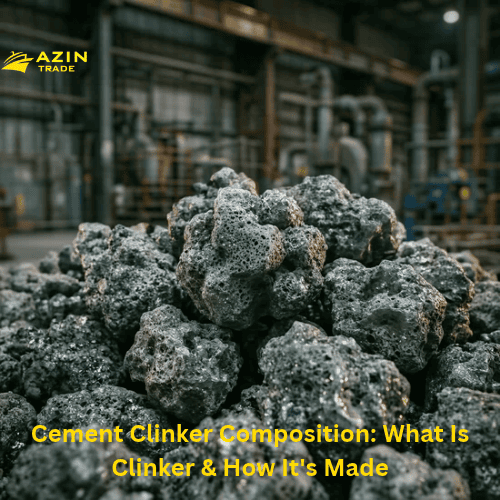
Clinker typically appears as:
- Dark gray or black nodules
- Hard, rock-like material
- Porous texture
- Diameter between 3–25 mm
Why Cement Clinker Is Important in Cement Production
Clinker accounts for most of the strength and binding properties of cement.
Specifically, when manufacturers grind clinker into a fine powder and mix it with gypsum, it forms Portland cement, the most widely used construction material in the world. Then, the minerals inside clinker react with water in a process called hydration, which forms compounds that harden and bind aggregates together.
Key Functions of Clinker in Cement
- Provides mechanical strength to concrete
- Enables hydraulic binding (cement hardens in water)
- Determines setting time and durability
- Influences resistance to chemicals and temperature
Therefore, without clinker in cement, the finished product would not develop the structural strength required for construction.
Cement Clinker Composition
Clinker consists primarily of calcium silicates along with smaller amounts of aluminates and ferrites. These compounds form during the high-temperature reactions in the kiln, and together they define the cement clinker composition that determines how the finished cement will perform.
Overall, the four main phases found in clinker composition are:
- Alite (C3S – Tricalcium Silicate)
- Belite (C2S – Dicalcium Silicate)
- Aluminate (C3A – Tricalcium Aluminate)
- Ferrite (C4AF – Tetracalcium Aluminoferrite)
Together, these minerals control the hydration behavior and performance of clinker cement.
Typical Chemical Composition of Clinker
| Compound | Chemical Formula | Percentage Range | Function |
|---|---|---|---|
| Calcium Oxide | CaO | 60–67% | Main component forming silicates |
| Silicon Dioxide | SiO₂ | 17–25% | Forms strength-giving silicates |
| Aluminum Oxide | Al₂O₃ | 3–8% | Contributes to early reactions |
| Iron Oxide | Fe₂O₃ | 0.5–6% | Helps in clinker formation |
| Magnesium Oxide | MgO | 0–4% | Influences soundness |
| Sulfur Trioxide | SO₃ | 1–3% | Regulates cement setting |
Main Mineral Phases in Cement Clinker
Understanding the mineral phases behind cement clinker composition matters because they control cement performance.
1. Alite (C3S)
Alite is the most important phase in clinker. For instance, it provides early strength in cement, reacts rapidly with water, and generates significant heat during hydration. Typically, alite makes up 50–70% of clinker.
2. Belite (C2S)
By contrast, belite reacts more slowly than alite. It provides long-term strength, produces less heat during hydration, and improves durability. Belite usually represents 15–30% of clinker.
3. Tricalcium Aluminate (C3A)
Meanwhile, this compound reacts very quickly with water. It influences initial setting time, generates high heat, and stays sensitive to sulfate attack. Typical content is 5–10%.
4. Tetracalcium Aluminoferrite (C4AF)
Finally, this phase contributes less to strength but helps during clinker formation. It improves burnability, gives clinker its gray color, and contributes moderately to strength. Typical content is 5–15%.
Raw Materials Used to Produce Clinker
Manufacturers produce clinker from carefully proportioned raw materials containing calcium, silica, alumina, and iron. Getting these proportions right is what shapes the final cement clinker composition once the raw materials pass through the kiln.
- Limestone — provides calcium oxide (CaO), the primary component of clinker.
- Clay — supplies silica (SiO₂), alumina (Al₂O₃), and iron oxide (Fe₂O₃).
- Corrective Materials — additionally, manufacturers may add iron ore, bauxite, sand, fly ash, or shale to adjust the chemical composition.
Clinker Production Process
- Raw Material Extraction — First, workers extract limestone and clay from quarries using drilling and blasting methods, then transport the materials to crushing facilities.
- Crushing and Pre-Blending — Next, crushers break large rocks into smaller fragments, and pre-blending helps maintain consistent chemical composition before grinding.
- Raw Meal Grinding — Then, mills grind the crushed materials into a fine powder called raw meal, ensuring proper mixing of chemical components.
- Preheating — After that, the raw meal passes through a preheater tower where hot gases from the kiln heat it to around 800–900°C. As a result, moisture evaporates and carbon dioxide begins to release from limestone.
- Calcination — At temperatures around 900–1000°C, calcium carbonate decomposes: CaCO₃ → CaO + CO₂.
- Clinker Formation in the Rotary Kiln — Subsequently, the raw meal enters the rotary kiln where temperatures reach 1450°C. Here, chemical reactions produce the clinker minerals C3S, C2S, C3A, and C4AF, and the molten material forms small nodules that harden into individual clinkers as they cool.
- Clinker Cooling — Finally, clinker coolers rapidly cool the hot clinkers exiting the kiln. This rapid cooling helps preserve mineral structure and improves the quality of the resulting clinker cement.
Types of Clinkers
Cement plants produce several types of clinkers depending on the desired cement properties:
- Portland Cement Clinker — the most common type of clinker cement, used to produce ordinary Portland cement (OPC); high strength, wide use in construction.
- Sulfate-Resistant Clinker — lower C3A content; used in marine structures and sewage systems.
- White Cement Clinker — low iron content, light color; used in decorative concrete.
- Low-Heat Clinker — reduced heat of hydration; used for large dams and massive concrete structures.
From Clinker to Clinker Cement: Grinding and Production
Builders cannot use clinker directly in construction. Instead, manufacturers must first grind it into a fine powder with gypsum to create clinker cement.
Why Gypsum Is Added: Gypsum controls the setting time of cement. Otherwise, cement made from clinker would harden too quickly.
Typical Cement Composition
| Component | Percentage |
|---|---|
| Clinker | 90–95% |
| Gypsum | 3–5% |
| Additives | 0–5% |
Once grinding finishes, the material becomes cement powder ready for packaging or bulk transport.
Physical Properties of Clinker
Clinker Density
Clinker density typically sits around 3.15 g/cm³. This figure matters for cement plants because clinker density directly affects grinding energy requirements and storage calculations.
Hardness
Clinker stays extremely hard, which is why plants need powerful grinding mills to turn it into clinker cement.
Porosity
Clinker nodules contain internal pores that affect grinding efficiency.
Color
Clinker color varies depending on chemical composition, ranging from dark gray to black to greenish gray.
Environmental Impact of Cement Clinker Production
Clinker production consumes significant energy and, as a result, contributes heavily to global carbon emissions. Overall, the cement industry accounts for approximately 7–8% of global CO₂ emissions.
Major Sources of Emissions: calcination of limestone, fuel combustion in kilns, electricity consumption.
For example, producing 1 ton of clinker releases around 800–900 kg of CO₂ — a figure in line with the Portland Cement Association’s decarbonization roadmap, which identifies clinker and cement production as the industry’s primary source of CO₂ output.
Strategies to Reduce Clinker Emissions
- Clinker Substitution — for instance, fly ash, slag, limestone, and calcined clay can replace part of the clinker in cement.
- Alternative Fuels — similarly, many cement plants now use biomass, waste-derived fuels, and industrial residues.
- Energy Efficiency — meanwhile, modern kilns use preheater-precalciner systems and waste heat recovery.
Global Clinker Production
China, India, Vietnam, Turkey, and Indonesia lead global output. In fact, China alone accounts for more than 50% of global cement production, with its plants producing more clinkers annually than any other country.
Clinker Trade and Export
Traders move cement clinker widely across international markets. Reasons include lower transportation costs than finished cement, grinding plants located near markets, and regional shortages of cement. Major exporters include Vietnam, Turkey, the United Arab Emirates, and Japan, all shipping clinkers in bulk to buyers who grind and blend them locally.
Clinker Storage and Transportation
Storage: clinker silos, covered stockpiles, domes. Transportation: bulk carriers (ships), rail transport, trucks.
Because clinker stays dense and durable, shippers find it easier to transport than finished clinker cement.
Quality Control in Clinker Production
Maintaining a consistent cement clinker composition is critical for producing reliable cement.
Key Quality Parameters: free lime content, mineral composition, burnability, clinker nodulization, cooling rate.
For this reason, advanced laboratories use X-ray fluorescence (XRF) and X-ray diffraction (XRD) to analyze the chemical and mineral composition of clinker.
The Future of Clinker in Sustainable Cement
New technologies include LC3 cement (Limestone Calcined Clay Cement), carbon capture systems, electrified kilns, and alternative binders. However, cement clinker will likely remain a critical component of cement for decades.
Conclusion: What Is Clinker and Why It Matters
So, what is clinker? In short, clinker is the backbone of cement production and plays a vital role in modern construction. High-temperature reactions between limestone and clay in rotary kilns form clinker, and its essential minerals give clinker cement its strength and hydraulic properties.
Its composition — dominated by alite, belite, aluminate, and ferrite — directly influences cement performance, including strength development, durability, and setting behavior. Together, clinker density, burnability, and mineral phases determine how well the final cement product performs on site.
Despite its importance, clinker production also consumes significant energy and contributes to a large share of global CO₂ emissions. As a result, the cement industry is investing heavily in technologies and strategies to reduce clinker content and improve sustainability.
Ultimately, understanding clinker — from its chemical structure to its manufacturing process — is essential for engineers, manufacturers, and construction professionals working to build the infrastructure of the future. Whether you know it as clinker or klinker, the material behind that word is what makes modern cement possible.
Start Working with Azintrade Today
If you are tired of unreliable suppliers, inconsistent quality, and unexpected delivery problems, it’s time to upgrade.
Start your next shipment with Azintrade — the supplier that values your business, your deadlines, and your success.
Contact Azintrade now and build a strong, stable, and profitable supply chain for cement, clinker, and cement clinker products.
✅ For expert consultation and product orders, click here.