
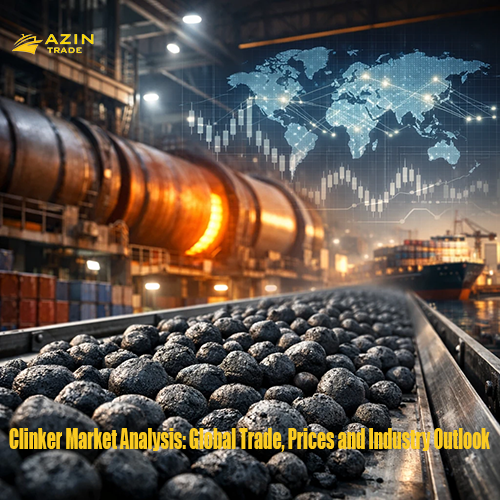
Clinker Market Analysis: Global Production, Trade Trends, Pricing and Industry Outlook
Introduction to Clinker Market Analysis
Clinker market analysis is essential for understanding the global cement industry and the dynamics of international construction materials trade. Clinker is the key intermediate material used in cement production, and its global trade connects cement producers with grinding plants across different regions. A comprehensive clinker market analysis helps industry professionals evaluate global production capacity, export flows, pricing structures, and long‑term market demand.
The global clinker market has expanded significantly due to infrastructure development, urbanization, and increasing cement consumption worldwide. Many countries import clinker instead of producing it locally because cement kilns require large capital investments and high energy consumption. For this reason, clinker market analysis has become an important tool for cement manufacturers, investors, and construction
supply chains.
What Is Clinker in Cement Production
Clinker is produced during the pyro‑processing stage of cement manufacturing. Raw materials such as limestone, clay, silica, and iron ore are heated in a rotary kiln at temperatures close to 1450°C.
During this process, complex chemical reactions occur, forming clinker nodules composed mainly of calcium silicates. After cooling, clinker is ground with gypsum to produce cement.
Main Mineral Components of Clinker
| Mineral | Chemical Name | Function |
|---|---|---|
| C3S | Tricalcium Silicate | Early strength |
| C2S | Dicalcium Silicate | Long‑term strength |
| C3A | Tricalcium Aluminate | Setting reaction |
| C4AF | Tetracalcium Aluminoferrite | Minor reactions |
These minerals determine cement performance and strength development.
Global Clinker Market Analysis and Industry Structure
A detailed clinker market analysis reveals that the global clinker industry operates through a network of integrated cement plants and independent grinding plants.
Integrated plants produce both clinker and cement, while grinding plants import clinker and process it locally.
This structure allows companies to optimize logistics costs and energy consumption.
Two Major Industry Structures
Integrated Cement Plants
Large facilities that include limestone quarries, rotary kilns, and cement grinding units.
Grinding Plants
Facilities that import clinker and grind it with additives to produce cement.
The growth of grinding plants has significantly increased international clinker trade.
Global Clinker Production Overview
Global clinker production is concentrated in countries with large cement industries and abundant raw materials.
Leading Clinker Producing Countries
| Country | Production Advantage |
|---|---|
| China | Largest cement production capacity |
| India | Rapid infrastructure development |
| Vietnam | Export oriented clinker production |
| Turkey | Strategic export location |
| Indonesia | Strong cement manufacturing sector |
China accounts for more than half of global cement production, although most of its clinker is consumed domestically.
Vietnam has emerged as the largest exporter of clinker in the international market.
Clinker Market Analysis of Global Trade
The global clinker market has become increasingly international as producers export surplus clinker to regions with growing cement demand.
Clinker trade has expanded rapidly in Asia, Africa, and the Middle East.
Major Clinker Exporting Countries
| Country | Export Strength |
|---|---|
| Vietnam | High production surplus |
| Turkey | Strategic geographic access |
| UAE | Strong port infrastructure |
| Iran | Low production costs |
| Indonesia | Competitive manufacturing |
These countries supply clinker to markets where cement grinding plants depend on imports.
Clinker Import Market Analysis
Many countries import clinker because building new cement kilns requires large capital investment and environmental permits.
Major Clinker Importing Countries
| Country | Import Driver |
|---|---|
| Bangladesh | High cement demand |
| Philippines | Infrastructure expansion |
| Sri Lanka | Grinding plant industry |
| Ghana | Construction growth |
| Kenya | Urban development |
These markets rely heavily on long‑term clinker supply contracts.
Clinker Price Analysis in Global Markets
Clinker prices vary significantly depending on energy costs, freight rates, and regional demand.
Key Factors Affecting Clinker Prices
Energy Costs
Fuel costs represent a large portion of clinker production expenses.
Shipping Costs
Ocean freight plays a major role in clinker trade pricing.
Supply and Demand
Construction booms increase clinker demand and prices.
Quality Characteristics
Clinker with better mineral composition often commands higher prices.
Average Global Clinker Prices
| Region | Price Range (USD/ton) |
|---|---|
| Southeast Asia | 35 – 55 |
| Middle East | 40 – 60 |
| Africa | 55 – 75 |
| Europe | 70 – 90 |
Freight rates can represent up to 40% of the final delivered price.
Clinker Quality Factors in Market Analysis
Clinker quality is a critical factor influencing cement strength, durability, and grinding efficiency.
Key Quality Indicators
| Parameter | Typical Range |
|---|---|
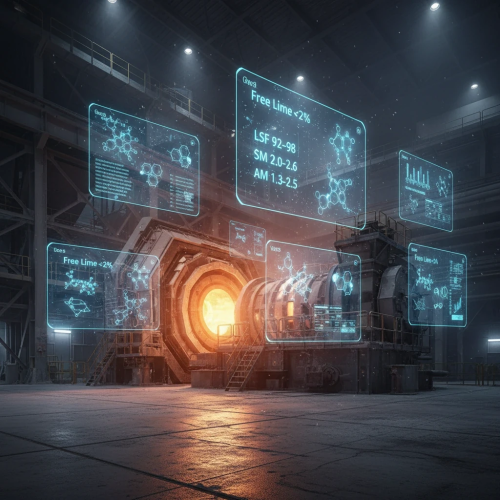
| Free Lime | <2% |
| Lime Saturation Factor (LSF) | 92 – 98 |
| Silica Modulus (SM) | 2.0 – 2.6 |
| Alumina Modulus (AM) | 1.3 – 2.5 |
Higher quality clinker reduces grinding energy consumption and improves cement performance.
Logistics and Transportation in the Clinker Market
Efficient logistics are essential for successful clinker trade. Clinker is typically transported in bulk carriers due to its large volume.
Typical Clinker Export Logistics
- Storage in clinker silos or stockpiles
- Transport to port terminals
- Bulk vessel loading
- International shipping
- Port unloading
- Delivery to cement grinding plants
Proper moisture control during storage and shipping is essential.
Environmental Impact of Clinker Production
Clinker production is one of the most carbon‑intensive industrial processes. The calcination of limestone releases significant amounts of carbon dioxide.
Major environmental concerns include:
• High CO₂ emissions
• Large energy consumption
• Dust emissions
• Raw material depletion
These environmental challenges are pushing the cement industry toward cleaner technologies.
Low Carbon Technologies in the Clinker Industry
Cement producers are investing in innovative technologies to reduce emissions and energy consumption.
Key Sustainable Technologies
| Technology | Benefit |
|---|---|
| Waste Heat Recovery | Generates electricity from kiln heat |
| Alternative Fuels | Reduces fossil fuel usage |
| Blended Cement | Reduces clinker factor |
| Carbon Capture | Captures CO₂ emissions |
These technologies are expected to transform the clinker market over the next decades.
Impact of Carbon Regulations on the Clinker Market
Environmental policies such as carbon taxes are influencing global clinker trade.
The European Union’s Carbon Border Adjustment Mechanism (CBAM) will impose carbon costs on imported cement and clinker.
This policy could reshape international clinker trade patterns.
Future Demand Outlook in Clinker Market Analysis
Global clinker demand will continue to grow due to infrastructure development and population growth.
Key demand drivers include:
Urbanization
Infrastructure investment
Housing construction
Industrial expansion
Asia and Africa are expected to be the fastest growing clinker markets.
Investment Opportunities in the Clinker Industry
The clinker industry offers several investment opportunities across the cement supply chain.
Examples include:
• Clinker export terminals
• Cement grinding plants
• Energy efficient kiln technology
• Alternative fuel systems
Investors are increasingly focusing on sustainable cement production technologies.
Risks in the Global Clinker Market
Despite strong demand, the clinker market faces several risks.
These include:
Energy price volatility
Environmental regulations
Shipping cost fluctuations
Economic downturns affecting construction
Companies must carefully manage these risks to remain competitive.
FAQ – Clinker Market Analysis
What is clinker used for in cement production
Clinker is the primary material used to produce cement and is ground with gypsum to create Portland cement.
Why do some countries import clinker
Many countries import clinker because building cement kilns requires high capital investment and energy costs.
Which country exports the most clinker
Vietnam is currently one of the largest clinker exporters in the global market.
What affects clinker prices
Energy costs, shipping rates, clinker quality, and construction demand all influence clinker prices.