
The Ultimate Guide to Cement Clinker: Chemistry, Production, and Future Trends 1. Introduction: The Industrial Paradox
1.Cement clinker is the primary constituent of Portland cement. From a civil engineering perspective, it is the magic binder that holds the world together. From an industrial and environmental perspective, it is the product of an aggressive thermochemical process that remains one of the largest anthropogenic sources of CO2CO_2. To understand clinker is to understand the struggle between material performance and planetary limits.
2. Mineralogical Composition: The Bogue Compounds
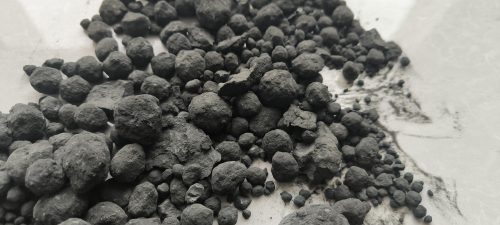
The performance of clinker is entirely dictated by its phase composition. The interaction of limestone (CaOCaO) and clay (containing SiO2,Al2O3,Fe2O3SiO_2, Al_2O_3, Fe_2O_3) at extreme heat creates four distinct phases:
- Alite (C3SC_3S): The primary driver of early-age strength. It is thermodynamically unstable and requires high-temperature stabilization.
- Belite (C2SC_2S): Contributes to late-age strength. It is the focus of current efforts to produce low-heat, sustainable cements.
- Celite (C3AC_3A): Essential for fluxing during production but a headache for setting times, requiring precise gypsum additions.
- Brownmillerite (C4AFC_4AF): A liquid phase at kiln temperature that facilitates the formation of silicates.
3. The Industrial Production Process
The production of clinker is a journey through extreme thermal and chemical environments.
3.1 Raw Material Preparation
The process begins with the homogenization of raw materials. The “Raw Mix” must be perfectly proportioned. Any deviation here results in sub-par clinker that compromises the entire structural integrity of the final concrete.
3.2 The Preheater Tower and Calciner
Modern plants utilize multi-stage cyclone preheaters to recover heat. Here, the calcium carbonate in the limestone undergoes calcination (CaCO3→CaO+CO2CaCO_3 \rightarrow CaO + CO_2). This stage is responsible for the majority of the direct process emissions.
3.3 The Rotary Kiln: The Heart of the Process
In the burning zone, at temperatures of 1400°C–1500°C, the “clinkering” reaction occurs. This is where solid-state reactions transition into a liquid phase (sintering), allowing the formation of the complex silicate crystals. If the flame temperature or the residence time is insufficient, the result is “dead-burned” or under-burned material that is useless for cement production.
3.4 Cooling and Storage
Rapid cooling is essential to “freeze” the mineral phases, particularly to prevent the conversion of Alite back into less reactive forms.
4. Thermochemistry and Quality Control
The quality of clinker is measured by the Limesaturation Factor (LSF), Silica Modulus (SM), and Alumina Modulus (AM). These ratios define the operational limits of the plant. A plant operator is essentially a high-stakes chemist balancing the furnace thermodynamics to ensure the crystal lattice of Alite is perfectly formed while minimizing fuel waste.
5. The Environmental Cost
We cannot discuss clinker without addressing the “Carbon Problem.” For every tonne of clinker produced, approximately 0.8 to 0.9 tonnes of CO2CO_2 are released. This comes from two sources:
- Chemical Decomposition: Decarbonation of limestone.
- Thermal Energy: Burning fossil fuels to reach 1450°C.
The industry is currently obsessed with “Clinker Factor Reduction”—the practice of replacing clinker with Supplementary Cementitious Materials (SCMs) like fly ash or slag to lower the overall carbon footprint of the cement.
6. Future Trends: The Search for Alternatives
The future of clinker is not “more of the same.” It involves:
- Belite-Rich Cements: Lower energy requirements for burning.
- Carbon Capture and Storage (CCS): Retrofitting kilns to capture process emissions before they reach the atmosphere.
- Alternative Fuels: Moving away from coal toward waste-derived fuels, treating the kiln as a massive incinerator.
7. Conclusion: The Reality of Modern Construction
Clinker remains an irreplaceable, albeit problematic, component of our built environment. As we move toward 2050, the challenge is not just to produce clinker, but to justify its existence by moving toward a circular model where industrial waste replaces virgin limestone and carbon capture becomes standard operating procedure.
8.Start Working with azintrade Today
If you are tired of unreliable suppliers, inconsistent quality, and unexpected delivery problems, it’s time to upgrade.
Start your next shipment with azintrade —
the supplier that values your business, your deadlines, and your success.
Contact azintrade now and build a strong, stable, and profitable supply chain for ceramic and porcelain tiles in Azerbaijan.
✅ For expert consultation and product orders, click here.