
1. Introduction
Cement clinker is the core material behind global cement production, and understanding cement clinker is essential for engineers, producers, and analysts who work with high‑performance construction materials. This guide provides a deep technical and industrial analysis of how cement clinker is produced, optimized, and used across modern infrastructure.
2. What Is Cement Clinker?
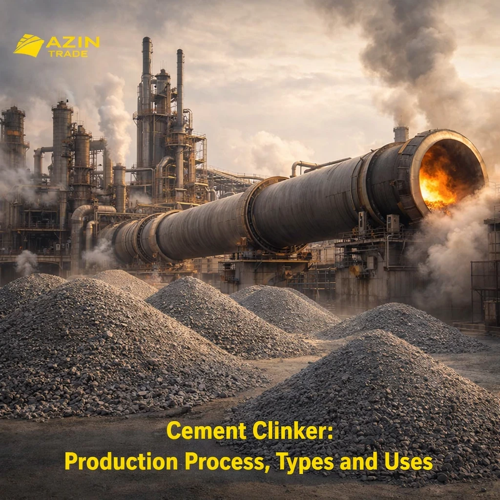
Cement clinker is a partially molten, thermally transformed product created by heating a mixture of limestone, clay, silica, and iron compounds in a rotary kiln at approximately 1450°C.
Once cooled, the nodules form the mineral phases required for Portland cement.
3. Chemical and Mineral Composition
The core oxides:
- CaO
- SiO₂
- Al₂O₃
- Fe₂O₃
These oxides form the four major mineral phases.
Mineral Phase Functions
| Mineral Phase | Function | Impact on Cement | Sensitivity |
|---|---|---|---|
| C3S (Alite) | Early strength | High 1–7 day strength | Cooling rate, sulfur balance |
| C2S (Belite) | Long‑term strength | 28–90 day strength | Kiln temperature stability |
| C3A | Controls setting | Rapid reactions | Gypsum regulation |
| C4AF | Burnability & color | Helps kiln stability | Iron content |
4. Full Clinker Production Process
Raw Material Preparation
Limestone, clay, silica sand, and iron ore are crushed, ground, and homogenized into raw meal.
Preheating & Precalcination
Cyclone preheaters and precalciners reduce fuel consumption and ensure partial decarbonation before kiln entry.
Rotary Kiln Sintering
A precisely controlled thermal zone where material melts, mineral phases form, and nodules develop.
Typical kiln sintering temperature: 1400–1450°C
Clinker Cooling
Rapid cooling preserves alite and improves final cement performan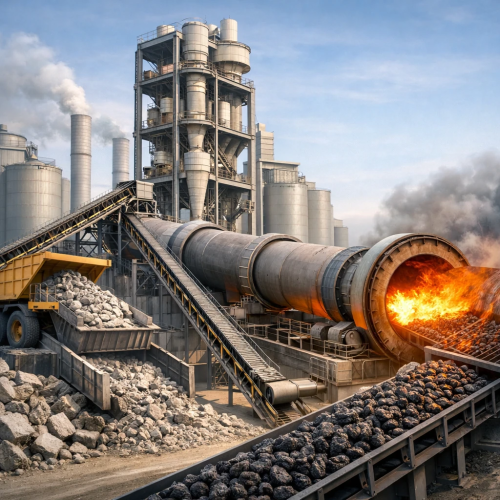
5. Comparative Technical Tables
Table 1: Comparison of Clinker Types
| Clinker Type | Main Strength Profile | Heat of Hydration | Sulfate Resistance | Main Application |
|---|---|---|---|---|
| OPC Clinker | Balanced | Moderate | Medium | General construction |
| Sulfate‑Resistant Clinker | Medium strength | Low | Very high | Marine, sewage systems |
| Low‑Heat Clinker | Slow strength gain | Very low | High | Massive pours, dams |
| White Clinker | Similar to OPC | Moderate | Medium | Architectural finishes |
| High‑Belite Clinker | Slow early, high long‑term | Very low | Medium | Eco‑friendly cement |
Table 2: Kiln Efficiency Comparison
| Kiln System | Fuel Consumption | Emission Level | Maintenance | Efficiency |
|---|---|---|---|---|
| Wet Kiln | Very high | High | High | Low |
| Dry Kiln (No Preheater) | High | Moderate | Medium | Medium |
| Dry Kiln with Preheater | Moderate | Lower | Medium | High |
| Dry Kiln with Preheater & Precalciner | Low | Lowest | Medium | Very high |
Table 3: Cooling Technology Comparison
| Cooling System | Cooling Speed | Heat Recovery | Impact on Alite | Industry Usage |
|---|---|---|---|---|
| Planetary Cooler | Slow | Low | Weaker | Old plants |
| Rotary Cooler | Moderate | Medium | Acceptable | Mid‑level plants |
| Grate Cooler | Fast | High | Strong | Modern plants |
| Cross‑Bar Cooler | Very fast | Very high | Excellent | High‑efficiency plants |
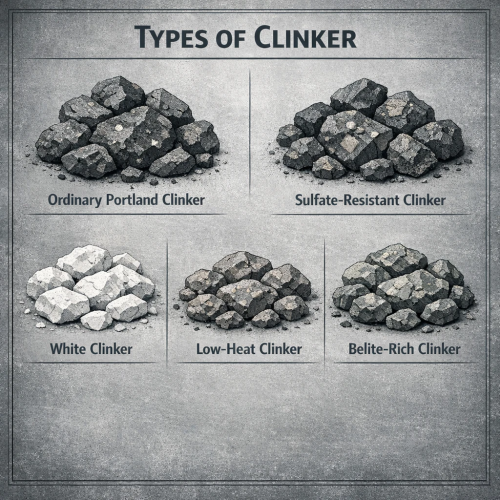
6. Types of Clinker
Standard Types
- Ordinary Portland Clinker
- Sulfate‑Resistant Clinker
- Low‑Heat Clinker
- White Clinker
Advanced Industrial Types
- High‑Belite (eco‑focused)
- Low‑alkali clinker
- Barium‑modified clinker
- Alternative fuel optimized clinker
- Iron‑rich clinker for cost‑efficient burning
7. Quality Control Parameters
Chemical Indicators
- Free lime
- LSF (Lime Saturation Factor)
- SM (Silica Modulus)
- AM (Alumina Modulus)
Physical and Microstructural Tests
- Microscopy (polished section)
- XRD
- SEM
- Grindability index
- Kiln coating stability
8. Industrial Uses
- Portland cement production
- High‑strength concrete
- Oil well cement
- Precast elements
- Infrastructure megaprojects
- Export markets
9. Environmental Impact
Clinker production accounts for ~70% of cement CO₂ emissions.
Main contributors:
- Limestone calcination (largest source)
- Kiln combustion
- Electrical grinding energy
Mitigation strategies:
- Biomass and alternative fuels
- SCM substitution
- Carbon capture
- High‑belite clinker technologies
10. Global Market Overview
Major exporting countries
- Vietnam
- Turkey
- UAE
- Saudi Arabia
- Indonesia
Major importing regions
- Africa
- Bangladesh
- Eastern USA
- Parts of Europe
Market drivers include:
- Fuel price differences
- Shipping rates
- Regional construction cycles
- Surplus capacity in Asia
11. Price Determinants
Clinker pricing is influenced by:
- Quarry chemistry
- Fuel cost
- Transport distance
- Port loading efficiency
- Global freight index
- Environmental compliance cost
12. Future Technologies
The clinker industry is shifting toward:
- Electrified kilns
- Oxy‑fuel combustion
- High‑belite low‑carbon clinker
- AI‑driven kiln optimization
- Carbon capture integration
- Renewable thermal energy solutions
13. FAQ
What is cement clinker?
Cement clinker is a sintered material produced inside a rotary kiln and used to make Portland cement.
How is clinker made?
By heating limestone, clay, and silica materials in a rotary kiln at about 1450°C, followed by rapid cooling.
What minerals are in clinker?
The main phases are C3S, C2S, C3A, and C4AF.
Why is clinker quality important?
Because it directly affects cement strength, setting time, durability, and grinding performance.
Which countries export the most clinker?
Vietnam, Turkey, UAE, Saudi Arabia, and Indonesia dominate global exports.
Which clinker type is best for marine structures?
Sulfate‑resistant clinker.
Which clinker is best for massive concrete pours?
Low‑heat clinker due to low heat of hydration.
What makes clinker expensive?
Fuel cost, raw material quality, and shipping distance.
✅ For expert consultation and product orders, click here.