

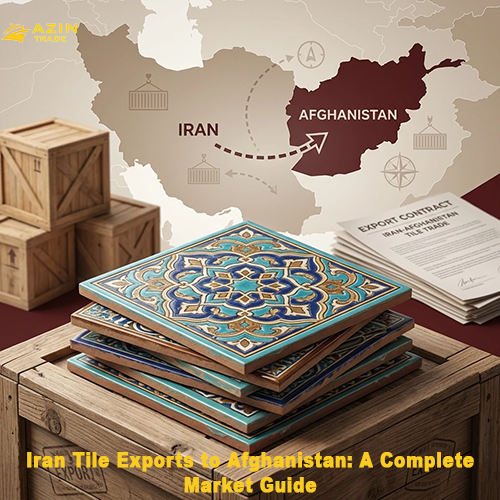
Iran Tile Exports to Afghanistan: Market Overview and Growth Opportunities
Iran tile exports to Afghanistan have become one of the most important trade flows in the regional construction materials market. Due to Afghanistan’s growing demand for affordable building materials and Iran’s strong ceramic manufacturing industry, Iran tile exports to Afghanistan continue to expand every year.
With increasing urban development in cities such as Kabul, Herat, and Mazar‑i‑Sharif, construction companies rely heavily on imported materials. Among these imports, Iranian ceramic and porcelain tiles are widely used because they combine competitive pricing, reliable supply chains, and diverse designs.
Why Iran Tile Exports to Afghanistan Are Growing
The steady growth of Iran tile exports to Afghanistan is driven by several structural factors in the Afghan construction market.
Urban Development and Housing Demand
Afghanistan’s population is growing rapidly and urban areas are expanding. This creates high demand for residential housing and public buildings.
Tiles are commonly used in:
- kitchens
- bathrooms
- living spaces
- commercial buildings
- mosques and public facilities
Because of these applications, tile imports remain a crucial component of Afghanistan’s building materials supply.
Limited Domestic Tile Production
Another reason Iran tile exports to Afghanistan remain strong is the limited tile manufacturing capacity inside Afghanistan.
Most construction materials must be imported from neighboring countries. Iranian suppliers fill this gap by providing large volumes of ceramic and porcelain tiles at competitive prices.
Competitive Advantages of Iran Tile Exports to Afghanistan
Several factors make Iranian tiles highly competitive in the Afghan market.
Geographic Proximity
One of the biggest advantages of Iran tile exports to Afghanistan is the shared border between the two countries.
Short transportation distances reduce:
- logistics costs
- delivery time
- risk of product damage
This makes Iranian tiles easier and faster to deliver compared to products shipped from distant countries.
Competitive Pricing
Iranian manufacturers benefit from:
- abundant raw materials
- large production capacity
- established manufacturing infrastructure
Because of these factors, Iran tile exports to Afghanistan often offer lower prices than many international competitors.
High Production Capacity
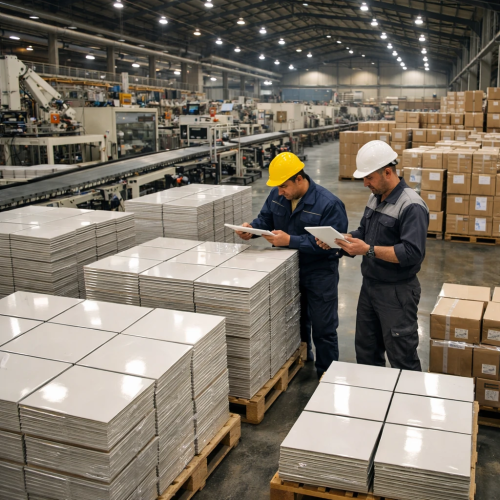
Iran is among the world’s largest tile producers, with more than 100 active ceramic tile factories.
Major production hubs include:
- Yazd
- Kashan
- Isfahan
- Qom
These regions supply millions of square meters of tiles annually for both domestic and export markets.
Iran Tile Exports to Afghanistan vs Other Suppliers
| Feature | Iranian Tiles | Chinese Tiles | Turkish Tiles |
|---|---|---|---|
| Price | Competitive | Medium | High |
| Delivery Speed | Fast | Slow | Medium |
| Shipping Cost | Low | High | Medium |
| Availability | Very High | Moderate | Limited |
| Product Variety | High | High | Medium |
Due to these advantages, Iran tile exports to Afghanistan dominate the Afghan tile import market.
Major Trade Routes for Iran Tile Exports to Afghanistan
Efficient logistics play a major role in supporting Iran tile exports to Afghanistan.
Dogharoon – Herat Border
This is the most important commercial crossing between the two countries and a major gateway for tile shipments heading into western Afghanistan.
Milak – Zaranj Crossing
This route connects southeastern Iran to southern Afghan provinces and supports growing construction demand in those regions.
Mahirud Border Crossing
Another active border corridor used for transporting construction materials including ceramic tiles.
Types of Tiles Exported from Iran to Afghanistan
Iranian manufacturers export several tile categories through Iran tile exports to Afghanistan.
Ceramic Wall Tiles
Widely used in bathrooms and kitchens due to their affordability and easy installation.
Porcelain Floor Tiles
Known for durability and water resistance, making them ideal for high‑traffic spaces.
Decorative Tiles
These tiles are commonly used in mosques, hotels, and luxury residential projects.
Outdoor Anti‑Slip Tiles
Suitable for terraces, courtyards, and outdoor walkways.
Economic Importance of Iran Tile Exports to Afghanistan
The growth of Iran tile exports to Afghanistan provides several economic benefits for Iran’s manufacturing sector.
These exports help:
- increase non‑oil exports
- create industrial employment
- support tile factories operating at full capacity
- strengthen regional trade relations
Afghanistan remains one of the most reliable export markets for Iranian ceramic tile producers.

Challenges Facing Iran Tile Exports to Afghanistan
Despite the strong demand, exporters face certain challenges.
Currency Fluctuations
Exchange rate changes can impact pricing strategies and profit margins.
Border Logistics Delays
Occasional congestion or regulatory procedures may slow transportation across borders.
Economic Instability
Economic uncertainty in Afghanistan can affect import demand and payment conditions.
Future Outlook for Iran Tile Exports to Afghanistan
Looking ahead, the outlook for Iran tile exports to Afghanistan remains positive.
Several factors support continued growth:
- rapid urbanization
- housing construction projects
- infrastructure development
- increasing demand for affordable building materials
Given its manufacturing capacity and geographic advantage, Iran will likely remain a leading tile supplier to the Afghan market.
FAQ
Why are Iranian tiles popular in Afghanistan?
Iranian tiles offer competitive prices, diverse designs, and fast transportation due to the shared border between the two countries.
Are Iranian ceramic tiles high quality?
Many Iranian manufacturers meet international production standards and export tiles to multiple regional markets.
Which cities in Afghanistan import the most tiles?
Major import markets include Kabul, Herat, Kandahar, and Mazar‑i‑Sharif.
How are tiles transported from Iran to Afghanistan?
Tiles are usually transported by trucks through major border crossings such as Dogharoon–Herat and Milak–Zaranj.
Is the demand for tiles increasing in Afghanistan?
Yes. Population growth and urban development continue to drive demand for construction materials including ceramic and porcelain tiles.