
White Cement Export from Iran to Afghanistan: The Complete Guide for Importers, Distributors, and Construction Companies
Introduction
Afghanistan has emerged as one of the most important export destinations for Iranian construction materials, particularly white cement. As urban development accelerates and infrastructure projects continue to expand across the country, demand for high-quality Iran white cement has increased significantly. According to UN Comtrade figures compiled by Trading Economics, Afghanistan imported over $150 million worth of stone, plaster, and cement materials from Iran in a single year, underscoring how central this trade relationship has become.
From residential developments and commercial buildings to government infrastructure projects and decorative architectural applications, this product has become an essential construction material for modern Afghanistan.
For Afghan importers, distributors, contractors, and project owners, sourcing a high-quality supply from a reliable Iran white cement exporter is critical. Product quality, stable supply, competitive pricing, logistics efficiency, and export expertise can determine the success of an entire construction project.
Iran has established itself as one of the leading suppliers to Afghanistan due to its strategic geographic location, advanced manufacturing facilities, and competitive export pricing. Among the companies operating in this sector, Azintrade has built a strong reputation as a trusted Iran white cement exporter by connecting Afghan buyers with premium Iranian material and providing comprehensive export solutions.
This guide explores everything buyers need to know about white cement exports from Iran to Afghanistan, including market trends, pricing factors such as cement price in Afghanistan, iran white cement export logistics, quality considerations, and why Azintrade is the preferred choice for many Afghan importers.
The Growing Construction Industry in Afghanistan
Why Construction Demand Continues to Rise
Over the past decade, Afghanistan’s construction sector has experienced continuous growth despite economic and political challenges.
Several factors contribute to this demand:
- Population growth
- Urbanization
- Housing shortages
- Commercial development
- Infrastructure reconstruction
- International development projects
As cities continue to expand, the need for high-quality construction materials has increased dramatically.
Major cities such as Kabul, Herat, Mazar-i-Sharif, Kandahar, and Jalalabad continue to witness growing construction activity, creating substantial demand for imported building materials — and, in turn, for a dependable iran white cement exporter able to keep pace with that growth.
Urban Development and Housing Projects
Afghanistan’s urban population continues to grow each year. This trend has encouraged investment in:
- Apartment complexes
- Residential communities
- Private villas
- Mixed-use developments
- Commercial towers
Modern architectural styles increasingly require decorative building materials, making white cement a preferred choice among architects and developers.
What Is White Cement?
White cement is a specialized form of Portland cement produced using raw materials with extremely low levels of iron oxide and manganese.
The manufacturing process is carefully controlled to achieve a bright white appearance while maintaining excellent strength and durability characteristics — the hallmark of high-quality Iran white cement.
Key Properties
| Property | Advantage |
|---|---|
| High whiteness | Attractive appearance |
| Excellent strength | Structural reliability |
| Smooth finish | Superior aesthetics |
| High durability | Long service life |
| Decorative flexibility | Architectural applications |
| Consistent quality | Reliable performance |
These characteristics make it ideal for both functional and decorative construction projects.
Why This Material Is Popular in Afghanistan
Modern Architectural Trends
Contemporary Afghan architecture increasingly emphasizes visual appeal.
Builders widely use it for:
- Decorative facades
- Luxury villas
- Shopping centers
- Hotels
- Mosques
- Public buildings
Architects often prefer it because it provides a cleaner and more sophisticated appearance than traditional gray cement.
Growth of Premium Construction
As purchasing power increases in certain regions, demand for premium construction materials continues to grow.
Property developers are increasingly investing in:
- Luxury residential projects
- Commercial developments
- Hospitality projects
- High-end office buildings
These projects often require high-quality Iran white cement for aesthetic purposes.
Decorative Concrete Applications
This material enables the production of:
- Architectural concrete
- Decorative panels
- Concrete sculptures
- Precast elements
- Terrazzo flooring
- Decorative paving products
Its versatility makes it an attractive option across multiple sectors.
Why Iran Is the Best Source for Afghan Buyers
Geographic Proximity
One of Iran’s greatest advantages is its location. The shared border between Iran and Afghanistan creates significant logistical benefits for any iran white cement exporter shipping into the country.
Benefits include:
- Reduced transportation costs
- Faster delivery times
- Lower risk of shipping delays
- Easier customs procedures
- Better supply chain control
Compared to suppliers located in Europe, East Asia, or other distant markets, Iranian exporters can deliver products more efficiently and cost-effectively.
High Production Capacity
Iran is among the major cement producers in the region.
The country’s cement industry benefits from:
- Advanced manufacturing facilities
- Abundant raw materials
- Skilled workforce
- Modern production technologies
This allows Iranian suppliers to meet both small and large-volume orders consistently, and keeps the iran cement price competitive even for bulk shipments.
Competitive Export Pricing
Price competitiveness remains one of the most important reasons Afghan importers choose this Iranian product. Iran cement price generally stays lower than material sourced from more distant markets, largely thanks to shorter transport routes and lower freight costs.
Factors contributing to lower costs include:
- Lower transportation expenses
- Regional trade advantages
- Large production volumes
- Efficient logistics networks
Importers can often achieve better profit margins when sourcing from Iran compared to alternative markets.
Major Applications in Afghanistan
Residential Construction
Builders commonly use it in:
- Luxury homes
- Villas
- Apartment buildings
- Decorative walls
- Exterior finishes
Builders value its ability to improve the visual appeal of residential properties.
Commercial Buildings
Commercial projects frequently use this material for:
- Shopping malls
- Office buildings
- Hotels
- Restaurants
- Business centers
Its clean appearance contributes to a modern and professional image.
Religious and Cultural Buildings
Mosques and cultural centers often incorporate this material because of its aesthetic qualities.
Common applications include:
- Domes
- Decorative facades
- Interior decorative elements
- Architectural detailing
Infrastructure Projects
Government and private infrastructure projects may utilize it in:
- Public buildings
- Transportation facilities
- Urban beautification projects
- Decorative public structures
Market Analysis: Demand Trends in Afghanistan
Current Market Conditions
Afghanistan remains heavily dependent on imported construction materials. The country’s growing demand creates attractive opportunities for exporters, and it also keeps buyers actively comparing cement price in Afghanistan across different suppliers before committing to long-term contracts.
Key Demand Drivers
| Driver | Impact on Demand |
|---|---|
| Population Growth | High |
| Urban Expansion | High |
| Infrastructure Development | High |
| Commercial Investment | Medium-High |
| Housing Construction | High |
| Reconstruction Projects | High |
These factors continue to support long-term demand for white cement.
Future Market Outlook
Industry experts expect continued growth in housing construction, commercial developments, infrastructure projects, and urban expansion. As a result, white cement imports are likely to remain strong for years to come, and the cement price in Afghanistan will likely stay sensitive to import volumes and regional supply conditions.
Export Routes from Iran to Afghanistan
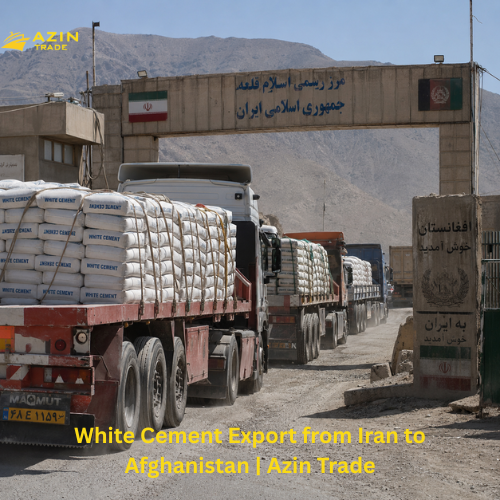
Reliable iran white cement export logistics depend heavily on which border crossing a shipment uses. Below are the three main routes exporters rely on.
Islam Qala Border Route
The Islam Qala crossing serves as one of the most important trade gateways between the two countries.
Advantages include:
- High trade volume
- Established logistics infrastructure
- Efficient customs processing
Dogharoon Border Crossing
Dogharoon is another major route for exporting this material.
Benefits include:
- Reliable transportation
- Frequent cargo movement
- Access to major Afghan markets
Milak Border Crossing
This route provides access to southern regions of Afghanistan.
It is particularly useful for:
- Large shipments
- Regional distribution
- Construction projects in southern provinces
Factors Affecting Prices
Understanding what drives the iran cement price — and, downstream, the cement price in Afghanistan — helps buyers negotiate better contracts and plan procurement budgets.
Factory and Brand
Different manufacturers have different pricing structures based on:
- Production technology
- Product quality
- Brand reputation
- Manufacturing costs
Transportation Costs
Freight expenses often represent a significant portion of the final delivered price, and they’re one of the biggest variables in iran white cement export logistics.
Factors include:
- Distance
- Fuel costs
- Border conditions
- Truck availability
Order Quantity
Bulk orders generally benefit from:
- Better pricing
- Lower transportation costs per ton
- More favorable commercial terms
Exchange Rate Fluctuations
International trade is influenced by currency movements, which can affect both the iran cement price at origin and the final cement price in Afghanistan once goods clear customs.
How to Choose a Reliable Iran White Cement Exporter
Selecting the right supplier is one of the most important decisions an importer can make.
Evaluate Product Quality
Always verify:
- Technical specifications
- Product certifications
- Whiteness level
- Compressive strength
Assess Export Experience
Experienced exporters can help buyers avoid:
- Documentation issues
- Customs delays
- Transportation problems
- Regulatory complications
Check Supply Capacity
A reliable iran white cement exporter should be capable of meeting long-term demand without interruptions.
Review Customer Support
Strong communication is essential for successful international trade.
Why Azintrade Is the Preferred Exporter
Direct Access to Leading Iranian Manufacturers
Azintrade works closely with reputable producers, enabling customers to access premium-quality, high-quality material at competitive prices.
This direct sourcing approach helps buyers achieve:
- Better pricing
- Consistent quality
- Reliable availability
Comprehensive Export Solutions
Unlike many suppliers that simply sell products, Azintrade provides end-to-end support across the full chain of iran white cement export logistics.
Services include:
- Product sourcing
- Export documentation
- Customs coordination
- Logistics management
- Delivery planning
Competitive Pricing for Wholesale Buyers
Azintrade understands the needs of:
- Importers
- Distributors
- Contractors
- Government procurement teams
The company focuses on delivering maximum value on iran cement price while maintaining strict quality standards.
Reliable Delivery and Logistics
Construction projects depend on timely material supply. Azintrade coordinates shipments through established logistics networks to ensure efficient delivery throughout Afghanistan.
Long-Term Partnership Approach
Many exporters focus solely on individual transactions. Azintrade focuses on building long-term relationships by providing:
- Consistent quality
- Transparent communication
- Reliable service
- Flexible commercial solutions
Case Study: Large-Scale Construction Supply
Imagine a contractor responsible for a large commercial development in Afghanistan. The project requires:
- High-quality Iran white cement
- Stable monthly supply
- Reliable delivery schedules
- Competitive pricing
Working with an experienced iran white cement exporter such as Azintrade allows the contractor to simplify procurement, reduce supply risks, and maintain project timelines. This type of partnership is increasingly important in today’s competitive construction environment.
Frequently Asked Questions
Why import white cement from Iran? Iran offers high-quality Iran white cement, competitive pricing, and efficient logistics compared to more distant markets.
What packaging options are available? Common options include 25 kg bags, 40 kg bags, 50 kg bags, and jumbo bags.
Can Azintrade handle large-volume orders? Yes. Large infrastructure and commercial projects can be supported.
Is export documentation provided? Yes. Azintrade arranges the necessary documentation as part of its iran white cement export logistics service.
How are shipments transported? Typically through established road transport networks connecting Iran and Afghanistan via the Islam Qala, Dogharoon, or Milak border crossings.
What industries use white cement? Construction, architecture, infrastructure, decorative concrete manufacturing, and landscaping.
Why is white cement more expensive than gray cement, and how does that affect cement price in Afghanistan? Its specialized production process and higher purity requirements increase manufacturing costs, which is reflected in a higher iran cement price compared to standard gray cement — and, in turn, a higher landed cement price in Afghanistan.
Is white cement suitable for decorative applications? Yes. It is widely regarded as the preferred cement for decorative and architectural projects.
The Competitive Advantage of Working with Azintrade
Choosing the right iran white cement exporter can significantly affect profitability, project efficiency, and customer satisfaction.
By partnering with Azintrade, buyers benefit from:
- Reliable product quality
- Competitive wholesale pricing
- Professional export support
- Efficient logistics coordination
- Long-term supply capability
- Strong industry expertise
- Responsive customer service
- Transparent communication
Conclusion
Afghanistan remains one of the most attractive export markets for Iranian white cement. Growing construction activity, urban expansion, infrastructure investment, and increasing demand for premium building materials continue to drive import opportunities.
For importers, contractors, distributors, and project developers, selecting the right iran white cement exporter is essential for achieving successful project outcomes.
Azintrade combines export expertise, strong supplier relationships, reliable iran white cement export logistics, and customer-focused service to deliver high-quality Iranian white cement to buyers across Afghanistan.
Whether you require a trial order, regular monthly shipments, or large-scale project supply, Azintrade is ready to support your business with dependable export solutions, competitive iran cement price, and premium-quality material.
Contact Azintrade Today
Request a customized quotation and discover why more businesses are choosing Azintrade as their trusted Iran white cement exporter for shipments from Iran to Afghanistan.
If you are tired of unreliable suppliers, inconsistent quality, and unexpected delivery problems, it’s time to upgrade.
Start your next shipment with Azintrade — the supplier that values your business, your deadlines, and your success.
Contact Azintrade now and build a strong, stable, and profitable supply chain for high-quality Iranian construction material.
✅ For expert consultation, current cement price in Afghanistan, and product orders, click here.