
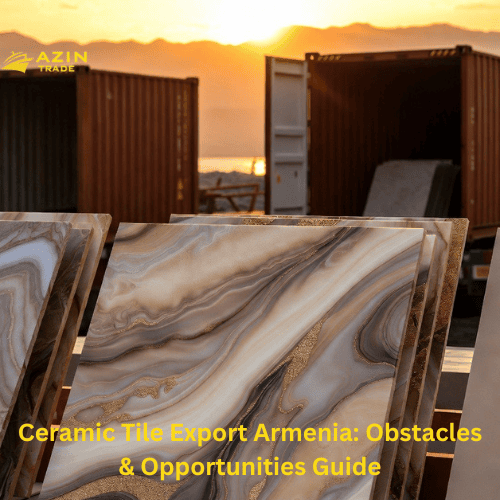
Ceramic Tile Export Armenia: Obstacles & Opportunities Guide
Iranian manufacturers face real ceramic tile export Armenia obstacles. Unlike the busy corridors to Iraq or Afghanistan, covered in our Iran tile exports to Afghanistan market guide, Armenia is smaller. However, it remains strategically valuable. In fact, it is one of the few land routes still fully open to Iran in the South Caucasus. Armenia has no open land border with Turkey or Azerbaijan. As a result, the Iranian corridor is one of only two overland lifelines the country has, alongside Georgia. This gives Iranian exporters a rare geographic advantage. Even so, the obstacles are real, and they shape almost every shipment that crosses the border. For a step-by-step look at shipping and paperwork, see our complete guide to ceramic tile export to Armenia.
The EAEU Trade Deal Changes the Calculation
Since May 2025, the Iran–EAEU Free Trade Agreement has reshaped this trade. It eliminated tariffs on roughly 87–90% of goods traded between Iran and the Eurasian Economic Union. Armenia alone accounted for over $500 million of Iran’s EAEU trade last year. Therefore, it is Iran’s second-largest EAEU partner after Russia. As regional analysts note, this tariff relief is a genuine advantage. Still, it does not remove every obstacle. Border infrastructure, market size, and certification rules remain real constraints. Producers active in building materials can also compare these dynamics with clinker, another major export category, in our 2026 clinker suppliers guide. Below, we break down the main obstacles facing ceramic tile export to Armenia today.
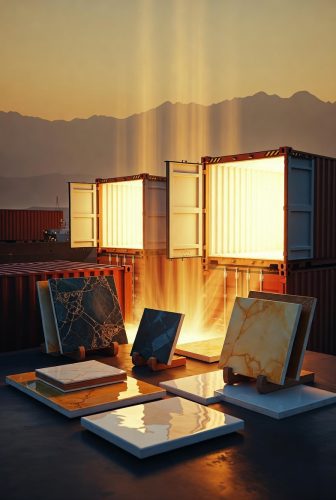
1. Armenia’s Single Border Crossing Limits Ceramic Tile Export
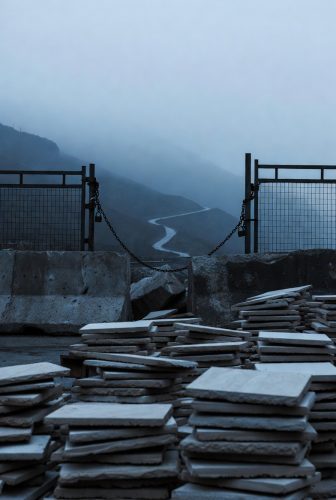
The most structural obstacle is geographic. Meghri–Nordooz, also called Agarak–Norduz, is the only land crossing between Armenia and Iran. Therefore, every truckload of tile and ceramic bound for Yerevan must pass through one mountain corridor.
- The route is a long, winding mountain road. It links the border directly to Yerevan. There is no rail alternative yet, unlike the newer Iran–Afghanistan rail links covered in our Afghanistan export obstacles analysis. Consequently, all freight moves by truck.
- Iranian-side customs inspections are thorough and slow. Long-haul trucks set the rhythm at the crossing. When they arrive in clusters, processing times stretch considerably, especially around holidays and winter weather.
- Capacity upgrades are underway, though not finished. An EU- and EBRD-financed modernization of the Meghri crossing, including a second bridge, targets completion around 2026. Until then, capacity remains a bottleneck for exporters trying to scale up.
2. Geopolitical Risk Adds to Armenia Export Uncertainty
Armenia’s regional security situation adds real unpredictability. This compounds the other export obstacles that ceramic tile shipments must absorb.
- Recent regional hostilities have tested the corridor. Armenian officials confirm that the Meghri and Norduz checkpoints kept serving trade and civilians even during difficult periods. Even so, disruption risk to schedules and insurance costs remains elevated.
- Talk of a “Zangezur corridor” through southern Armenia keeps the region in flux. Any future rerouting could change how goods move through the south. This adds long-term planning uncertainty for exporters relying on the current single crossing.
- Insurance and freight costs rise with perceived instability. Even when disruptions are brief, carriers often price in a risk premium for contested border regions.
3. EAEU Rules Shape Ceramic Tile Export to Armenia
Because Armenia belongs fully to the Eurasian Economic Union, these obstacles are not just physical. They are regulatory too.
- Products must meet EAEU technical regulations, not just Armenian ones. Ceramic and tile items typically need to comply with EAEU-wide standards on safety, labeling, and certification. These can differ from Iran’s domestic rules.
- Certification adds cost and lead time. Exporters without an existing EAEU conformity certificate must budget for testing and paperwork before a shipment clears customs smoothly.
- The FTA’s rules of origin must be satisfied too. Missing or incorrect origin documentation can mean a shipment is charged full tariffs, despite the new agreement. This erodes the price advantage exporters count on.
4. Armenia’s Market Size Limits Export Volume
Armenia’s population and construction sector are far smaller than Iran’s other regional markets. As a result, these obstacles show up commercially, not just physically.
- Smaller order sizes reduce economies of scale. Shipping costs per unit are harder to lower when loads are smaller and less frequent than routes into Iraq or Pakistan.
- Fewer active importers mean concentrated relationship risk. Losing one distributor in Yerevan can meaningfully affect an exporter’s entire Armenian revenue line.
- Local production and Russian-origin materials compete for the same shelf space. Since Armenia sits inside the EAEU customs union, Russian and Belarusian materials also enter tariff-free.
5. Currency Risk in the Armenia Export Channel
Even with the EAEU-Iran framework in place, currency and banking questions remain part of the practical picture.
- Cross-border banking channels are still limited by sanctions-related caution. Banks handling Iran-linked payments often apply extra scrutiny, even for legal EAEU-covered trade. This slows settlement.
- Dram and rial volatility complicates multi-week contracts. A price agreed at order time can shift in real terms by the time payment clears.
- Many deals still rely on trade intermediaries or barter-like arrangements. This adds counterparty risk for exporters who are new to Armenia.
6. Packaging Standards for Ceramic Tile Export to Armenia
Tile and ceramic products stay physically vulnerable over the mountainous route, no matter the destination. The same holds for other heavy materials, as our guide to exporting building stone to Armenia shows.
- Breakage rates climb on long, winding routes. Packaging built for short domestic transport often fails over the multi-hour mountain crossing.
- Disputes over damaged goods are a recurring friction point. Without standardized inspection at the border, disagreements over cost are common.
- Better packaging raises landed cost. Reinforced crating and moisture-resistant wrapping are necessary, though they narrow already-thin margins on smaller orders.
7. Competition Facing Ceramic Tile Export to Armenia
Iranian exporters do not have this market to themselves. Competitive pressure is one of the more persistent obstacles they face.
- Russian and Belarusian materials enter tariff-free through the EAEU. These producers share the same customs union as Armenia, without needing a separate deal.
- Turkish and Chinese ceramics arrive via Georgia. Because Georgia is Armenia’s other open border, competing products reach Yerevan through a second route Iranian exporters lack.
- Design and finish expectations keep rising. Armenian buyers increasingly compare Iranian products against Turkish designs. This pushes Iranian producers to keep innovating despite sanctions-related limits.
8. Informal Networks Still Shape Armenia Export Deals
As with other corridors, including the dynamics in our Afghanistan export obstacles piece, much of this trade still runs on personal ties rather than standard frameworks.
- Established traders hold a structural advantage. Long-standing ties and deep knowledge of both Iranian and Armenian import rules are hard for new entrants to match quickly.
- Grading and labeling vary by producer. Consequently, it is harder for Armenian buyers to compare products on a consistent basis.
- Dispute resolution remains largely informal. Disagreements over quality or timing are usually settled directly, rather than through formal arbitration.
Armenia Export Opportunities Despite the Obstacles
None of this changes Armenia’s fundamental appeal for Iranian producers.
- The Iran–EAEU Free Trade Agreement now removes tariffs on most traded goods. This is a structural advantage most non-EAEU competitors lack.
- Armenia’s limited overland options, Iran and Georgia only, keep the Iranian corridor strategically important regardless of short-term friction.
- Ongoing construction and renewal in Yerevan sustain steady underlying demand for imported tile, ceramic, and related materials.
- Planned upgrades at Meghri signal real capacity growth once complete.
How to Overcome Ceramic Tile Export Obstacles in Armenia
- Secure EAEU technical certification in advance. This avoids costly delays and helps exporters fully benefit from the FTA’s zero-tariff terms.
- Diversify logistics planning around the single Meghri-Nordooz crossing. Build in buffers for seasonal and security-related delays.
- Invest in reinforced, moisture-resistant packaging built specifically for the mountain route.
- Build formal distributor relationships in Yerevan. This reduces dependence on informal intermediaries.
- Monitor regional corridor developments, including talk of alternate transit routes, to keep logistics plans current.
Conclusion
Iran’s ceramic tile export to Armenia is smaller in volume than trade with Iraq or Afghanistan. Even so, it carries unique strategic value, since it is one of only two overland routes connecting Armenia to markets beyond its region. The obstacles are real: a single border crossing, EAEU certification rules, security volatility, and currency friction. However, they sit alongside a genuine advantage, the Iran-EAEU Free Trade Agreement. Therefore, producers who invest in certification, resilient packaging, and formal distributor ties are best placed to turn Armenia’s steady demand into a durable, tariff-advantaged channel.
Interested in exporting tile and ceramic products to Armenia or other markets? Understanding these obstacles is the first step toward a more resilient strategy. If you want a reliable partner, see our complete guide to ceramic tile export to Armenia, or explore our guide to exporting building stone to Armenia.